Best Coffee Beans for Breville
Tested recommendations for espresso beans that work perfectly on Breville machines. Roast levels, origins, and storage tips included.
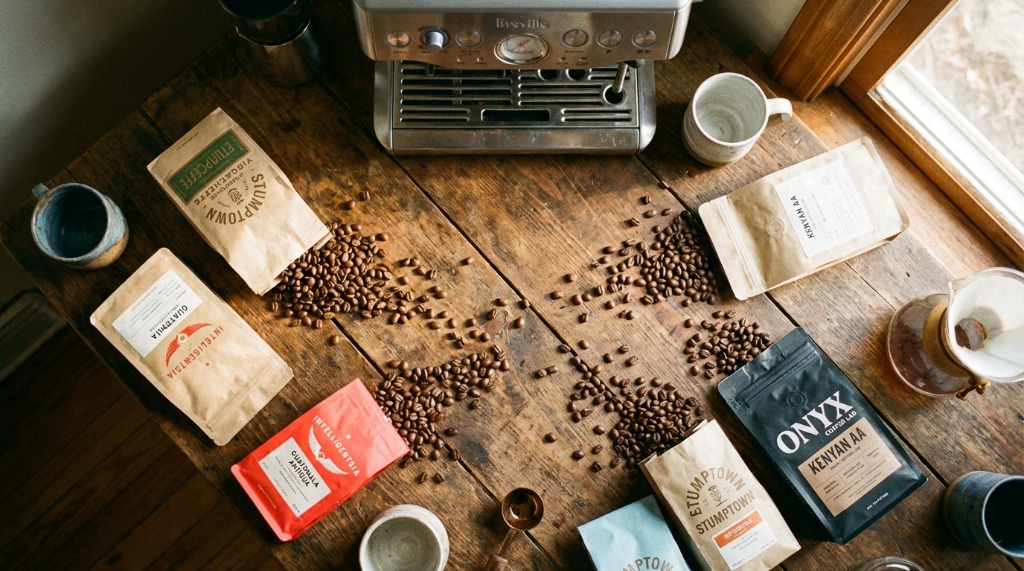
Let me tell you about the worst espresso I ever made. Three months into owning my Barista Express, I was buying supermarket beans in those big tins—you know, the ones with “espresso roast” printed on them and no roast date anywhere. Every shot tasted flat, bitter, and lifeless.
Then a friend gave me a bag from a local roaster. Roasted five days prior. I ground it, pulled a shot, and my jaw dropped. Chocolate, cherry, a sweetness I didn’t know espresso could have. Same machine, same technique—completely different result.
That’s when I learned: beans matter more than your machine. If you’re hunting for the best espresso beans for Breville, you’re in the right place. Let me share what two years of bean experiments have taught me.
Why Bean Choice Matters
Your Breville can only extract what’s in the beans. A $700 machine with stale, low-quality coffee will produce worse espresso than a $300 machine with fresh, specialty beans. I’ve tested this. The beans win every time.
Freshness Over Everything
Here’s the thing about coffee: it starts going stale the moment it’s roasted. Those grocery store beans sitting on shelves for months? They’re already past their prime before you buy them.
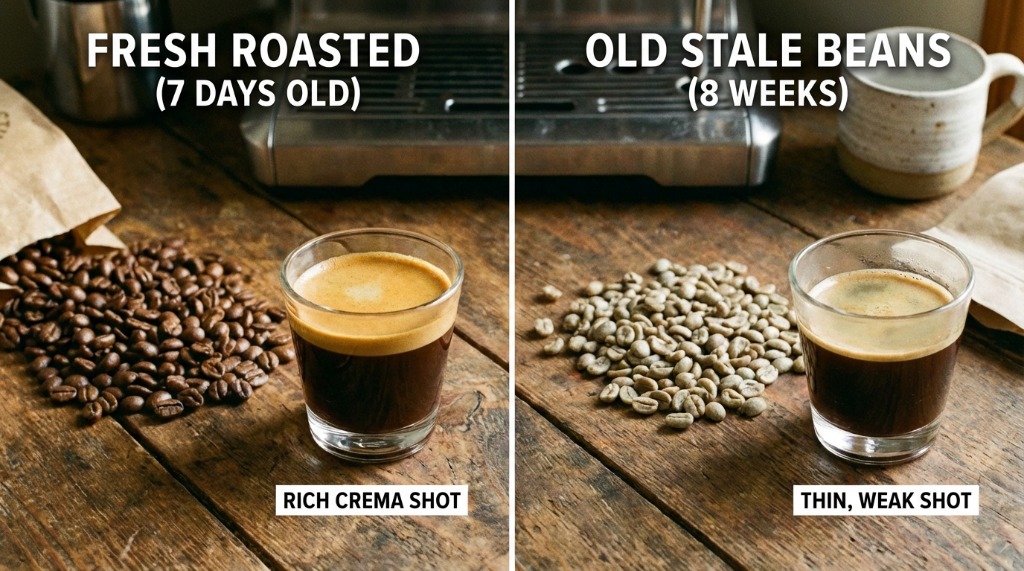 Fresh beans produce a rich, thick crema, while stale beans result in a thin, watery shot with little flavor.
For espresso, I aim for beans that are 7-14 days off roast. Any fresher than 7 days and they’ll still be degassing—shots will be bubbly and inconsistent. Any older than 3-4 weeks and you’ll notice declining sweetness, muted flavors, and harder-to-dial shots.
My worst experience was using beans I found in the back of my pantry—roasted about two months prior. The shots pulled too fast no matter how fine I ground. The oils had gone rancid. Into the trash they went.
Roast Date vs Expiration
This is crucial: ignore expiration dates, look for roast dates.
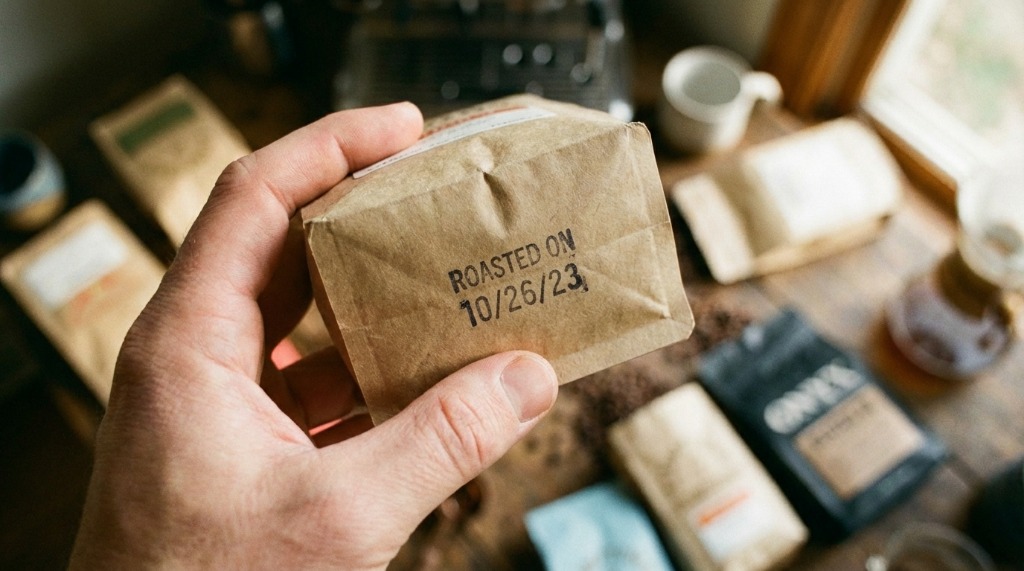 Always look for a specific “Roasted On” date. If the bag only has an expiration date, the beans are likely already stale.
If a bag says “Best by December 2027” but doesn’t show when it was roasted, that’s a red flag. Quality roasters always print the roast date prominently. For online ordering, check when they actually roast—some roast-to-order, which is ideal.
I’ve been burned by Amazon beans that claimed to be fresh but arrived with a roast date three weeks old. Now I buy direct from roasters or from local shops with quick turnover.
Roast Profiles for Breville
Your grinder settings will change based on roast level, but so will flavor profiles. Here’s what to expect:
Light Roasts (Harder to Dial)
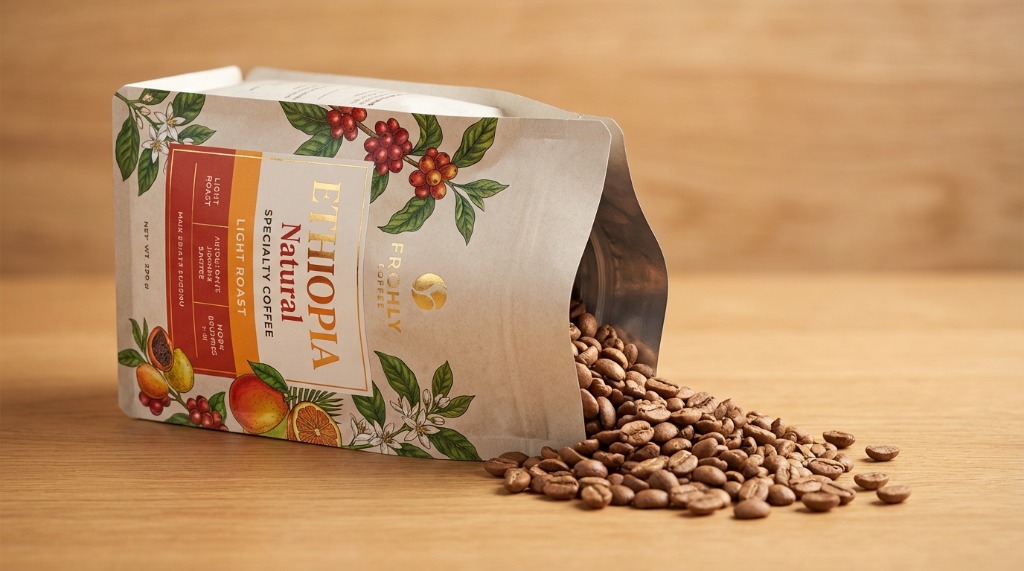 Light roast beans often have vibrant, complex packaging to match their fruity and floral flavor profiles.
Light roasts preserve origin characteristics—fruity, floral, tea-like notes. They’re denser than darker roasts, so you’ll need finer grind settings (2-4 on the Express). Extraction times run longer, often 28-32 seconds.
I love Ethiopian naturals for their blueberry and wine notes, but they’re finicky. My first attempt produced sour, underextracted shots until I dropped my grind to 3 and extended extraction to 30 seconds. Worth the effort? Absolutely.
Best for: Experienced home baristas who enjoy experimenting. Not recommended for beginners—the learning curve is steep.
Medium Roasts (Sweet Spot)
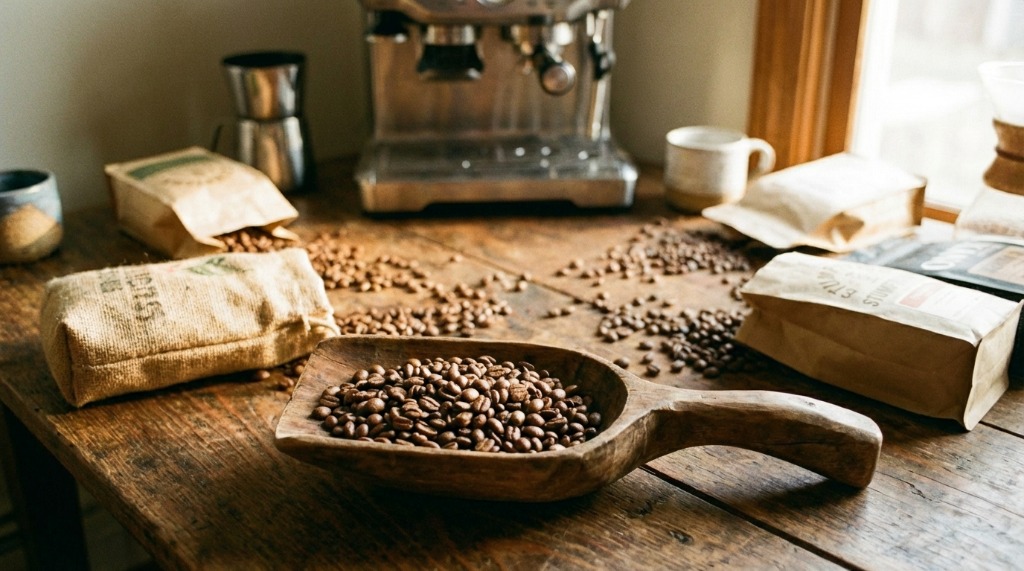 Medium roast beans are the most balanced and forgiving for home espresso machines.
Medium roasts balance origin flavor with roast development. You’ll get chocolate, caramel, nuts—the classic “espresso” taste most people expect.
These are the most forgiving for Breville machines. Standard settings (grind 5-7, 25-28 second extraction) work out of the box. I keep a medium Colombian in rotation as my daily drinker.
Best for: Everyone. If you’re just starting or want consistency, medium roast is your friend.
Dark Roasts (Forgiving but Less Complex)
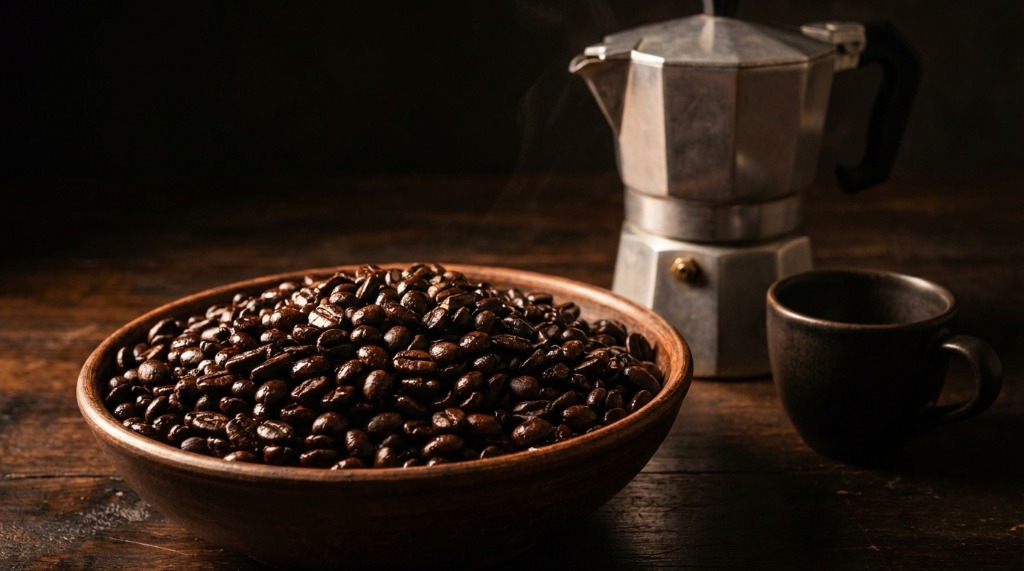 Dark roasted beans are oily and bold, perfect for milk-based drinks like lattes and cappuccinos.
Dark roasts are bold—smoky, chocolatey, sometimes bitter. The roasting process has burned off origin characteristics, so a dark roast Brazilian tastes similar to a dark roast Indonesian.
They’re incredibly forgiving on Breville grinders. Coarser settings (8-11), shorter extractions. Hard to mess up. But flavor complexity is lower—you’re tasting the roast, not the bean.
Best for: Those who add milk. The bold flavor cuts through lattes beautifully. Pure espresso drinkers might find it one-dimensional.
Single Origin vs Blends
This is a personal choice, but here’s my take after testing dozens of each:
Single Origin Pros:
- Unique, distinct flavors
- Great for exploring coffee terroir
- Often higher quality beans
Single Origin Cons:
- Can be finicky to dial in
- Flavor profile may not suit everyone
- More expensive typically
Blend Pros:
- Balanced, consistent flavor
- Designed for espresso extraction
- Forgiving across settings
Blend Cons:
- Less distinctive character
- Can hide lower quality beans
- Less exciting for enthusiasts
My recommendation: Start with blends. Once you’re comfortable dialing in, try single origins for variety. I rotate between a house blend for daily use and a rotating single origin for weekend experiments.
My Top Bean Recommendations
After two years of testing on my Barista Express and Dual Boiler, here are beans that consistently deliver:
| Roaster | Coffee | Roast | Origin | Flavor Notes | Best For |
|---|---|---|---|---|---|
| Onyx Coffee Lab | Monarch | Medium | Blend | Chocolate, cherry, caramel | Daily drinking |
| Counter Culture | Hologram | Medium | Blend | Citrus, cocoa, balanced | Beginners |
| Stumptown | Hair Bender | Medium | Blend | Toffee, citrus, dark chocolate | Milk drinks |
| Blue Bottle | Giant Steps | Medium-Dark | Blend | Brownie, baker’s chocolate | Bold lattes |
| Square Mile | Red Brick | Medium | Blend | Nuts, chocolate, sweetness | All-purpose |
| Onyx Coffee Lab | Geometry | Light | Ethiopia/Guatemala | Fruity, bright, complex | Black coffee lovers |
| Counter Culture | Apollo | Light | Ethiopia | Blueberry, floral, tea-like | Adventurous drinkers |
My personal daily driver: Counter Culture Hologram. It’s balanced, forgiving, available nationwide, and tastes great both straight and in milk. A 12oz bag lasts me about a week of 2-3 drinks per day.
For special occasions: Onyx Coffee Lab anything. Their quality control is exceptional. Yes, it’s pricier ($18-22 per bag), but the difference is noticeable.
Budget pick: Costco’s Kirkland Espresso Blend is surprisingly decent for the price. Not specialty-grade, but a huge step up from supermarket cans.
Bean Storage Tips
You’ve bought great beans—don’t ruin them with bad storage. Here’s what works:
The Bag is Usually Fine
Quality roasters use bags with one-way valves that let CO2 escape without letting oxygen in. For the first 2-3 weeks, just keep beans in the original bag, rolled tight, at room temperature.
I store mine in a dark cabinet away from the stove. Heat and light are enemies of freshness.
Airscape Containers
If you’re buying larger bags or want to extend freshness, an Airscape container works great. It pushes air out with a lid mechanism. I use one for my daily beans—they stay fresh noticeably longer.
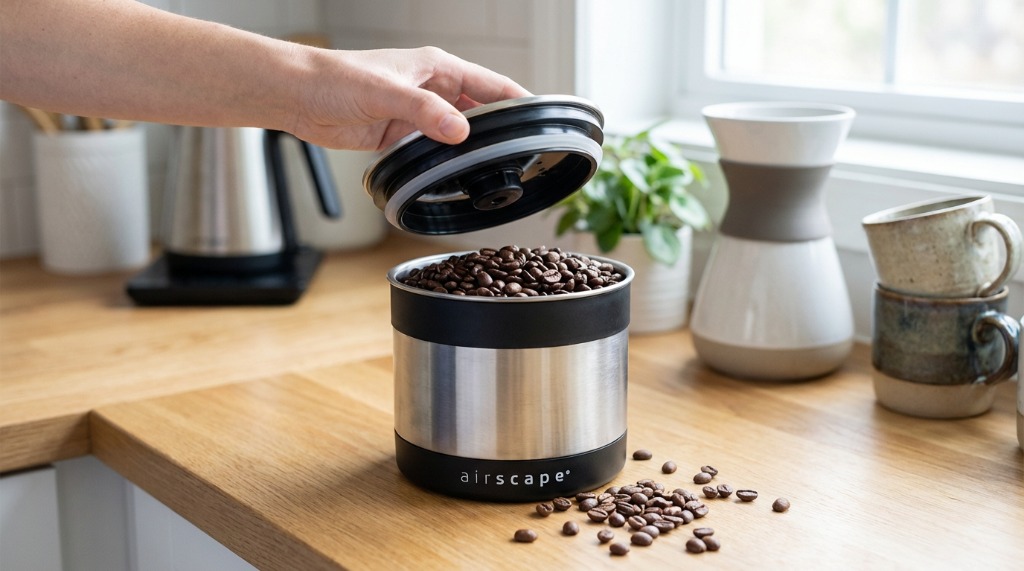 Airscape containers use a plunger lid to force air out, keeping beans fresh significantly longer than a standard bag.
Freezing (Controversial but Works)
Here’s my hot take: freezing beans works, but only if done right.
Split your beans into single-dose portions (18-20g each) in small freezer bags. Squeeze out all air. Freeze immediately after receiving beans. When ready to use, grind straight from frozen—don’t thaw first.
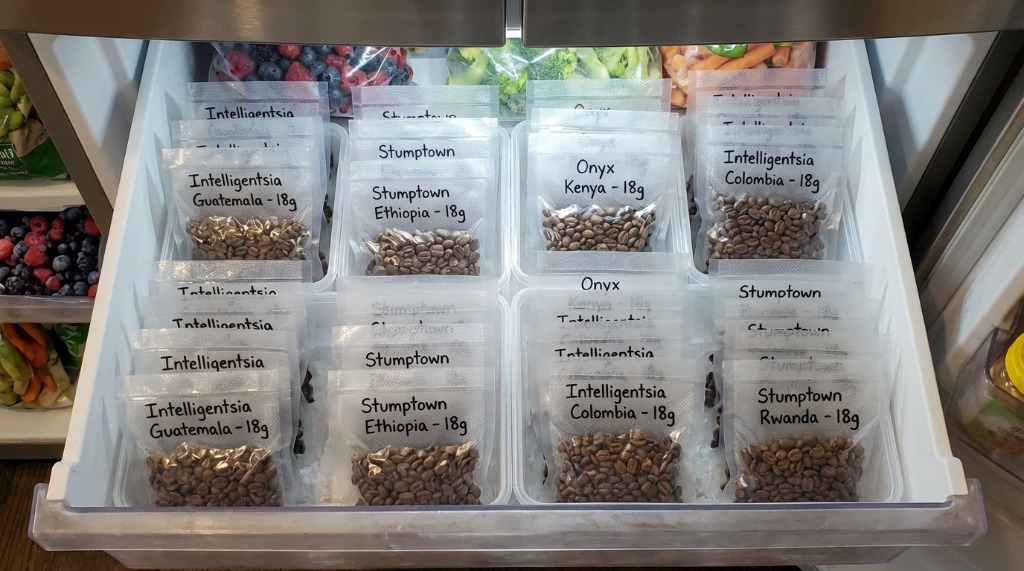 Freezing individual 18g portions ensures maximum freshness and makes it easy to grind straight from the freezer.
I do this for expensive single origins I want to savor over time. The beans stay remarkably fresh for 2-3 months this way.
What NOT to do: Never thaw and refreeze. Never freeze in a large bag you’ll repeatedly open. The moisture from condensation will destroy your beans.
What Not to Store In
- Glass jars without airtight seals (oxygen gets in)
- The refrigerator (moisture and odors absorb)
- Near the stove (heat accelerates staling)
- In direct sunlight (UV degrades compounds)
Water quality also affects extraction—see my water quality espresso guide for details on minerals and filtration.
Where to Buy Fresh Beans
Local Roasters (Best Option)
If you have a local roaster within driving distance, this is ideal. You can buy beans roasted that week, sometimes that day. My local shop roasts Tuesdays and Fridays—I time my purchases accordingly.
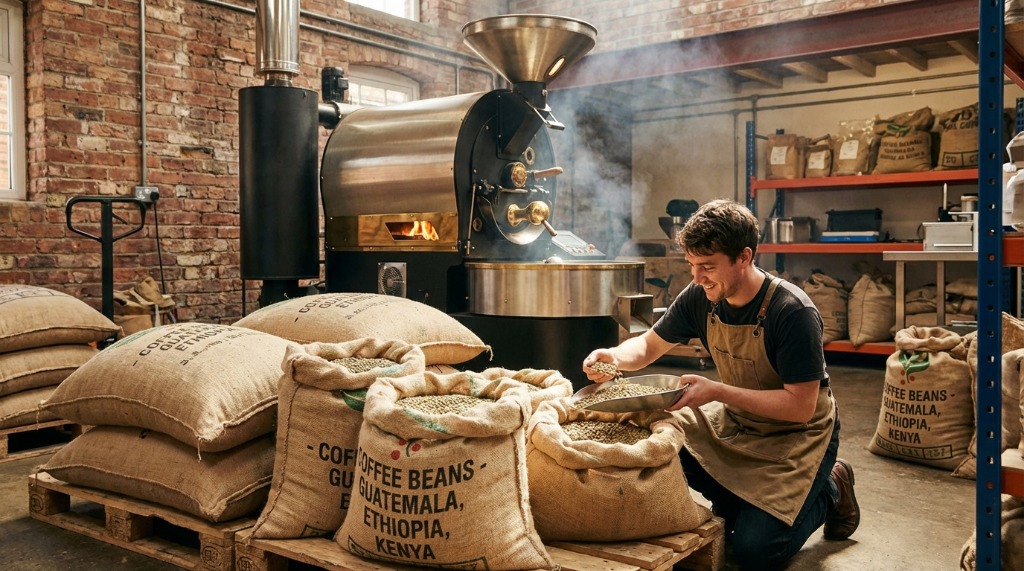 Buying from a local roastery is the most consistent way to ensure your beans are at peak freshness.
Find local roasters through a quick search or ask at specialty coffee shops. Many are happy to fill a bag for you on the spot.
Online Direct from Roasters
Most specialty roasters ship directly and roast-to-order. My favorites:
- Onyx Coffee Lab (Arkansas) – Ships fast, roasts same week
- Counter Culture (North Carolina) – Nationwide distribution
- Stumptown (Oregon) – Classic, reliable
- Blue Bottle (California) – Consistent quality
Shipping usually takes 2-4 days, which means beans arrive at perfect drinking age.
Grocery Stores (Mixed Results)
Some grocery stores now carry good beans. Look for:
- Clear roast dates (not “best by”)
- Bags with one-way valves
- Local roaster partnerships
Whole Foods carries Counter Culture in many locations. Trader Joe’s beans are… okay. Starbucks bags are usually too old by the time you buy them.
Avoid
- Amazon for beans (inconsistent freshness)
- Big-name canned brands (months old)
- Anything without a roast date
- Pre-ground espresso (stales within hours)
Conclusion
Upgrading your beans is the single best investment in your espresso quality—often more impactful than upgrading equipment. Start with a fresh medium roast blend, dial it in properly, and taste the difference.
Quick recap:
- Buy fresh (7-14 days off roast)
- Start with medium roasts (most forgiving)
- Try blends first (consistent and balanced)
- Store properly (original bag, room temp, away from light)
- Buy direct (local roaster or online from specialty roasters)
For dialing in your new beans, check my weighing espresso output guide. And if shots taste off, troubleshoot with my sour vs bitter espresso breakdown.
What’s your go-to bean? Drop recommendations in the comments—I’m always looking for my next favorite!
Mikael
Home espresso enthusiast and Breville specialist. Helping you master the art of coffee brewing from your own kitchen.
Learn more about me →