Breville Espresso Models Compared
Side-by-side comparison of Breville espresso machines from Bambino to Oracle. Find the best model for your budget and brewing style.
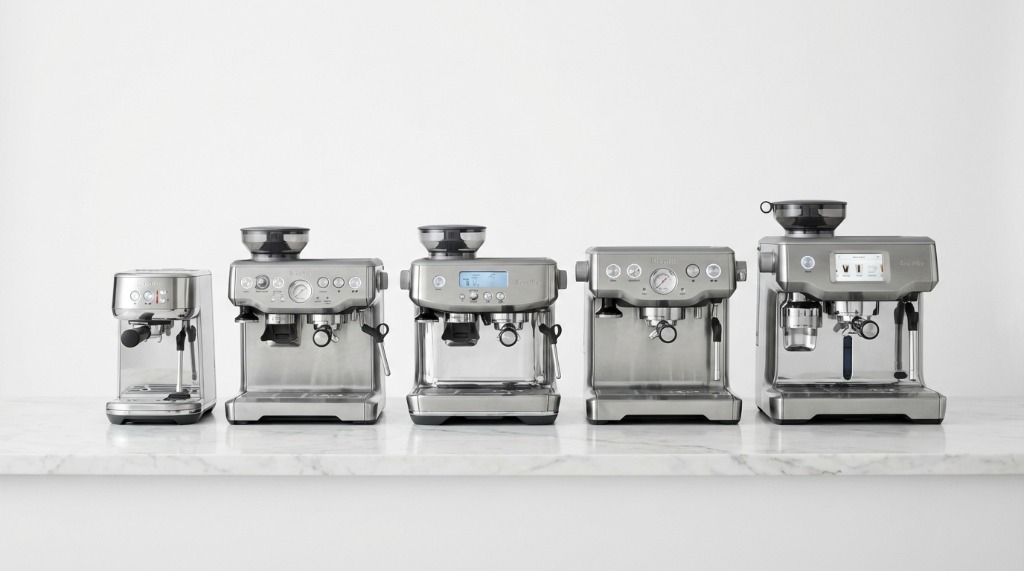
I remember the day I bought my first Breville espresso machine like it was yesterday. I’d been muddling through with a cheap drip maker for years, but one morning, after a particularly bad latte from the corner café, I decided enough was enough. I wanted real espresso at home—creamy shots, silky milk foam, the works.
Standing in the store, staring at the lineup, I felt overwhelmed. Which one? The Barista Express caught my eye first. It had that built-in grinder, looked sturdy, and fit my budget. That choice kicked off my home barista journey, and over the years, I’ve owned or tested most of Breville’s espresso machines.
If you’re in the same spot—wondering about Breville espresso machines comparison or hunting for the best Breville espresso machine—this guide is for you. Let’s walk through the models, differences, and what really matters.
Quick Model Lineup Overview
Breville keeps things straightforward with a range that scales from beginner-friendly to pro-level.
Starting simple: the Bambino and Bambino Plus. These are compact powerhouses without grinders, perfect if you already have beans ground or a separate grinder. The Bambino has a 47 fl oz water reservoir and a flexible ball-joint steam wand, while the Plus ups it to 64 fl oz, adds auto milk texturing, and includes a solenoid valve for better puck release.
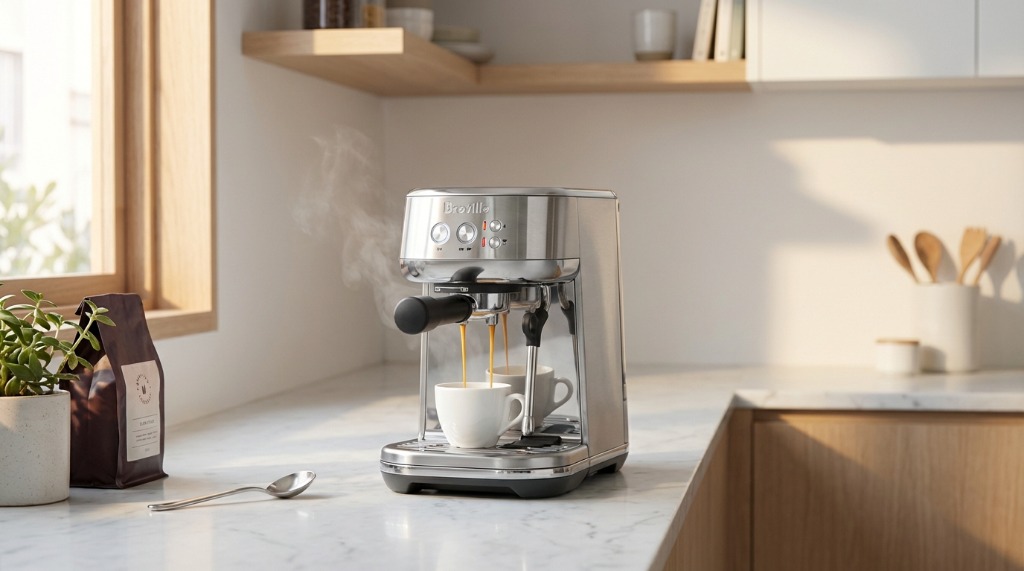 The Breville Bambino is perfect for small kitchens without sacrificing shot quality.
Then come the Barista series: Barista Express, Barista Pro, Barista Touch. These pack integrated grinders and more controls. The Express (my first love) is the entry point with 16-18 grind settings and a thermocoil heater. The Pro speeds things up with ThermoJet heating and a shot timer instead of a pressure gauge. The Touch adds a touchscreen with drink presets and auto steaming options.
Stepping up, the Dual Boiler brings serious heat management with two boilers for simultaneous brewing and steaming. And at the top, the Oracle (and Oracle Touch) automates grinding, tamping, and milk frothing—basically, the machine makes the coffee for you.
Here’s the quick breakdown:
| Model | Grinder | Boiler | Price Range | Best For |
|---|---|---|---|---|
| Bambino | No | ThermoJet | $300-350 | Budget/compact |
| Bambino Plus | No | ThermoJet | $450-500 | Auto milk |
| Barista Express | Yes (16 settings) | Thermocoil | $600-700 | Beginners |
| Barista Pro | Yes (30 settings) | ThermoJet | $800-900 | Speed lovers |
| Barista Touch | Yes (30 settings) | ThermoJet | $900-1000 | Preset drinkers |
| Dual Boiler | No | Dual PID | $1400-1600 | Enthusiasts |
| Oracle | Yes (auto) | Dual | $2000-2500 | Full automation |
Key Feature Breakdown
Grinder Options
The built-in grinder is a huge convenience factor. Nothing beats grinding fresh right before pulling a shot. My first week with the Express, I made the rookie mistake of pre-grinding beans for the week. Those last shots? Stale and flat. Fresh grinding is everything.
The Express uses a stepped grinder with 16 numbered settings plus an inner burr adjustment. Good enough for most folks, but I found some beans fell “between” settings. The Pro and Touch upgrade to 30 digital settings—finer control, easier dialing. If you’re finicky like me, that matters.
No grinder? The Bambino and Dual Boiler assume you’ll use a dedicated grinder. Honestly, pairing a Dual Boiler with a solid grinder like the Smart Grinder Pro opens up more flexibility. See my grind size adjustment guide for dialing tips.
Boiler Types (Single vs Dual)
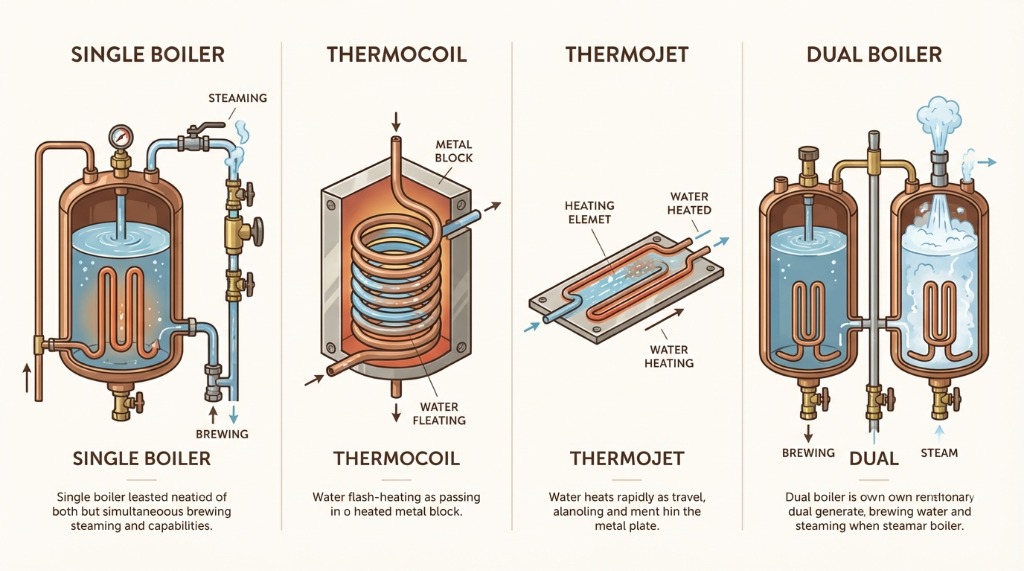 Comparison of different heating systems used in Breville espresso machines.
Here’s where things get interesting. The Bambino and Pro use ThermoJet—instant heat in 3 seconds. Seriously, 3 seconds. I timed it. My mornings changed when I upgraded to the Pro; no more waiting around.
The Express sticks with a thermocoil. It works, but there’s a 30-second heat-up, and temperature can fluctuate between shots. Not a dealbreaker, but noticeable if you’re pulling back-to-back drinks.
The Dual Boiler? Two separate boilers—one for brewing, one for steaming. This means you can pull a shot AND steam milk simultaneously. When I hosted a brunch last year, this saved my sanity. Four lattes in under 10 minutes. Try that on a single boiler. For a deep comparison, check my dual boiler vs barista express breakdown.
Steam Power & Milk Frothing
Milk is where these machines really differ. The Bambino’s wand is decent for beginners—forgiving tip design, easy microfoam. The Plus adds auto-steaming: insert the jug, press a button, done. My wife loves this because she doesn’t want to learn wand technique.
The Express and Pro have traditional wands. I’ve spent hours practicing latte art on the Express. It’s capable, but the steam power is modest compared to café machines. The Pro feels snappier with ThermoJet backing it.
The Dual Boiler and Oracle? Commercial-level steam. Thick, velvety microfoam in seconds. If you’re serious about latte art or make lots of milk drinks, this power matters.
Model-by-Model Deep Dive
Barista Express
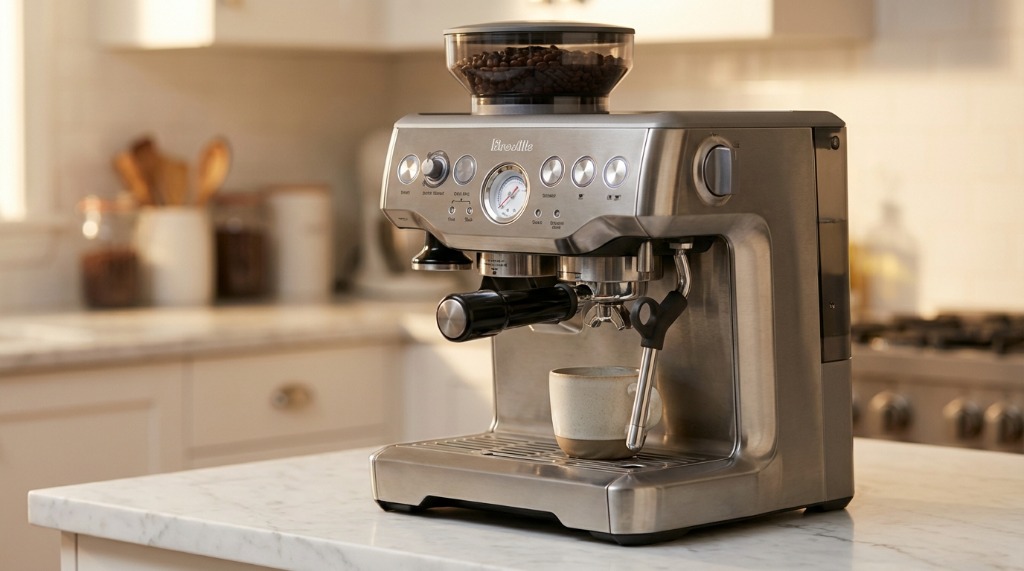 The Barista Express is the classic all-in-one choice for home baristas.
This is where most home baristas start—myself included. The Express gives you everything: grinder, PID-controlled temperature, pressure gauge, and a capable steam wand. All for around $600-700.
What I love: The pressure gauge feedback while pulling shots. Watching it hit the sweet spot? Oddly satisfying. The grinder’s good enough for daily use. Maintenance is straightforward—regular backflushing keeps it happy.
What I don’t: Heat-up time feels slow after trying ThermoJet models. Temperature surfing between shots if you’re rushing. The grinder’s 16 settings can feel limiting with certain beans.
Perfect for: Someone who wants to learn espresso fundamentals without dropping $1,000+. If you’re new, start here. Check my Barista Express setup guide for first-time tips.
Barista Pro
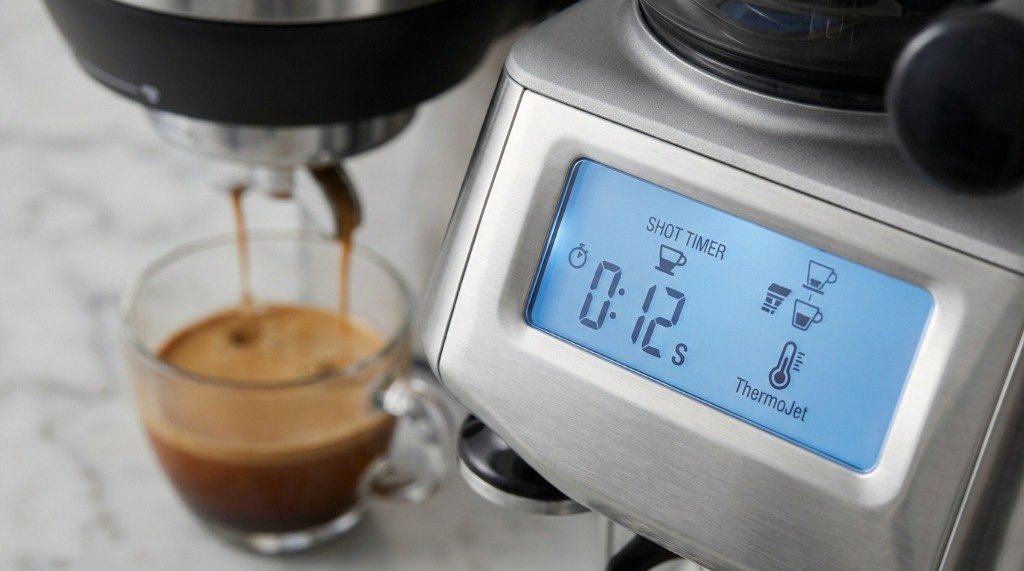 The Barista Pro features a digital display with a built-in shot timer and ThermoJet heating.
The Pro takes the Express formula and adds speed. ThermoJet heating means 3-second startup. The digital display shows a shot timer instead of a pressure gauge—more useful for dialing in, honestly.
The grinder upgrades to 30 settings. When I switched, I finally nailed a Brazilian bean that was impossible to dial on the Express. That alone justified the price bump.
What I love: Instant heat. Better grind control. Sleeker design (if that matters to you). The LCD is easier to read than the Express’s icons.
What I don’t: No pressure gauge—I actually miss it sometimes. Slightly louder pump than the Express. Price jump of $200+ for the speed upgrade.
Perfect for: Former Express owners who want faster mornings. If you’re new and budget allows, skip the Express and start here.
Dual Boiler
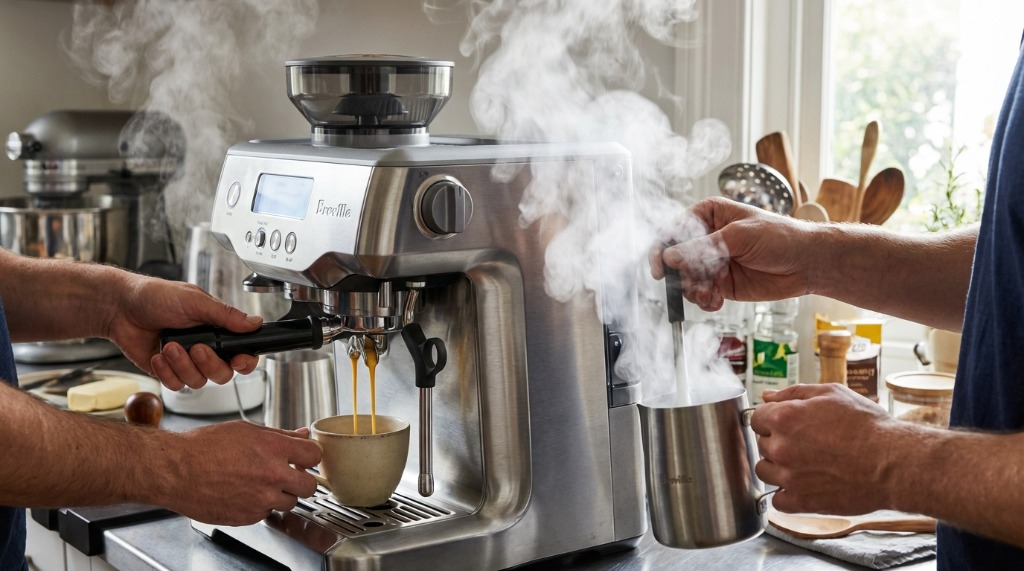 The Dual Boiler allows for simultaneous brewing and steaming, a game-changer for hosting.
This is my current daily driver. The Dual Boiler is for people who want café-quality at home and don’t mind providing their own grinder.
Two PID-controlled boilers mean rock-solid temperature stability. I’ve pulled 10 shots in a row during parties—zero temp drift. The steam power is ridiculous; I’m done texturing milk in under 20 seconds.
What I love: Simultaneous brew and steam. Temperature presets adjustable to the degree. Build quality feels like it’ll last 10 years. Shot consistency is unmatched in this price range.
What I don’t: No grinder—budget another $200-400 for a good one. Large footprint; my countertop groans. Heat-up takes 20-30 minutes for full stability (I leave it on a timer).
Perfect for: Enthusiasts who already own a quality grinder or want to upgrade. Households making 5+ drinks daily. Anyone tired of temperature surfing.
Price vs Performance Matrix
Let’s talk value. Here’s how I’d rank bang-for-buck:
| Model | Price | Performance Score (1-10) | Value Rating |
|---|---|---|---|
| Bambino | $300 | 6 | ⭐⭐⭐⭐⭐ |
| Barista Express | $650 | 7 | ⭐⭐⭐⭐ |
| Barista Pro | $850 | 8 | ⭐⭐⭐⭐ |
| Dual Boiler | $1500 | 9 | ⭐⭐⭐⭐ |
| Oracle | $2200 | 9 | ⭐⭐⭐ |
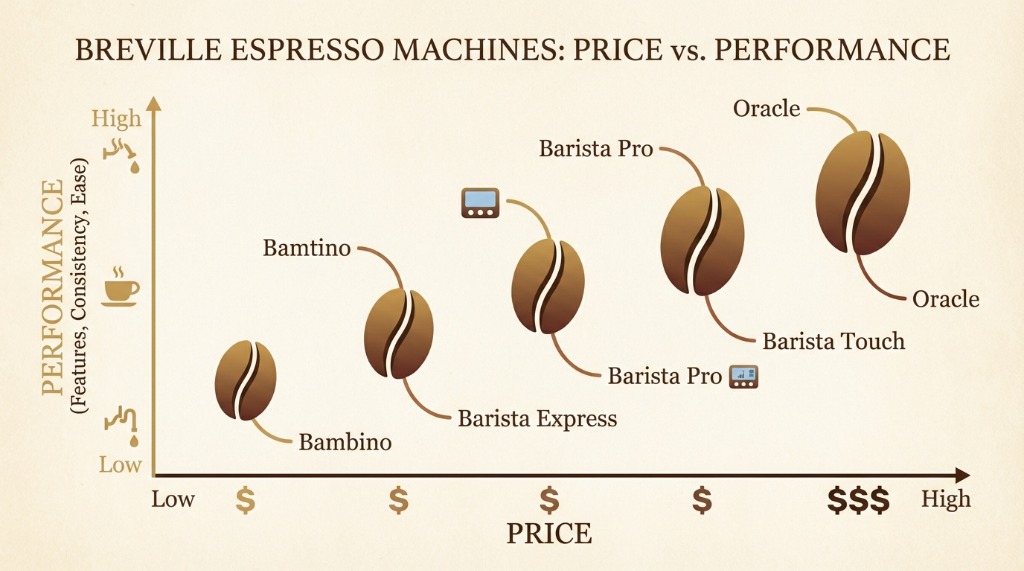 Visualizing the price vs performance ratio of the main Breville espresso machine lineup.
The Bambino wins on pure value—amazing espresso for $300 if you have a grinder. The Express remains the “safe” choice for beginners. The Dual Boiler is the sweet spot for serious home baristas—it performs close to $3,000 machines at half the cost.
The Oracle? Incredible, but you’re paying for automation I don’t personally need. If tamping and grinding are chores to you, though, it’s worth every penny.
Which Model Fits Your Needs?
Let me make this simple:
Just starting out? Barista Express. I started here—no regrets. Learn the basics without spending $1,000+.
Want faster mornings? Barista Pro. That ThermoJet is life-changing for anyone making drinks before leaving for work.
Hosting often? Dual Boiler. No waiting between drinks. Check my dual-boiler-vs-barista-express comparison for specifics.
Tech lover? Barista Touch or Oracle. Presets for lattes, mochas—my wife loves the Touch’s simplicity.
Solo sipper? Express or Pro is plenty. Families? Dual Boiler or higher.
Tight on space? Bambino. Budget under $500? Bambino. Over $1k? Dual Boiler’s value shines.
Think about drinks per day. One latte? Entry-level is fine. Five drinks? Go mid-range. Daily barista duties? Dual Boiler or bust.
My Recommendation
If I could pick one best Breville espresso machine for most folks? The Barista Pro. It balances everything—grinder, speed, steam—without breaking the bank. I upgraded from the Express and never looked back. ThermoJet’s instant readiness fixed my biggest gripe.
For pure value? The Express. For milk-heavy drinks on a budget? Bambino Plus. For serious enthusiasts? Dual Boiler—its simultaneous power saved my brunch hosting game.
Skip the Oracle unless you genuinely hate tamping and want full automation. At $2,000+, you’re paying premium for convenience.
Test in-store if you can. Watch your shots, feel the wand, compare sizes. That’s how I made my choice.
Conclusion
Picking a Breville changed my mornings forever. From fumbling first shots on the Express to nailing cortados on the Dual Boiler, each model taught me something.
There’s no perfect machine—it’s about your routine, your budget, your patience level. Start with the lineup overview above, match your needs honestly, and pull that first shot. You’ll wonder why you waited so long.
For temperature settings on any model, check my Breville temperature settings guide. And once you’re set up, the dosing baskets guide will help you dial in those perfect shots.
Questions? Drop them in the comments. Happy brewing!

Mikael
Home espresso enthusiast and Breville specialist. Helping you master the art of coffee brewing from your own kitchen.
Learn more about me →