Breville vs DeLonghi La Specialista Compared
Honest comparison of Breville Barista Express and DeLonghi La Specialista. Build quality, grinder, shots, steam, and which one to buy.
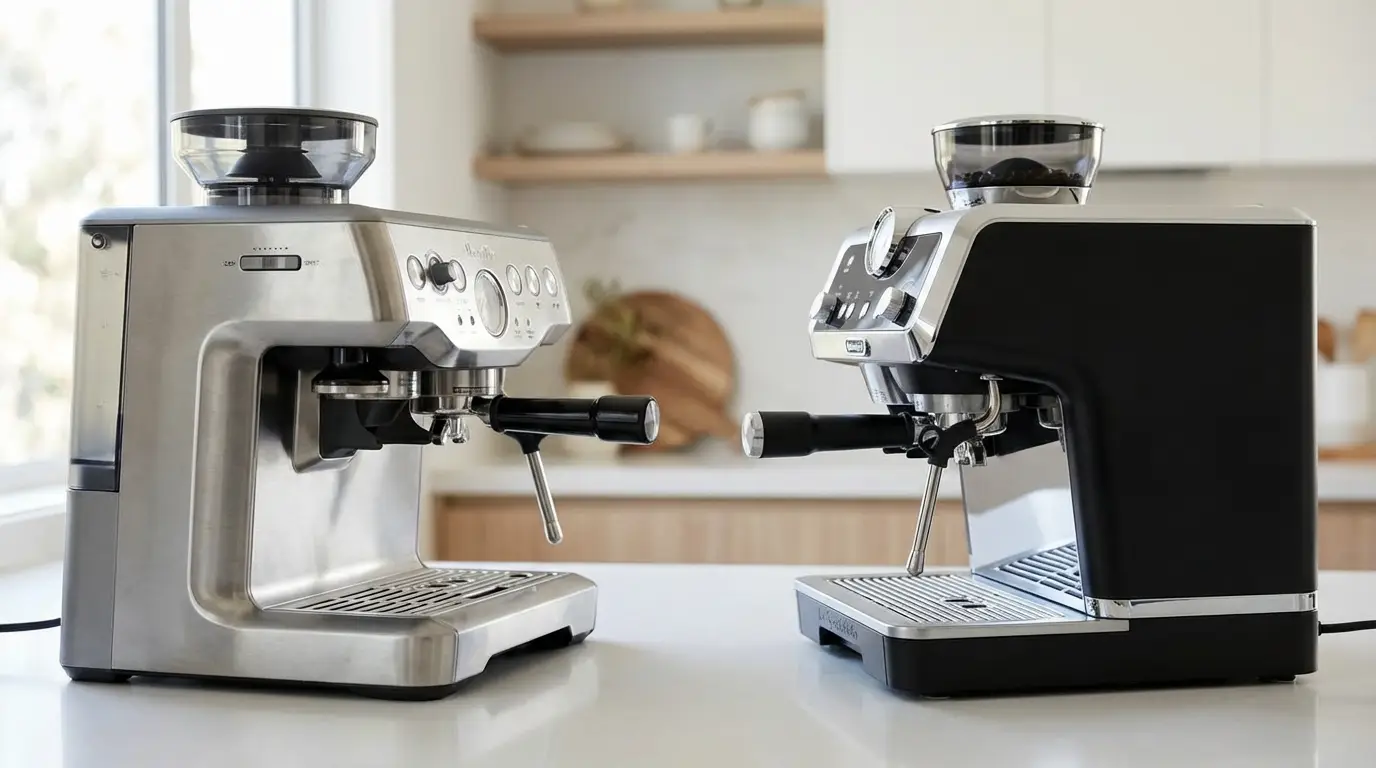
“Should I get a Breville or DeLonghi?” — this might be the most asked question in every beginner espresso forum. I’ve used the Breville Barista Express for years, and I’ve spent considerable time testing a friend’s DeLonghi La Specialista Arte. Here’s my honest take on both.
Spoiler: Neither machine is objectively “better.” They’re designed for different types of home baristas.
Quick Overview
Both machines sit in the ~$500-700 range and target first-time espresso buyers who want an all-in-one setup (built-in grinder + espresso brewing + steam wand). But they approach the experience very differently.
| Breville Barista Express | DeLonghi La Specialista Arte | |
|---|---|---|
| Philosophy | Control-oriented, manual tweaking | Guided, more automated |
| Street price (2025) | $580-700 | $500-650 |
| Portafilter | 54mm | 51mm |
| Grind settings | 16+ (adjustable inner burr) | 8 |
| Temperature control | 3 presets (hidden menu) | 3 presets (button) |
| Pre-infusion | Manual (hold button) | Automatic |
Build Quality
Let’s start with what you notice the moment you unbox them.
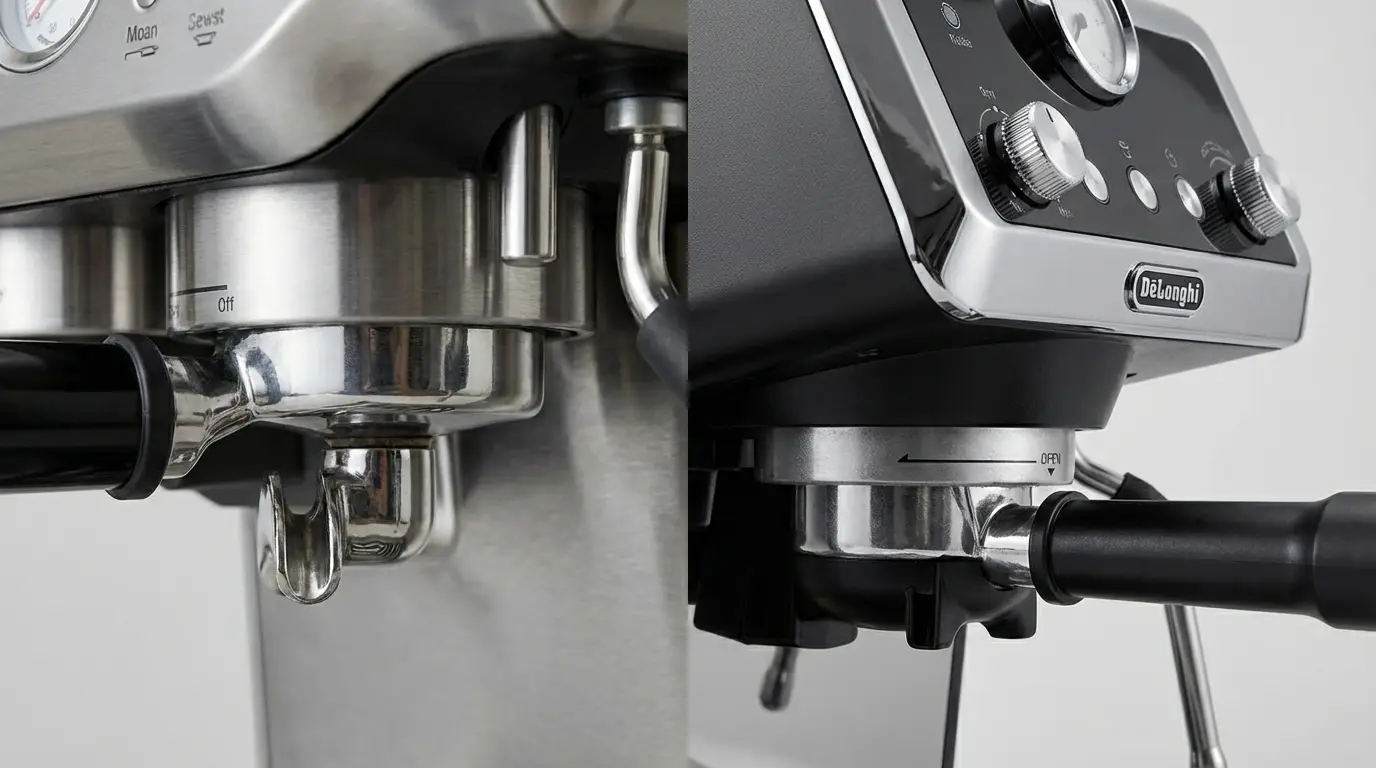
Breville feels solid in a way that’s hard to describe until you’ve held both. The housing has substantial metal elements, the portafilter has real weight to it, and the whole machine just feels anchored on the counter. The group head is heated, which keeps temperature stable between shots. There’s a solenoid valve that dries your puck after extraction—meaning easy knock-out and faster back-to-back shots.
DeLonghi is lighter. Not flimsy—it’s a well-made machine—but there’s noticeably more plastic in the construction. The drip tray design is a pain point that comes up repeatedly in forums: it has gaps that are hard to clean and can collect water in annoying places.
My honest take: Breville wins on build quality. It feels like a machine built to last 5+ years of daily use. Reddit threads with long-term owners consistently describe it as “built like a tank.” DeLonghi feels adequate but less robust.
Grinder Comparison
This is where the differences really start to matter.
Breville’s Grinder
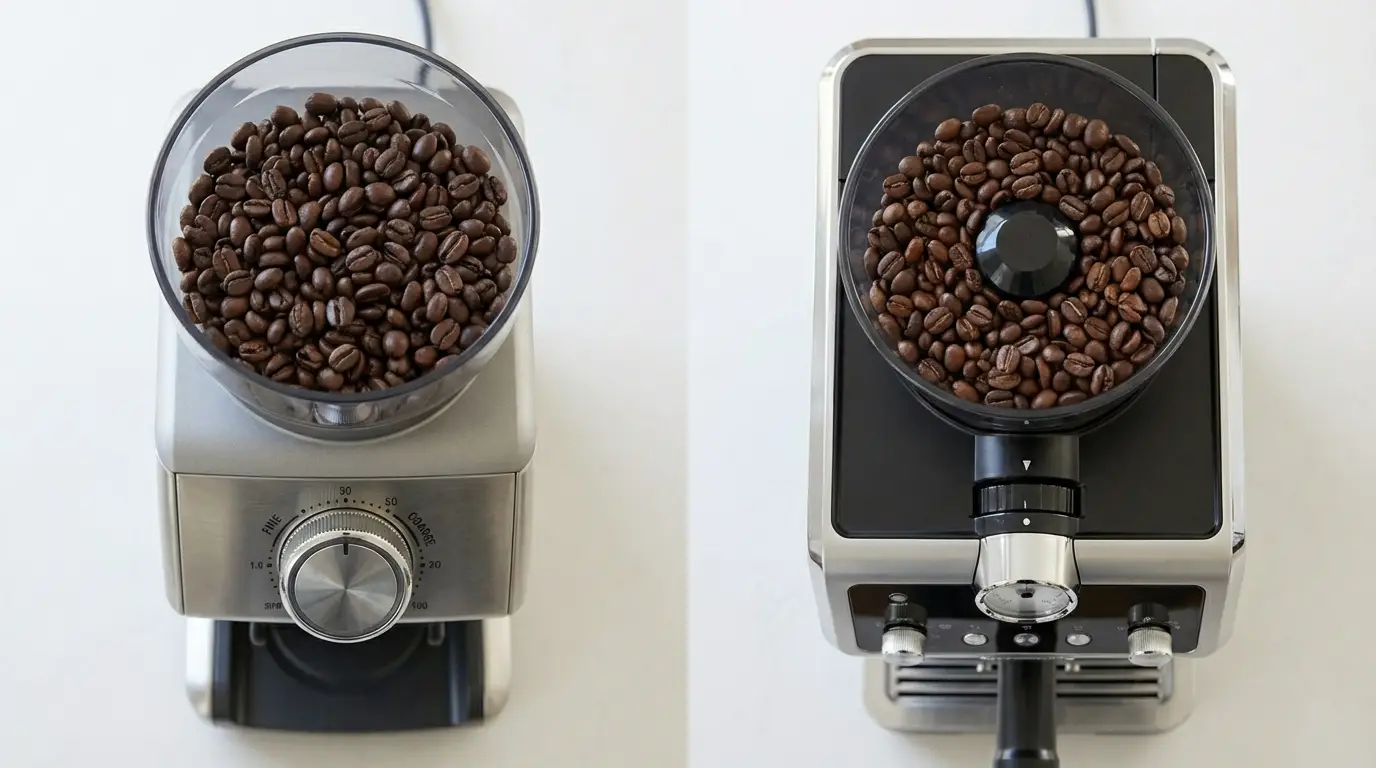
16 external grind settings with an adjustable inner burr that effectively multiplies your options. The hopper is removable for easy cleaning (important—coffee oils build up and go rancid). For the built-in grinder class, it’s surprisingly capable.
It’s not perfect—the Breville grinder has notable retention (about 1-2g stays in the chute between uses) and creates a lot of static. But with techniques like RDT and WDT, you can work around these issues.
DeLonghi’s Grinder
8 grind settings. That’s it. The conical burrs can get fine enough for espresso, but the jump between each setting is larger, which makes fine-tuning more difficult. The grinder internals are also harder to access for cleaning.
My take: Breville has the better grinder, and it’s not particularly close. When you’re trying to dial in espresso, the difference between 8 and 16+ settings is huge. One DeLonghi setting might be too coarse and the next too fine—with no option in between.
The Verdict on Both
Neither grinder is going to compete with a dedicated standalone grinder. But if you’re committed to the all-in-one format, Breville gives you significantly more control.
Espresso Shot Quality
Here’s where things get interesting.
Breville gives you adjustable pre-infusion (just hold the extraction button longer for a manual pre-infusion soak), consistent 9-bar pressure from the 2022+ OPV update, and a gradual pressure ramp that mimics what you’d find in higher-end machines. But—and this is important—it rewards good technique. Bad puck prep = bad shots. The machine won’t save you.
DeLonghi takes a more forgiving approach. It has automatic pre-infusion, wider puck distribution (the 51mm basket is more forgiving of minor distribution errors), and more automation in the extraction process. It’s designed so that even without perfect technique, you’ll get a drinkable shot.
In terms of ceiling potential, the Breville can produce higher-quality shots—more clarity, better crema, more flavor definition. But it takes practice and attention to get there.
In terms of floor potential, the DeLonghi produces more consistent “pretty good” shots without requiring you to obsess over every variable.
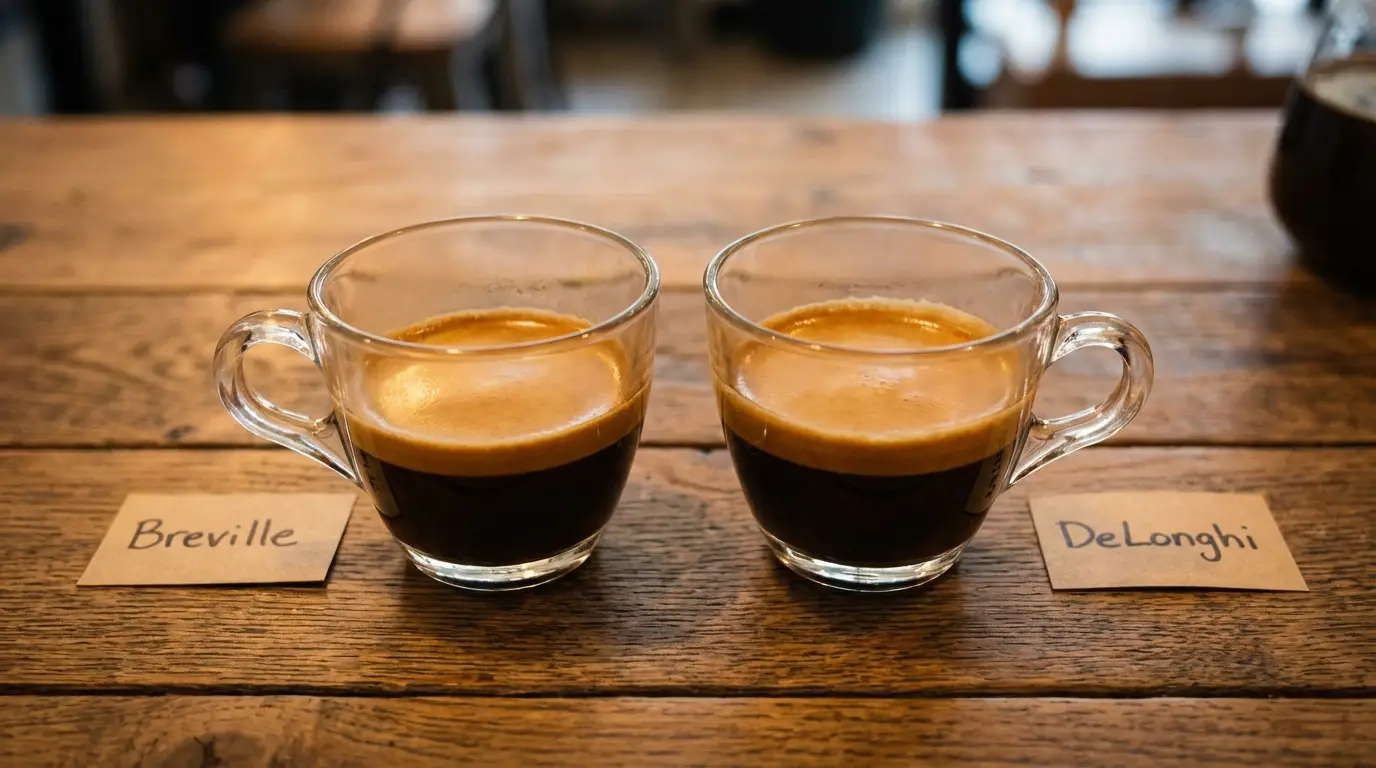
I’ve pulled shots from both on the same beans, same day. The Breville shots had more complexity and sweetness. The DeLonghi shots were perfectly acceptable but a bit flatter. This matches what the broader Reddit consensus reports.
Steam Wand
This one surprised me.
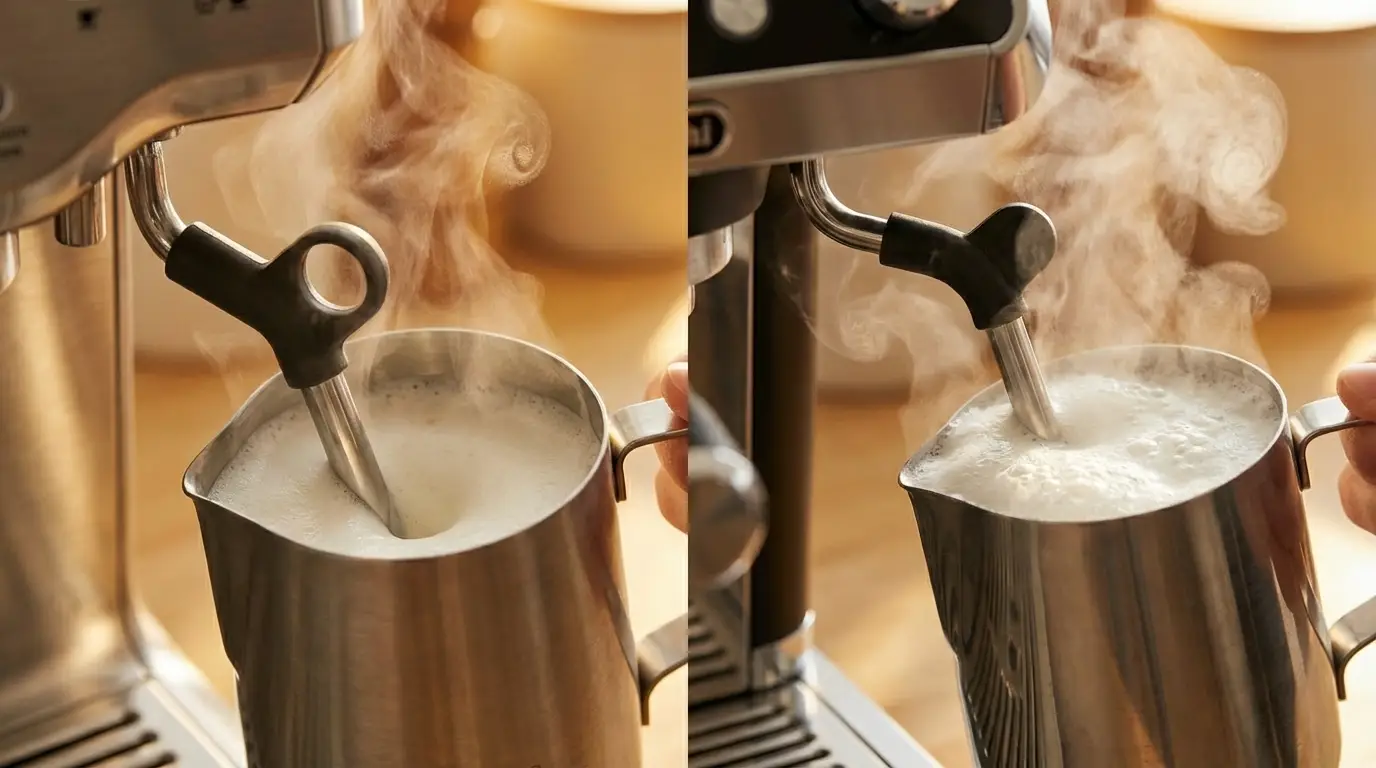
DeLonghi actually has a more powerful steam wand. It heats milk faster and produces more steam volume. If you make a lot of milk drinks and value speed, this is a genuine advantage.
Breville’s steam wand is less powerful but easier to control. For someone learning microfoam and latte art, the slower pace is actually helpful—you have more time to listen for the right hissing sound and position the wand correctly.
My preference: Breville for learning and precision microfoam. DeLonghi if you’re making four oat milk lattes for the family every morning and want speed.
Ease of Use
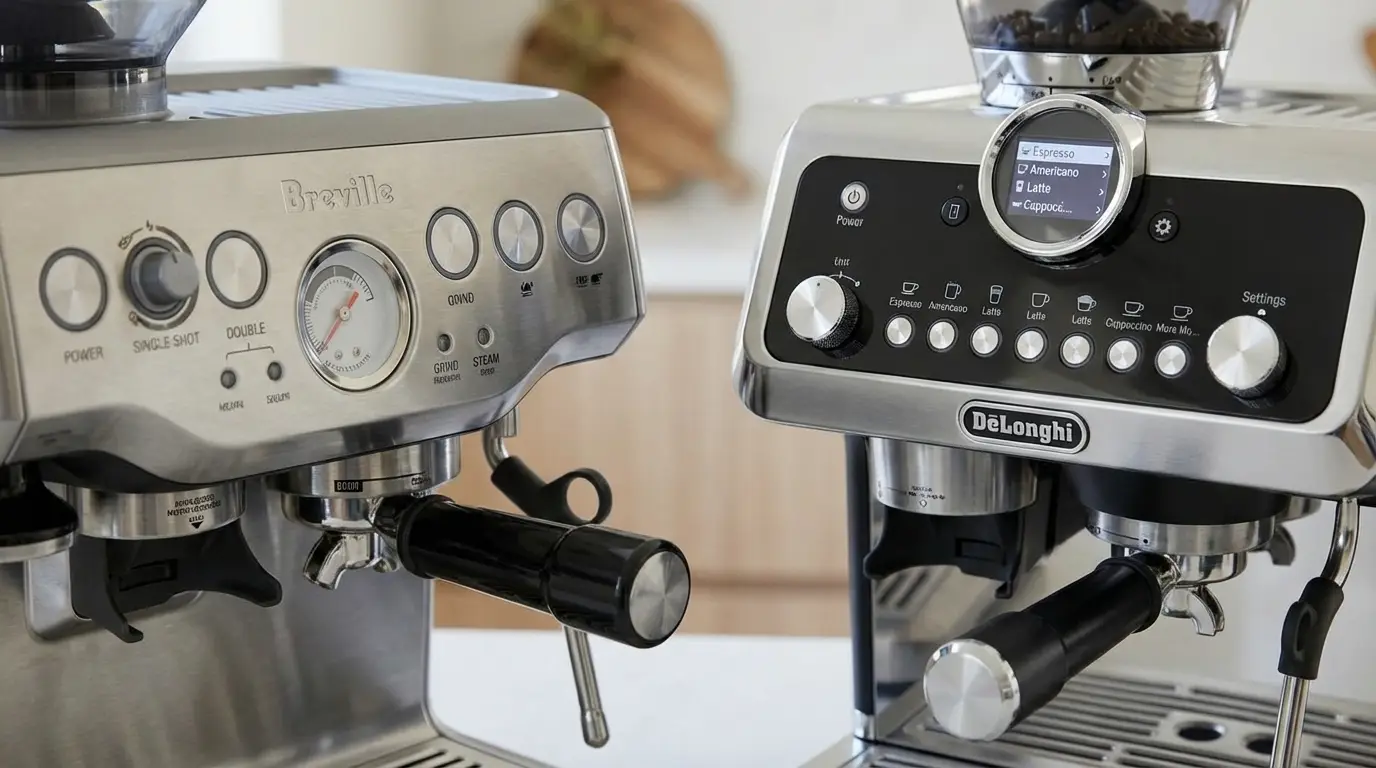
DeLonghi wins here for beginners. The drink menus, intuitive buttons, and automated features mean you can pull a decent shot within minutes of unboxing. Temperature is adjusted with a clearly labeled button (92/94/96°C). The machine actively guides you.
Breville has a steeper learning curve. Temperature adjustment is hidden in a button combo (hold PROGRAM, press 1-CUP for temperature selection). Pre-infusion is manual. There’s no drink menu—you control everything yourself.
But that learning curve is also why Breville owners tend to eventually pull better shots. You learn why things work, not just which button to press.
Mod Potential
If you’re the type who wants to tinker and upgrade:
Breville has a huge modding community. OPV adjustment, inner burr calibration, precision baskets, pressure profiling experiments—r/espresso is full of Barista Express mods. The machine is designed in a way that’s relatively accessible for modifications.
DeLonghi has very little mod documentation. The plastic construction makes hardware mods riskier, and the community hasn’t developed the same modding ecosystem.
If you see your machine as a long-term hobby platform, Breville is the obvious choice.
Maintenance
| Task | Breville | DeLonghi |
|---|---|---|
| Puck disposal | Easy knock-out (solenoid) | Slightly messier |
| Drip tray | Simple, easy clean | Fiddly design, gaps |
| Grinder access | Removable hopper | Harder to access |
| Back-to-back shots | No wait needed | Brief wait |
| Water tank access | Rear, manageable | Rear, similar |
Breville edges out on daily maintenance convenience. The solenoid valve giving dry pucks is a small thing that matters a lot when you’re making multiple drinks.
Longevity
Based on community reports from long-term owners:
Breville machines routinely show up in “5+ years and still going strong” threads on Reddit and Home-Barista. The metal construction and heated group head contribute to durability.
DeLonghi gets positive reports for 2-3 years. Beyond that, some users report grinder issues and general wear. That’s not bad for the price, but Breville’s track record is longer.
Who Should Buy Which?
| If You Are… | Get This |
|---|---|
| A total beginner who wants easy shots from day one | DeLonghi |
| An enthusiast who wants to learn and improve over years | Breville |
| Making lots of milk drinks quickly | DeLonghi (faster steam) |
| A family household with back-to-back shots | Breville (solenoid, fast recovery) |
| Budget-focused and want lowest entry price | DeLonghi |
| A tinkerer who wants to mod and upgrade | Breville |
| Prioritizing build quality and longevity | Breville |
My Final Take
If you want a machine that works well out of the box with minimal learning, the DeLonghi La Specialista is genuinely good. It’ll produce solid espresso and has a more powerful steam wand. For the price, it’s hard to argue with.
But if you’re willing to invest a few weeks learning technique, the Breville Barista Express will reward you with better espresso, more control, and a machine that’ll keep improving your skills over years. The build quality, grinder versatility, and modding ecosystem put it ahead for anyone who sees espresso as more than just a morning caffeine routine.
The Reddit consensus of roughly 60/40 in favor of Breville matches my experience. Both are good machines—Breville is just the one you’ll grow with.
FAQs
Can I use 58mm accessories with either machine?
No. Breville uses 54mm and DeLonghi uses 51mm. Both are non-standard sizes, meaning aftermarket accessory selection is more limited than 58mm machines. Breville has slightly more 54mm options available.
Which one is better for light roast espresso?
Breville, because of the finer grind adjustability and manual pre-infusion. Light roasts require precise extraction, and having 16+ grind settings instead of 8 makes dialing in much easier.
Is the DeLonghi La Specialista Evo or Opera worth the upgrade?
The Evo and Opera add features like cold brew options and more drink presets. If you value those extras, maybe. But the core espresso quality isn’t dramatically different from the Arte. The jump from DeLonghi to Breville is more meaningful than from Arte to Opera.
How loud are they?
Both have similar grinder noise. The DeLonghi’s pump is slightly louder in my experience, though this varies by unit. Neither is quiet enough for 5 AM without waking someone.
Will I outgrow either machine?
Eventually, probably—if espresso becomes a serious hobby. But the Breville gives you more room to grow before hitting that ceiling, especially with mods. Most people who outgrow either machine end up going to a separate grinder + machine setup.
Related Guides:

Mikael
Home espresso enthusiast and Breville specialist. Helping you master the art of coffee brewing from your own kitchen.
Learn more about me →