Breville vs Gaggia Classic Pro: Which to Buy?
Detailed comparison of Breville Barista Express vs Gaggia Classic Pro. Which espresso machine is right for your home setup? Real user perspective.
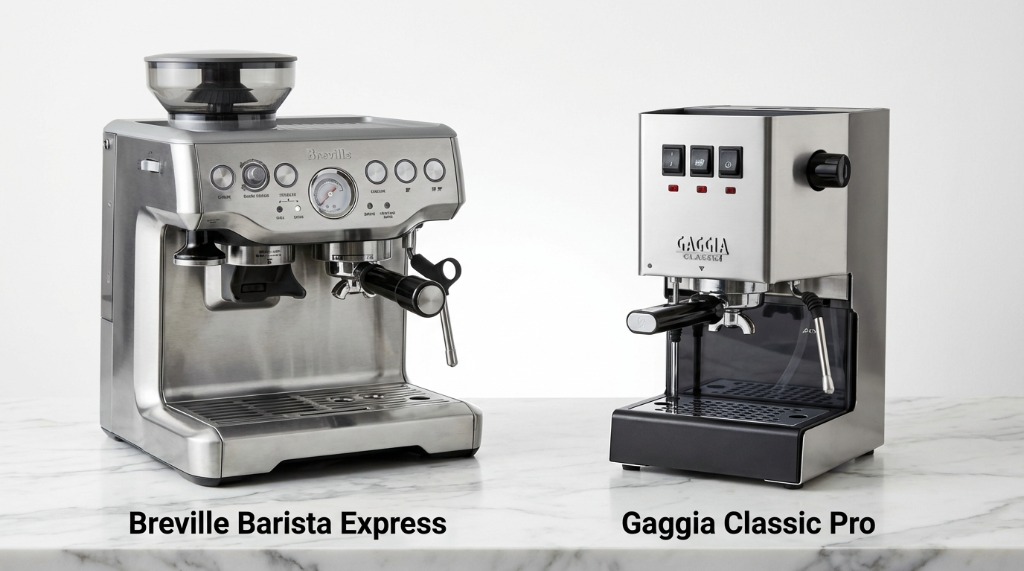
Two of the most recommended beginner espresso machines—but completely different philosophies. After using my Breville Barista Express for years and spending time with a friend’s Gaggia Classic Pro, I can give you an honest comparison of what each machine does well and where they fall short.
The short answer? Breville is easier, Gaggia has more potential. But your best choice depends on what kind of home barista you want to be.
Quick Comparison Table
| Feature | Breville Barista Express | Gaggia Classic Pro |
|---|---|---|
| Price | ~$700-750 | ~$450-500 |
| Built-in Grinder | Yes (conical burr) | No (need separate) |
| Boiler Type | Thermocoil | Single boiler |
| Pressure Gauge | Yes, built-in | No (can add aftermarket) |
| PID Temperature | Digital control | Manual (mod available) |
| Steam Pressure | Moderate | Strong |
| Mod Potential | Limited | Extensive |
| Learning Curve | Gentle | Steeper |
| Size | Larger footprint | Compact |
All-in-One vs Build Your Setup
This is the fundamental difference:
Breville Barista Express
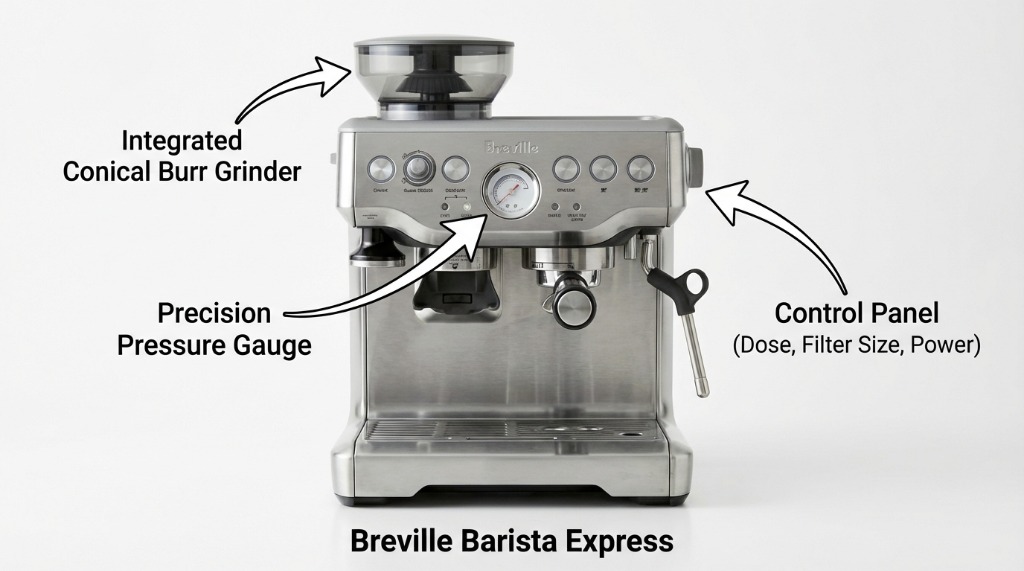
Everything you need in one box:
- Integrated conical burr grinder
- Pressure gauge
- Digital temperature control
- Steam wand
- Dosing tools included
- Preset volume buttons
Out of the box experience: Plug in, add beans and water, follow the simple instructions, pull a shot. You can be making espresso in 30 minutes.
Gaggia Classic Pro
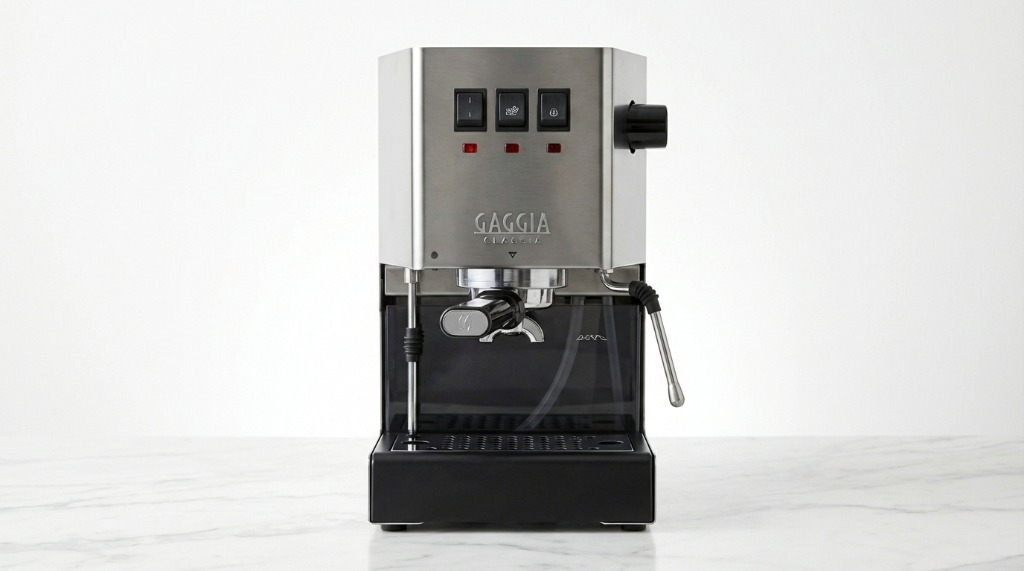
The machine only:
- 58mm commercial portafilter
- Professional 3-way solenoid valve
- Traditional single boiler design
- Powerful steam wand
Out of the box experience: You also need to buy a grinder ($150-400+), scale, tamper, distribution tools. Total setup cost often exceeds the Breville.
My take: The Breville is genuinely ready to use. The Gaggia requires investment in a grinder before you can make coffee at all.
Espresso Quality Potential
Breville Barista Express: 7.5/10
The shots from a well-dialed Breville are genuinely good. The built-in grinder produces decent consistency, the thermocoil heating maintains reasonable temperature stability, and the 15-bar pump (adjustable with OPV mod) delivers proper extraction.
Strengths:
- Consistent temperature shot-to-shot
- Pressure gauge helps visual feedback
- Programmable shot volumes
- Pre-infusion built in
Limitations:
- Grinder can’t go ultra-fine for light roasts
- 54mm basket limits upgrade options
- Thermocoil has slower recovery than boiler
- Less headroom for advanced techniques
Gaggia Classic Pro: 8.5/10 (with mods: 9/10)
The Gaggia uses more traditional espresso machine architecture. The single boiler, commercial-style portafilter, and 3-way solenoid give it serious potential—especially after modification.
Strengths:
- 58mm commercial-standard portafilter
- Excellent temperature stability after warm-up
- 3-way solenoid means dry puck and cleaner workflow
- Responds beautifully to mods (PID, OPV, 9-bar spring)
Limitations:
- No built-in grinder—budget another $200-400
- No pressure gauge without modification
- Single boiler = must temperature surf for milk drinks
- Steeper learning curve
My take: Stock for stock, the Breville and Gaggia produce similar quality espresso. But the Gaggia’s ceiling is higher with modifications and a quality grinder.
The Grinder Question
This is where the comparison gets complicated.
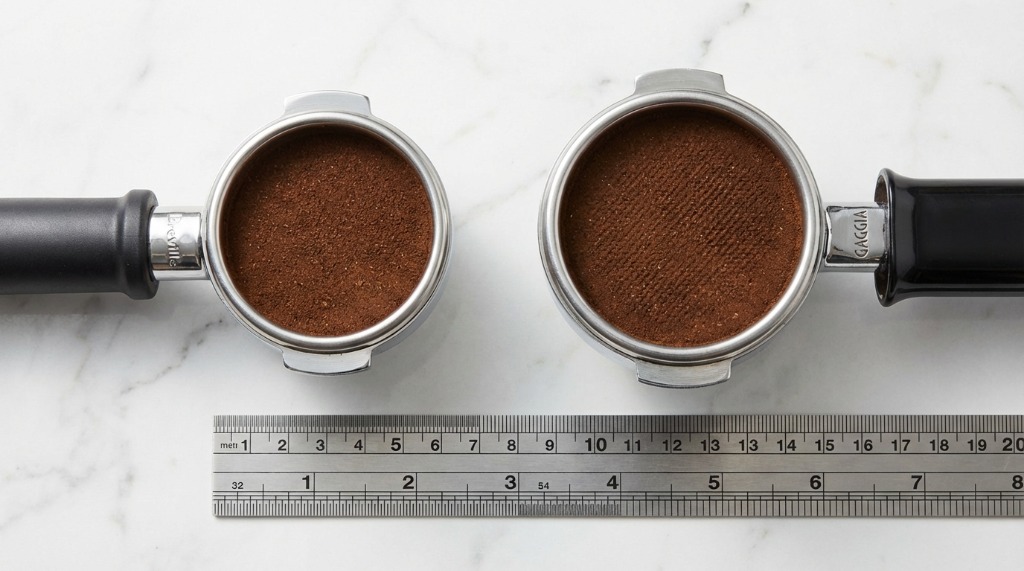
Breville’s Built-in Grinder
| Pros | Cons |
|---|---|
| Convenient—always ready | Limited fine adjustment |
| Adequate for most beans | Struggles with ultra-light roasts |
| Doses directly into portafilter | Can’t upgrade without replacing machine |
| No extra counter space | Retention ~1-2g |
The Breville grinder is “good enough” for 90% of home baristas. It handles medium and dark roasts well, produces consistent grounds, and requires no additional investment.
Gaggia Needs a Separate Grinder
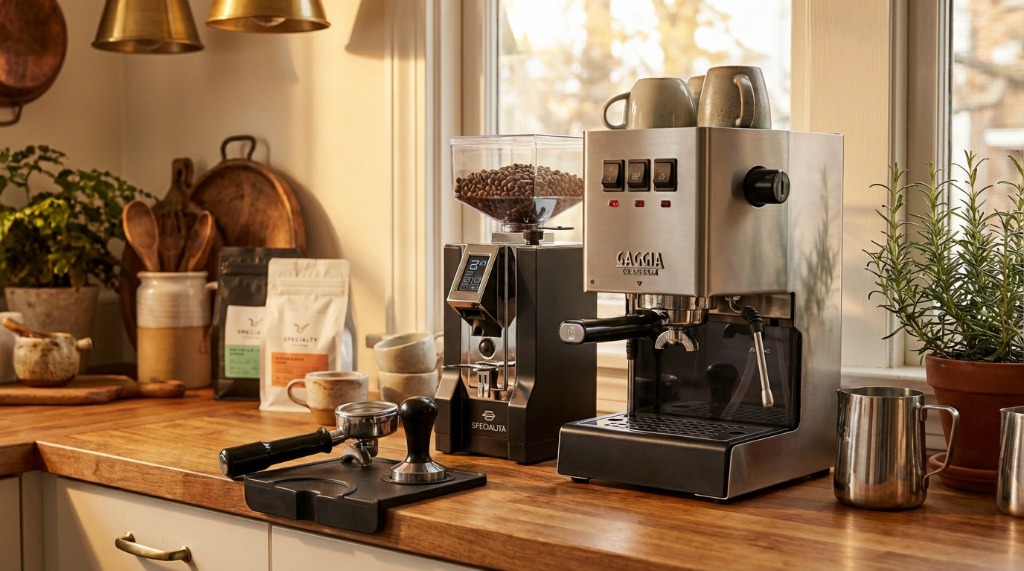
Common pairings:
- Eureka Mignon Notte (~$300): Excellent mid-range option
- Baratza Sette 270 (~$400): Popular, great grind quality
- 1Zpresso JX-Pro (~$200): Manual, exceptional value
- Breville Smart Grinder Pro (~$250): The irony is real
The math:
- Gaggia ($500) + Eureka Notte ($300) = $800
- Breville Barista Express ($700) = $700
With a good grinder, the Gaggia setup often costs more than the Breville all-in-one. But that grinder will outlast most machines.
Steam Power and Milk Drinks
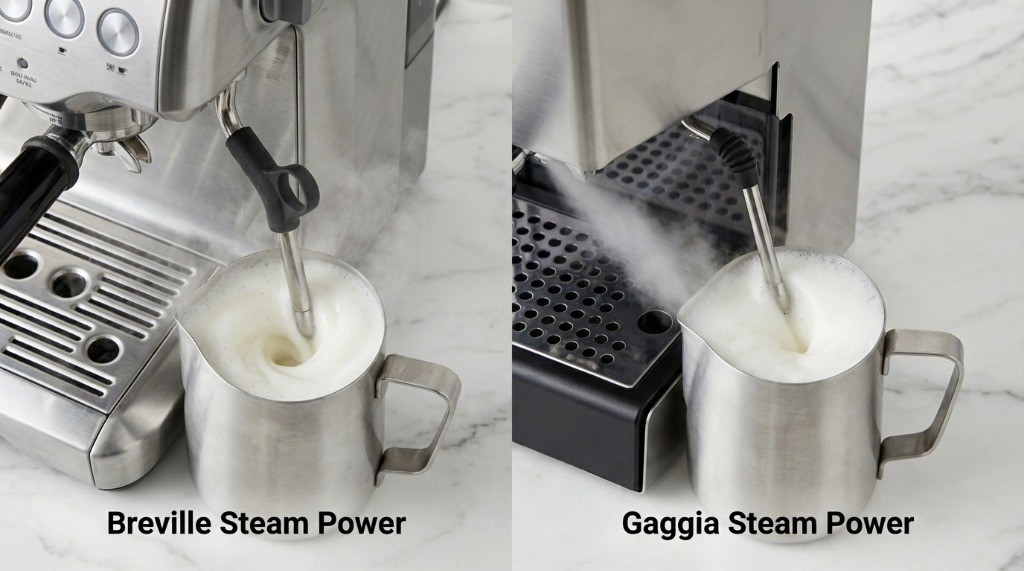
Breville Barista Express
Steam is… adequate. It takes about 30-40 seconds to texture milk for a latte. The steam pressure is moderate—not as powerful as commercial machines, but enough to create decent microfoam.
For latte art: Totally doable. I can pour basic hearts and tulips. The limitation is more skill than machine.
Gaggia Classic Pro
Noticeably more steam power. The single boiler runs hotter in steam mode, creating stronger pressure. Milk textures faster (20-30 seconds) and the steam tip is more forgiving.
For latte art: Better steam = easier microfoam. The more powerful wand gives you more control over the texture.
Catch: Single boiler means you pull your shot, then wait 30-60 seconds for temperature to climb into steam mode. Then wait again to drop back for the next shot. This is “temperature surfing.”
Modification Potential
Breville: Limited Mods Available
| Mod | Difficulty | Impact |
|---|---|---|
| OPV adjustment (9 bar) | Easy | Better extraction |
| Naked portafilter | Easy | Visual feedback |
| IMS baskets | Easy | Better flow |
| Bottomless portafilter | Moderate | Diagnose channeling |
The Breville isn’t really designed for modding. Most upgrades are accessories rather than internal modifications.
Gaggia: Modder’s Dream
| Mod | Difficulty | Impact |
|---|---|---|
| OPV spring (9 bar) | Easy | Much better extraction |
| PID controller | Moderate | Perfect temp stability |
| Pressure gauge | Easy | Visual extraction feedback |
| Bottomless portafilter | Easy | Standard 58mm |
| IMS baskets | Easy | Better flow |
| Dimmer switch mod | Moderate | Pre-infusion control |
| Silicone steam tube | Easy | More flexible wand |
A fully modded Gaggia Classic Pro can genuinely compete with machines costing 2-3x as much. The community support for mods is extensive.
Build Quality and Longevity
Breville Barista Express
- Housing: Stainless steel exterior, plastic internal components
- Expected life: 3-7 years with regular maintenance
- Repair: Proprietary parts, service through Breville
- Common issues: Grinder internals, thermocoil scaling
Gaggia Classic Pro
- Housing: All-metal construction, commercial heritage
- Expected life: 10-20+ years with maintenance
- Repair: Standard parts, repairable by any tech
- Common issues: Solenoid valve, gaskets (all easily replaced)
My take: The Gaggia is built like a commercial appliance from 30 years ago—because it basically is. These machines get passed down through generations. The Breville is built like modern consumer electronics—works great until something fails, then replacement is often easier than repair.
Who Should Choose Breville?
The Breville Barista Express is right for you if:
- You want to start pulling shots immediately
- You don’t want to research grinders separately
- Counter space is limited (one machine vs two)
- You value convenience over maximum potential
- You’re not interested in modifying your setup
- Budget is around $700 all-in
Perfect for: People who want great espresso without becoming hobbyists.
Who Should Choose Gaggia?
The Gaggia Classic Pro is right for you if:
- You enjoy tinkering and upgrading
- You already own (or will buy) a quality grinder
- Longevity matters—10+ years of use
- You want a machine that can grow with your skills
- Temperature surfing doesn’t bother you
- You’re excited by the mod community
Perfect for: People who see espresso as a hobby and enjoy the process of optimization.
My Honest Recommendation
If I’m buying for a friend who asks “I just want good espresso”: Breville Barista Express. It’s genuinely easier, produces good coffee immediately, and doesn’t require decision fatigue about grinders and accessories.
If I’m buying for myself knowing what I know now: Gaggia Classic Pro + Eureka Mignon grinder + PID mod. The ceiling is higher, the machine will last longer, and I enjoy the tinkering.
The awkward middle ground: If you buy the Breville and love espresso, you’ll eventually outgrow it. If you buy the Gaggia and just want morning coffee, you might resent the complexity.
Neither choice is wrong. Both make actual espresso that tastes good.
FAQs
Is the Breville grinder really good enough?
For most people, yes. It’s not competition-grade, but it produces consistent results for medium and dark roasts. Light roast enthusiasts will hit its limitations faster.
Can I add a grinder to the Breville later?
Yes, and many people do. You can use the Breville as machine-only with an external grinder. But at that point, you might wonder why you didn’t get the Gaggia.
How hard is temperature surfing on the Gaggia?
It takes practice. You pull your shot, switch to steam, wait for the temperature to climb, steam milk, then switch back and wait to cool down. After a week, it becomes routine. A PID mod eliminates this entirely.
Which has better resale value?
The Gaggia, significantly. These machines hold value because they last forever and have an enthusiast following. Brevilles depreciate like typical kitchen appliances.
Why not just get the Breville Dual Boiler?
If budget allows, the Breville Dual Boiler ($1500+) is genuinely excellent—commercial-level performance without Gaggia’s quirks. But at that price point, you’re comparing against many other options.
Key Takeaways
- Breville Barista Express: All-in-one convenience, great starting point, limited upgrade path
- Gaggia Classic Pro: Higher ceiling, requires separate grinder, modder’s dream
- For casual users: Breville is the easier, faster path to good espresso
- For hobbyists: Gaggia offers more long-term growth potential
- Both make real espresso—the “best” choice depends on your priorities
Related Guides:

Mikael
Home espresso enthusiast and Breville specialist. Helping you master the art of coffee brewing from your own kitchen.
Learn more about me →