Breville Warm-Up Time: Speed Up Your Morning
Learn how to speed up your Breville espresso machine warm-up for better morning shots. Practical preheat routines, thermal stability tips, and workflow optimization.
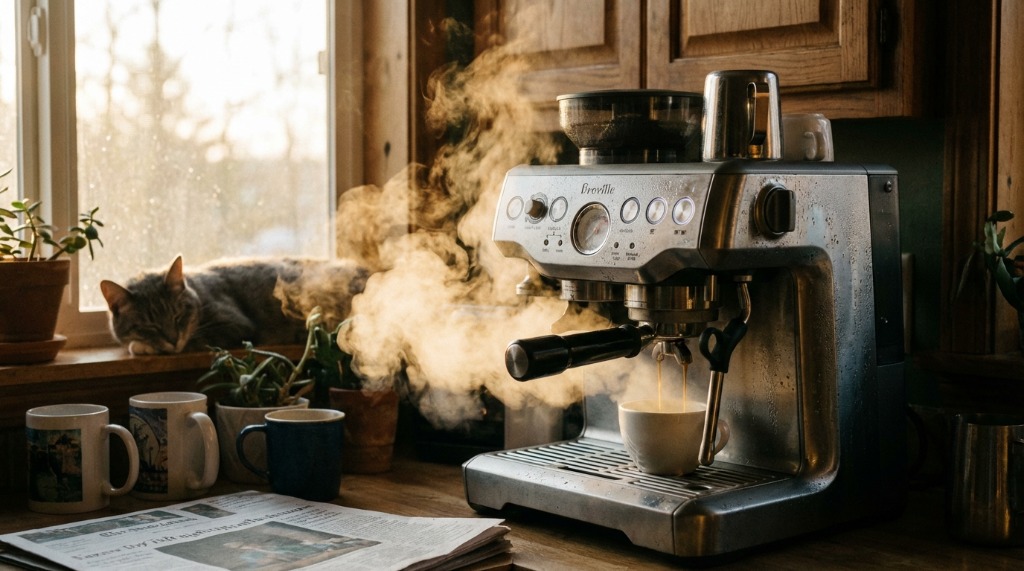
My first hundred espresso shots were sour disasters.
Not because of grind size. Not because of dose. Because I pulled shots the moment the “ready” light came on—and my grouphead was still cold.
Once I learned that thermal stability matters more than the ready light, my mornings changed completely. Same beans, same grind, same dose—but suddenly, sweet, balanced shots.
This guide shows you how to warm up your Breville properly without wasting 20 minutes staring at a machine.
What “Warm” Really Means on Breville Machines
”Ready Light” vs Full Thermal Stability
The ready light means the boiler has reached temperature. It doesn’t mean the metal path is hot.
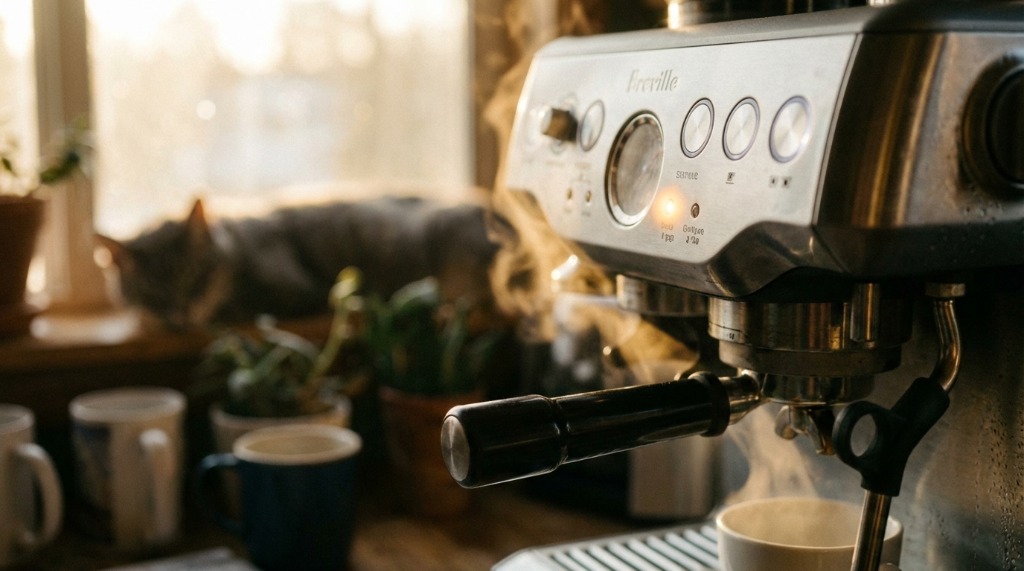 The “ready” light on a Breville machine indicates the internal boiler is hot, but the heavy metal grouphead and portafilter still need active preheating to reach thermal stability.
Water travels through:
- The grouphead (heavy brass or aluminium)
- The portafilter (also metal, often cold from sitting overnight)
- The basket (thin metal, cools quickly)
- Your cup (probably room temperature)
If any of these are cold, they absorb heat from the water. Your 93°C water hits cold metal and arrives at the coffee bed at 85°C. That’s under-extraction territory.
Why Temperature Stability Changes Taste
Temperature directly affects extraction rate:
- Too cold → Under-extraction → Sour, thin, acidic
- Optimal → Balanced extraction → Sweet, full-bodied, clean
- Too hot → Over-extraction → Bitter, harsh, hollow
The difference between a sour first shot and a sweet second shot is often just thermal stability. The coffee didn’t change—the metal got hotter.
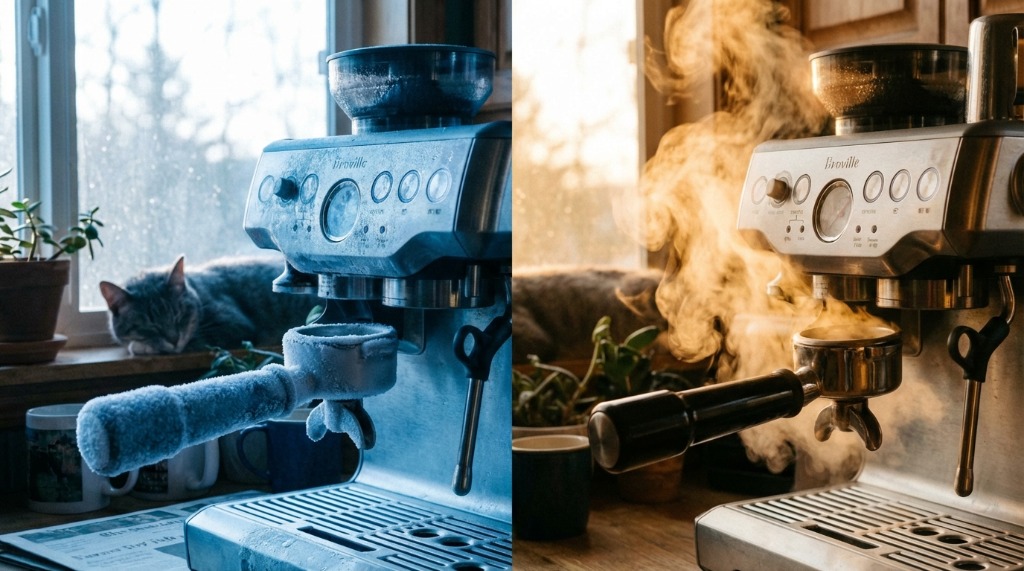 A visual conceptualization of thermal states: A “cold” machine (left) leads to temperature loss and sour shots, while a “hot” machine (right) maintains the target temperature throughout the extraction.
Which Parts Need Heat
| Component | Why It Matters |
|---|---|
| Grouphead | Largest thermal mass; absorbs most heat from water |
| Portafilter | Cold portafilter = cold puck = sour extraction |
| Basket | Thin metal, but direct contact with coffee |
| Cup | Cold cup cools espresso instantly; affects drinking experience |
You don’t need to heat all of these perfectly. But you need to heat them consistently—the same way every morning.
Typical Warm-Up Times (By Breville Heating Style)
ThermoJet Models (Fast Start)
Breville’s ThermoJet system heats water in about 3 seconds. Models like the Bambino, Bambino Plus, and Barista Pro reach brew-ready temperature almost instantly.
But here’s the catch: The water is hot. The grouphead is not.
Even with ThermoJet, you still benefit from a quick preheat routine. The speed advantage is real—you just can’t skip the metal heating step entirely.
Thermoblock/Thermocoil Style Warm-Up
Machines like the Barista Express use thermoblock heating. The machine signals “ready” within 30-60 seconds, but the grouphead and portafilter need more time to stabilize.
Many users report that even after the ready light, a 5-10 minute passive wait (or a quick preheat flush) produces better shots.
What You Should Expect in Real Mornings
Forget the 20-minute warm-up myth. What actually works:
- Passive wait: 10-15 minutes with portafilter locked in
- Active preheat: 60-90 seconds with a blank shot routine (faster and more consistent)
A short, active preheat routine beats a long passive wait every time—because you’re heating the parts that actually matter.
Morning Workflow (Fast, Repeatable)
60-90 Second “Heat the Metal” Routine
Here’s my daily preheat workflow:
- Turn on machine – Ready light comes on
- Lock empty portafilter in grouphead – Portafilter absorbs heat from group
- Wait 30-45 seconds – While you prep beans or grab milk
- Run blank shot – Water through portafilter into cup (heats group + portafilter + cup)
- Dump water, dry cup – Now everything is hot
- Grind, dose, tamp – Pull your actual shot
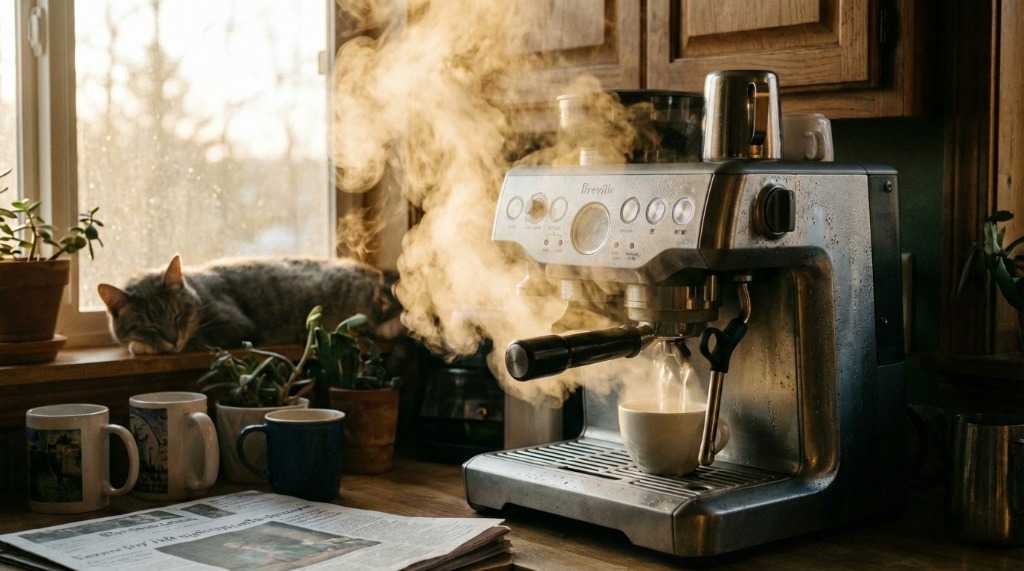 Running a blank shot (hot water without coffee) into your cup is the most effective way to simultaneously heat the grouphead, portafilter, and the cup itself.
Total time: 60-90 seconds. No passive waiting. Consistently hot hardware.
Cup and Portafilter Preheat Methods
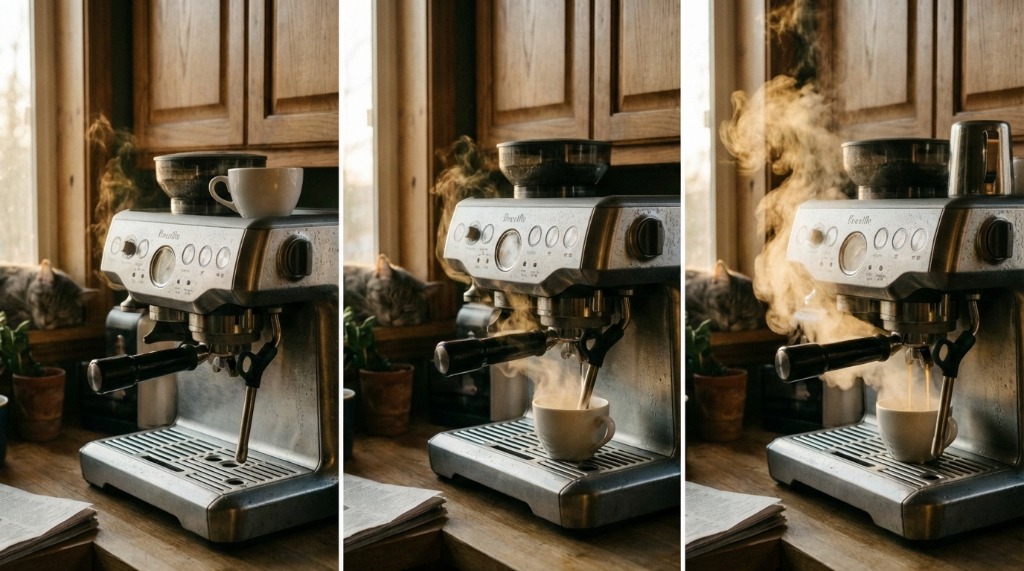 Comparing three warming methods: Passive warming on the cup tray (left), active warming using the hot water dispenser (center), and the “blank shot” flush through the portafilter (right).
Choose one approach and stick with it:
Option A: Blank shot into cup
- Run water through empty portafilter into your espresso cup
- Heats portafilter, basket, and cup simultaneously
- Dump water, wipe cup dry, proceed
Option B: Hot water flush + separate cup warming
- Run hot water through portafilter (into drip tray)
- Fill cup with hot water from steam wand or kettle
- Dump both, dry thoroughly before dosing
Option A is faster. Option B uses less water if you’re conscious about waste.
Sequence That Reduces Wasted Time
Here’s the optimized morning flow:
- Turn on machine → Walk away to prep other things
- Prep beans and milk → While machine heats
- Preheat flush → 30 seconds, blank shot into cup
- Grind, dose, tamp → While cup is still warm
- Pull shot → Into preheated cup
- Steam milk → If making lattes/cappuccinos
- Quick rinse and wipe → Reset for next use
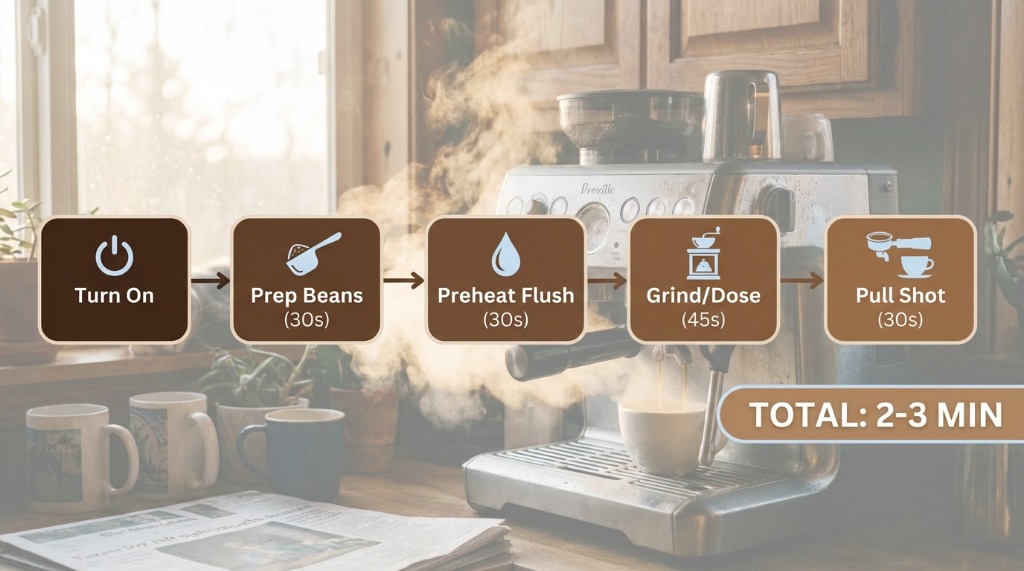 An optimized morning workflow timeline: From turning on the machine to the final pull, the total process for a balanced espresso should only take 2-3 minutes if preheating is integrated effectively.
Total espresso-in-hand time: 3-4 minutes from walking into the kitchen.
Tools That Make Warm-Up Faster
Must-Have Basics
- Scale – For consistent dosing (no re-grinding because you dosed wrong)
- Timer – Most Brevilles have one; use it
- Dry towel/cloth – Essential for drying basket and portafilter after flushing
Wet baskets cause channeling. Always dry after your preheat flush.
Nice-to-Have Speed Helpers
- Smart plug or outlet timer – Set machine to turn on 10 minutes before you wake up; it’s already hot when you arrive
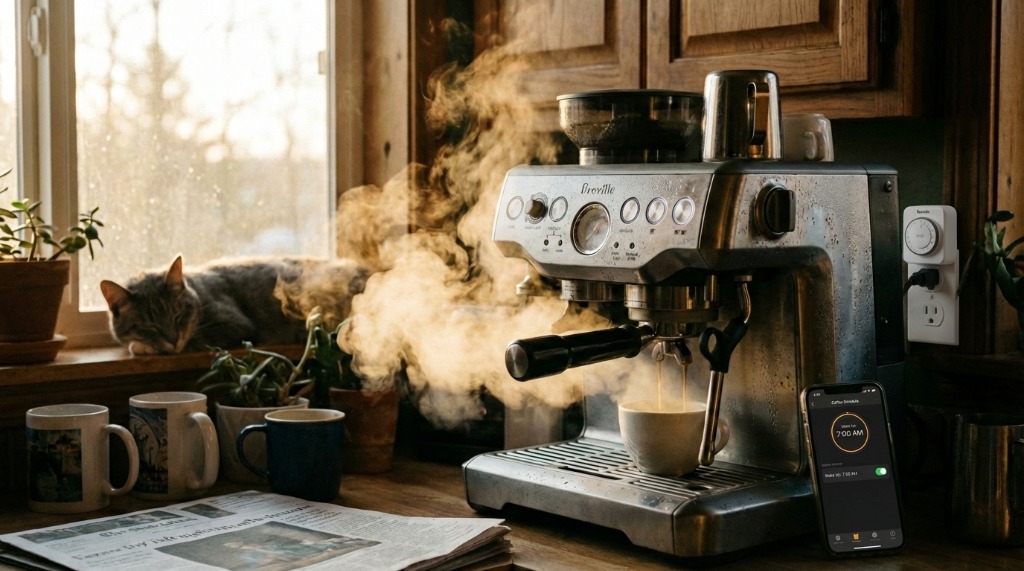 Using a smart plug to schedule your Breville’s warm-up ensures the machine is thermally stable the moment you walk into the kitchen, saving you time and improving your first shot of the day.
- Insulated cup – Maintains espresso temperature longer; less sensitive to preheat timing
A smart plug is probably the highest-impact “upgrade” for morning speed. Your machine warms up while you sleep.
When an External Kettle Helps
A quick-boil kettle can:
- Warm cups without running blank shots through the machine
- Provide rinse water for portafilter cleaning
- Reduce the number of blank shots needed
If you’re making multiple drinks back-to-back, kettle-warmed cups save time and water.
Espresso Basics During Warm-Up
Why Cold Hardware Can Trick Your Dial-In
If you dial in with cold hardware, you’re compensating for low temperature with grind adjustments. Then when the machine is fully warm, your recipe is “wrong.”
Symptom: First shot is fine, second shot runs fast and tastes bitter.
Cause: You ground finer to compensate for cold—now with hot hardware, it’s over-extracted.
Fix: Always dial in after your preheat routine, not before.
Baseline Recipe and What to Adjust First
Start every morning with the same baseline:
| Parameter | Typical Starting Point |
|---|---|
| Dose | 18g |
| Yield | 36g (1:2 ratio) |
| Time | 25-30 seconds |
| Preheat | Same routine, every day |
If your shot is off, don’t change grind immediately. First check: did you do your preheat routine? Is everything at normal temperature?
Simple Consistency Rules
- Same warm-up routine before changing grind – Eliminate thermal variables first
- First shot of the day is your test shot – If it’s sour, preheat wasn’t enough (not a grind problem)
- Don’t adjust based on cold shots – Heat the machine properly, then evaluate
Consistency comes from removing variables. Thermal stability is the biggest variable in morning espresso.
Milk Steaming Without Slowing Down
Timing: Start Steaming While Espresso Rests
If your workflow allows:
- Pull espresso shot
- Set cup aside (espresso rests 10-15 seconds while you steam)
- Steam milk
- Pour
Espresso doesn’t degrade in 15 seconds. This parallel workflow saves time without sacrificing quality. For more tips, see the complete daily routine guide.
Fast Milk Setup
Speed comes from preparation:
- Cold milk – Start with refrigerated milk (steams faster and better)
- Chilled jug – Keep pitcher in fridge if possible
- Quick purge – Burst of steam before inserting wand (clears condensation)
- Wipe + purge immediately after – Don’t let milk dry on the wand
This routine adds maybe 10 seconds but prevents crusty steam wand buildup that slows future sessions.
If Your Machine Transitions Slowly
Single boiler machines need time between brewing and steaming. Use that wait time productively:
- Rinse the portafilter
- Wipe the steam wand
- Reset your station for the next drink
- Prep the next dose if making multiple drinks
Dead time becomes prep time.
Hygiene and Safety
Burn Prevention
After your preheat flush:
- Grouphead is hot – Don’t touch the metal around the portafilter lock
- Portafilter handle is warm – Use the plastic/wooden parts
- Steam wand gets very hot – Handle with care
It sounds obvious, but tired mornings and hot metal are a bad combination. Build awareness into your routine.
Steam Wand Hygiene
After every steaming session:
- Purge – Quick steam burst to clear milk from inside
- Wipe – Damp cloth to remove external milk residue
- Purge again – Optional second burst to ensure clear
Milk left on the wand dries and builds up. Old milk contaminates future drinks with off-flavours. Wipe every single time. See the full steam wand purging guide for more details.
Electrical Safety
- Keep counter dry – Water and electricity don’t mix
- Unplug before deep cleaning – Especially before descaling or moving the machine
- Don’t reach behind while machine is on – Hot components and electrical connections are back there
Basic precautions, but worth stating.
Troubleshooting: Still Getting Sour Shots in the Morning?
Symptom: First Shot Sour, Later Shots Better
Likely cause: Cold portafilter and grouphead.
Fix: Extend your preheat routine:
- Run a longer blank shot (10-15 seconds)
- Or run two short blank shots
- Keep portafilter locked in during entire warm-up period
If second shot is always better, you need more preheat on the first.
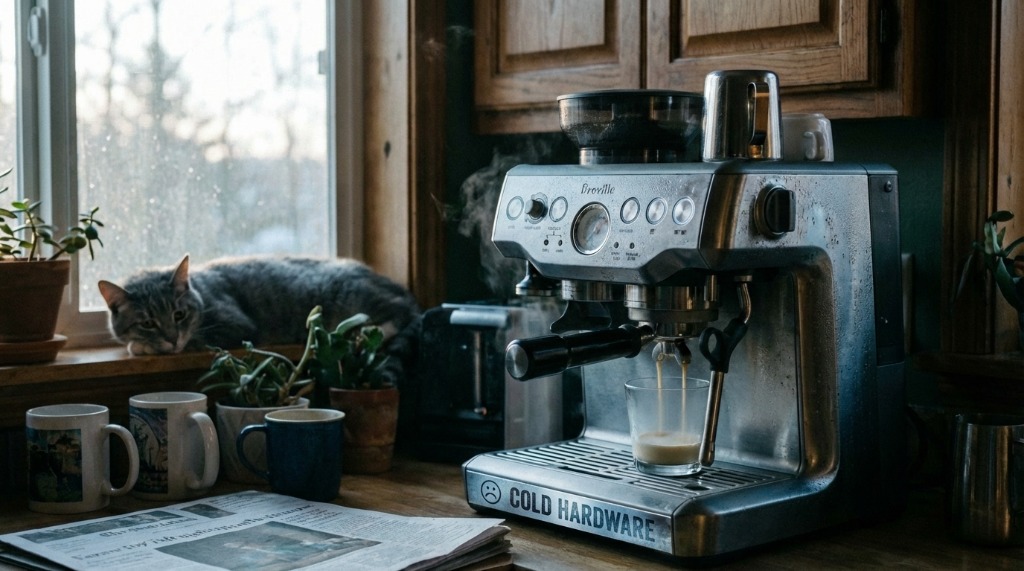 A common morning frustration: The first shot of the day (pulled with cold hardware) lacks body and sweetness, appearing thin and tasting overly acidic.
Symptom: Inconsistent Shot Times Each Morning
Likely cause: Inconsistent warm-up routine day-to-day.
Fix: Standardize your steps:
- Same wait time before blank shot
- Same blank shot duration
- Same time between flush and grinding
Randomness in warm-up creates randomness in extraction.
Symptom: Watery Espresso While “Machine Is Ready”
Likely cause: Not enough heat transfer to the metal path.
Fix:
- Add a blank shot (don’t just wait passively)
- Make sure portafilter stays locked in during warm-up
- Consider a longer preheat if you’re in a cold kitchen
The ready light lies. Trust your preheat routine.
FAQ
How Long Should I Warm Up a Breville Barista Express?
The Barista Express benefits from 5-10 minutes passive warm-up OR 60-90 seconds with an active preheat routine (blank shot through locked-in portafilter). Active preheat is faster and more consistent.
Do ThermoJet Brevilles Still Need Preheating?
Yes, but less. ThermoJet heats water instantly, but the grouphead and portafilter still need heat. A quick 30-second blank shot helps. You can skip the long passive wait, but don’t skip the flush.
Is a Blank Shot a Waste, or Part of Good Workflow?
Part of good workflow. The 30-60ml of water you “waste” heats all the metal that touches your coffee. The result is better extraction, more sweetness, and more consistent shots. Worth it.
Should I Preheat the Portafilter or Not?
Yes. A cold portafilter absorbs heat from your brew water. Lock it into the grouphead during warm-up, and run a blank shot through it before dosing. This alone can fix sour first shots.
What’s the Fastest Way to Get Café-Style Consistency Before Work?
- Smart plug – Machine turns on before you wake up
- Lock portafilter in overnight – Or at least during warm-up
- One blank shot – Into your cup to heat everything
- Same routine every day – Consistency beats optimization
Total active time: under 2 minutes. Consistency comes from the routine, not from waiting.
Conclusion
Key Takeaway
Speed comes from a short, repeatable preheat routine—not from waiting randomly for 20 minutes.
Heat the metal path:
- Grouphead (keep portafilter locked in)
- Portafilter and basket (blank shot through)
- Cup (catch that blank shot)
Do this the same way every morning, and your first shot will taste as good as your fifth.
Your Turn
What’s your current warm-up routine? Share your Breville model and morning workflow in the comments—I’ll help you optimize it for speed and consistency.

Mikael
Home espresso enthusiast and Breville specialist. Helping you master the art of coffee brewing from your own kitchen.
Learn more about me →