Dark Roast Espresso Settings for Breville
Dial in dark roast beans on your Breville Barista Express. Grind size, dose, ratio, temperature, and fixes for bitter or burnt-tasting shots.
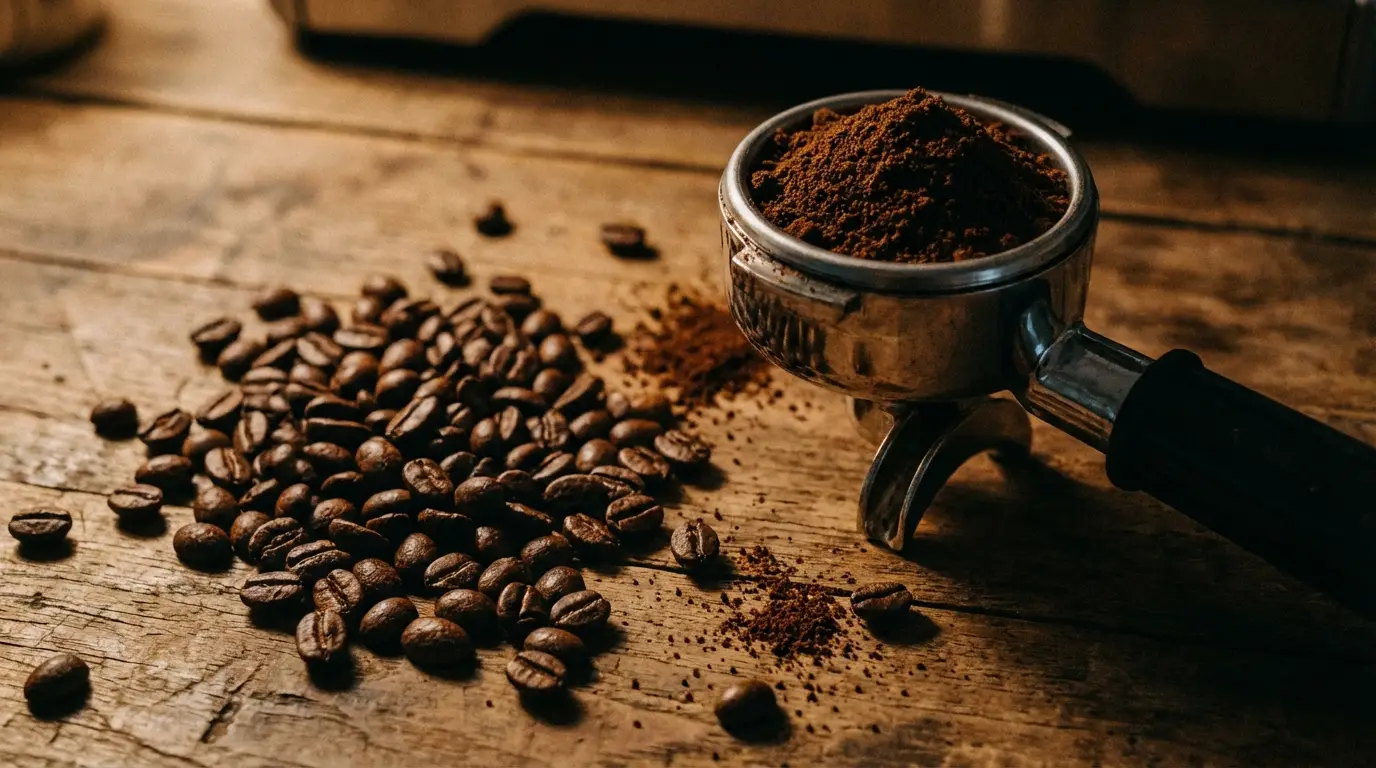
I remember switching from medium roast to a beautiful Italian dark roast and thinking I could use the same settings. The result was genuinely one of the worst shots I’ve ever pulled—bitter, ashy, and somehow both burnt and hollow at the same time.
Dark roast beans need fundamentally different treatment than medium or light roasts. They’re more porous, more soluble, and release their flavors much faster. Use light roast settings on dark beans and you’ll extract everything—including all the stuff you didn’t want.
Here’s exactly what to change on your Breville Barista Express.
Why Dark Roast Needs Different Settings
During roasting, dark roast beans spend more time at higher temperatures. This changes their physical structure in ways that directly affect extraction:
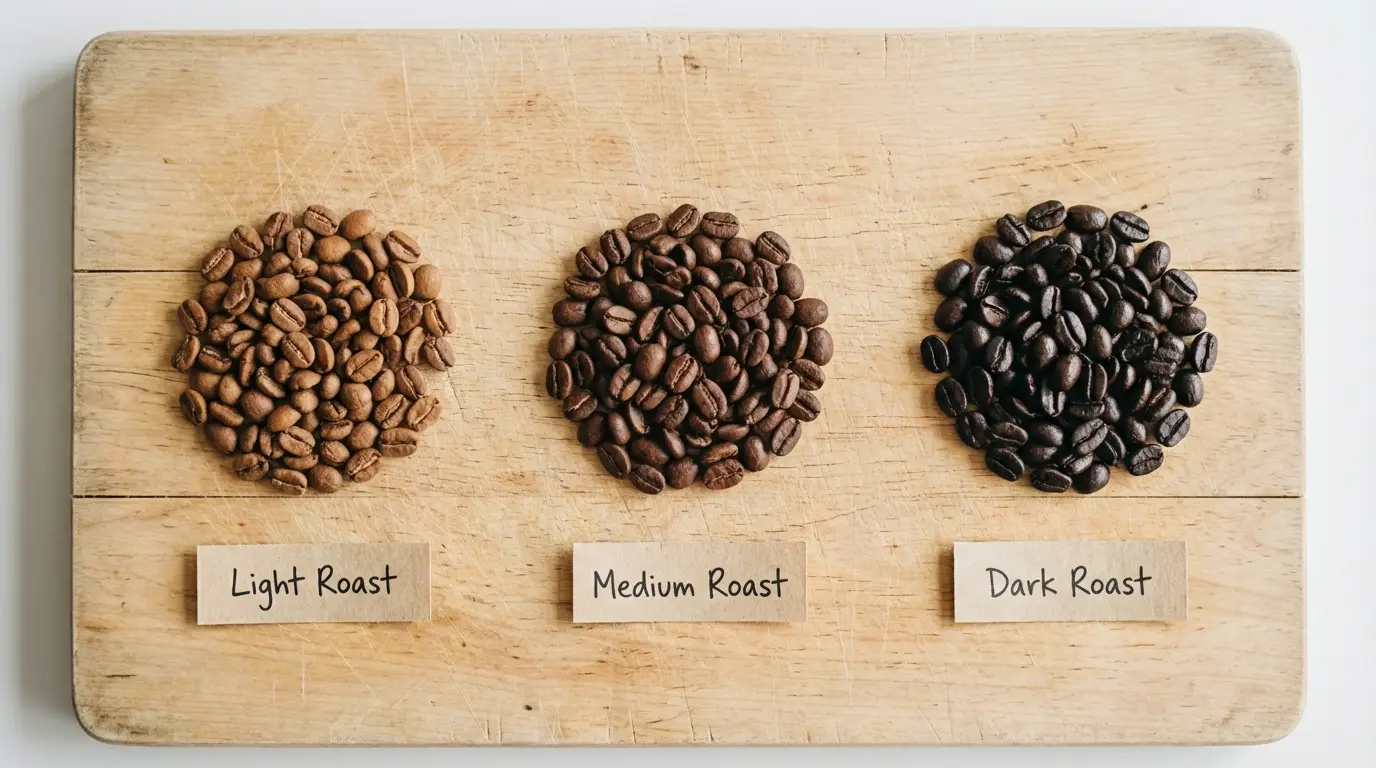
More porous: Longer roasting creates tiny air pockets throughout the bean, making it less dense and easier for water to penetrate.
More soluble: The sugars and oils are more developed and accessible. They dissolve into water faster.
More fragile: Breaks into finer particles when ground at the same setting as lighter roasts.
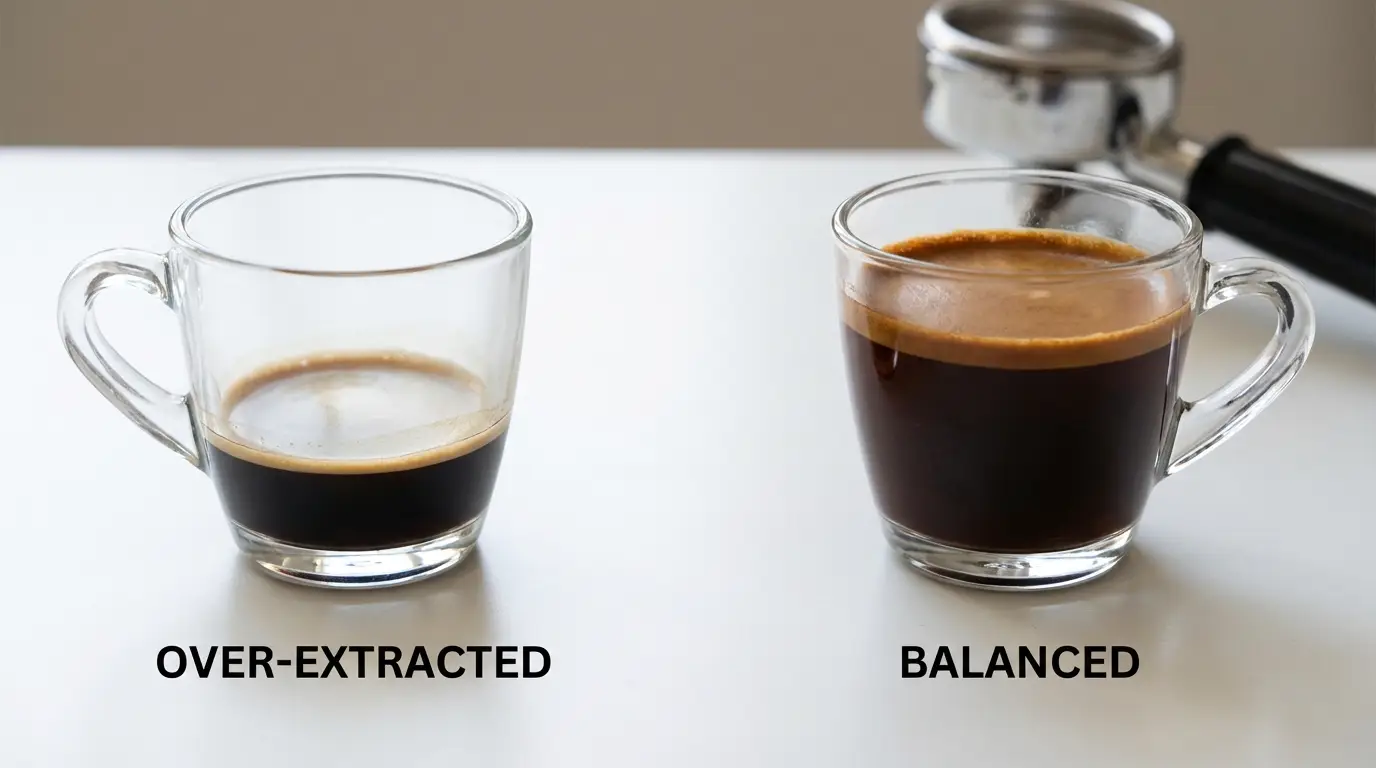
The result? Water flows through dark roast pucks faster, extracting more compounds in less time. If you use the same grind, ratio, and timing as your medium roast, you’ll massively over-extract—pulling out all the bitter, ashy, and astringent compounds that ruin the cup.
My Dark Roast Quick-Start Recipe
If you want to start somewhere and dial from there, here’s what works for me:
| Parameter | Setting |
|---|---|
| Dose | 18g |
| Grind size | 9-11 on Breville (coarser than medium roast) |
| Ratio | 1:1.5 (18g in → 27g out) |
| Temperature | Medium (default 93°C) or Low (90°C) |
| Extraction time | 25-30 seconds |
| Target taste | Thick, syrupy, low bitterness, chocolate notes |
This won’t be perfect for every dark roast, but it’s a solid starting point that avoids the worst mistakes.
Setting Up Each Variable
Grind Size: Go Coarser Than You Think
This is the most important adjustment. On the Breville Barista Express:
- Medium/light roast starting point: Grind setting 5-8
- Dark roast starting point: Grind setting 9-11
Why coarser? Because dark roast grounds are already more porous and extract faster. A finer grind would increase surface area and contact time, pushing you deep into over-extraction territory.
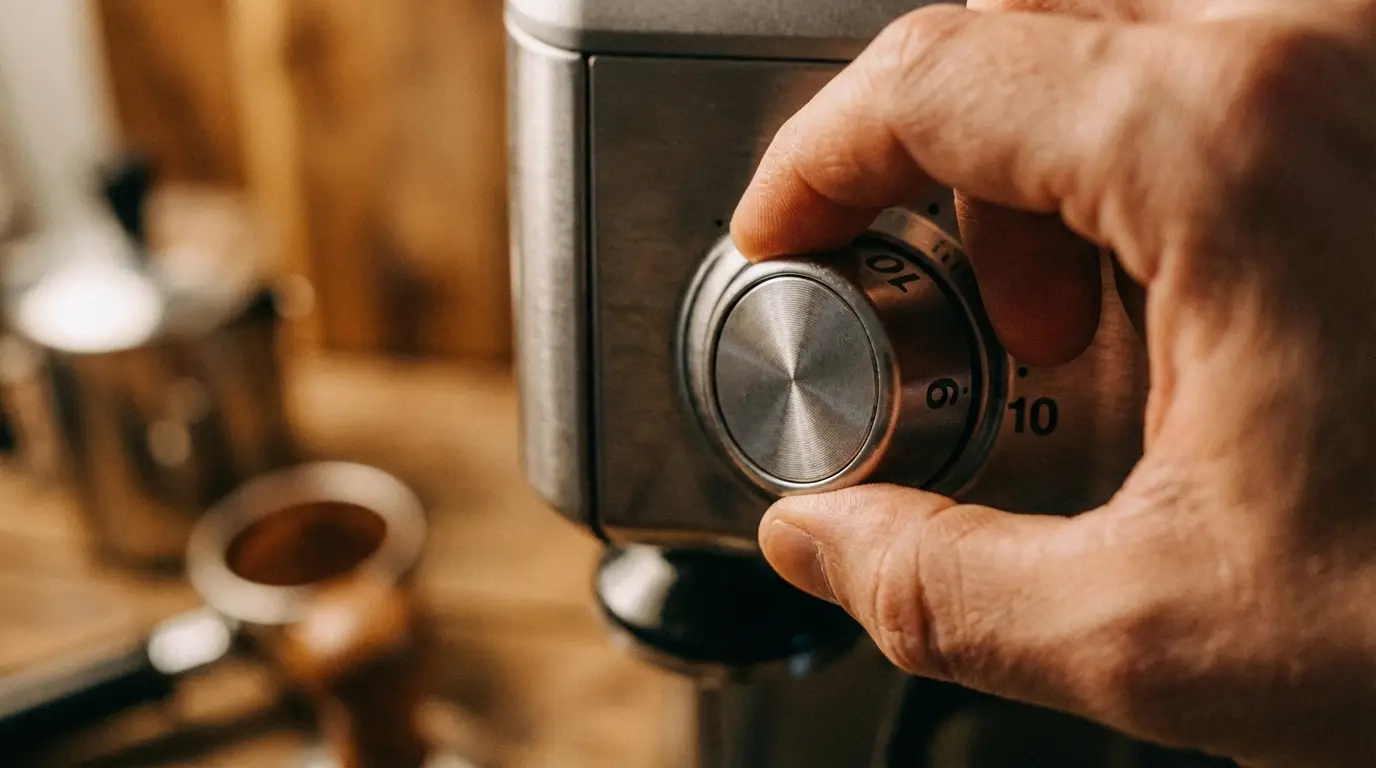
If your shot tastes bitter or ashy, go one step coarser. This is almost always the first fix for dark roast problems.
If your shot tastes sour or thin, go one step finer—you’ve gone too coarse and aren’t extracting enough sweetness.
Dose: Keep It Fixed
I use 18g for the Breville double basket with every roast level. Keeping dose constant simplifies dialing in because you only need to change one variable at a time.
One thing to note: dark roast beans take up more volume when ground because they’re less dense. So 18g of dark roast grounds looks like more coffee in the basket than 18g of light roast. Don’t be tempted to dose less just because it looks fuller—weigh it, trust the scale.
Ratio: Shorter Is Sweeter
This is where dark roast really diverges from the standard espresso advice.
The SCA and most guides recommend a 1:2 ratio (18g in, 36g out). That works great for medium roasts. For dark roasts? It pulls way too much liquid and extracts all the harsh, burnt-tasting compounds.
My recommended ratios for dark roast:
| Ratio | Output (from 18g) | Character |
|---|---|---|
| 1:1 | 18g | Like a ristretto—intense, thick, very bold |
| 1:1.5 | 27g | Sweet spot for most dark roasts—full body, chocolate, low bitterness |
| 1:2 | 36g | Often too extractive for dark roast—watch for bitterness |
Start with 1:1.5 and adjust from there. If you want MORE intensity, pull shorter (1:1). If you want more complexity and a lighter body, pull a touch longer—but be wary of exceeding 1:2.
Temperature: Consider Going Lower
Breville’s default temperature is ~93°C, which works well for medium roasts. For dark roasts, the SCA acknowledges that lower temperatures can be beneficial since the beans are already highly soluble.
My approach:
- Try the default first (93°C / medium setting)
- If shots taste bitter even with correct grind and ratio, drop to 90°C (low setting)
- The lower temperature slows down extraction of harsh compounds
To change temperature on the Breville Barista Express: hold the PROGRAM button, then press the 1-CUP button to cycle through temperature options.
Extraction Time: Shorter Window
Because of the coarser grind and shorter ratio, dark roast shots tend to run slightly faster.
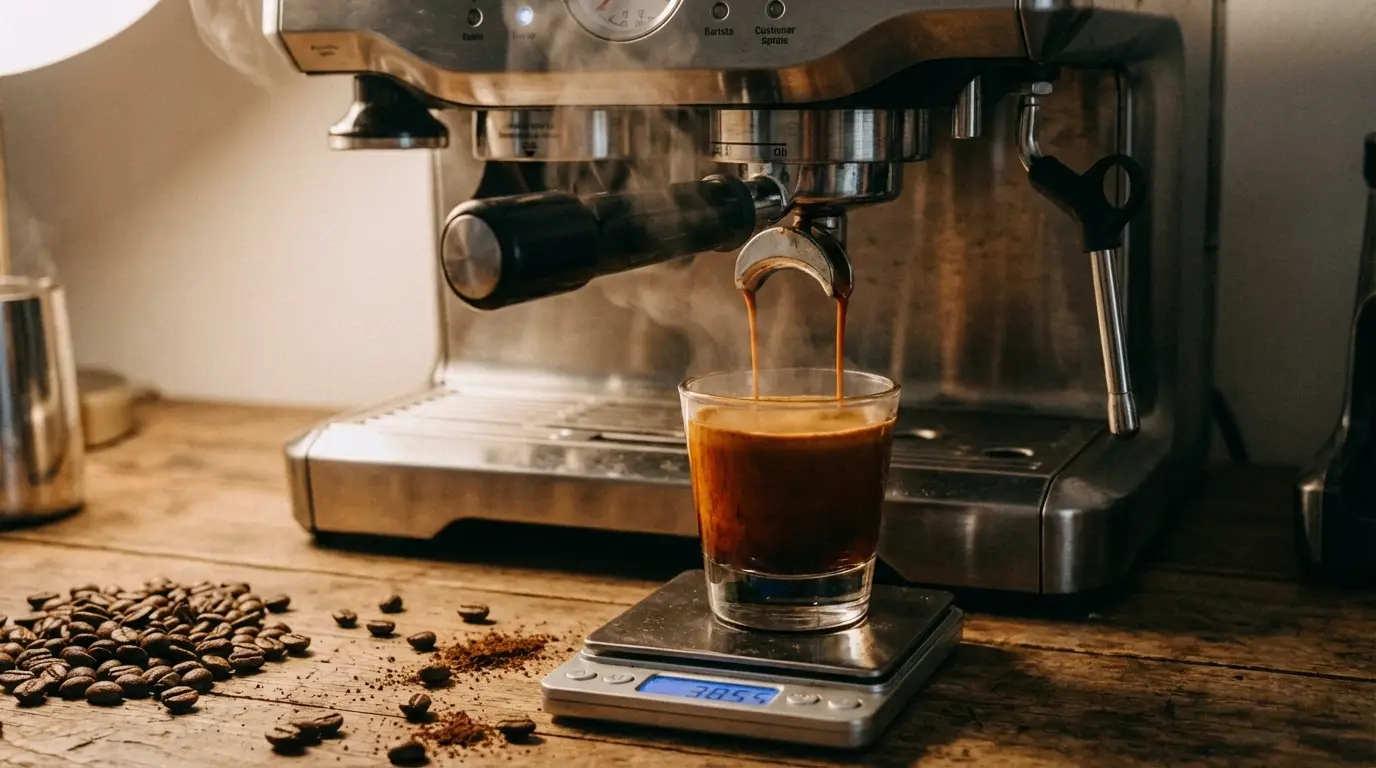
Target: 25-30 seconds including pre-infusion.
If your shot runs faster than 25 seconds, grind finer by one notch. If it runs longer than 32 seconds, grind coarser.
Don’t chase the exact same timing you’d use for light roasts (30-40 seconds). Dark roast doesn’t need—and shouldn’t have—that much contact time with water.
Dark Roast vs Medium vs Light: Settings Comparison
| Parameter | Dark Roast | Medium Roast | Light Roast |
|---|---|---|---|
| Grind (Breville) | 9-11 (coarser) | 6-8 (medium) | 4-6 (finer) |
| Dose | 18g | 18g | 18-20g |
| Ratio | 1:1 to 1:1.5 | 1:2 | 1:2 to 1:2.5 |
| Temperature | 90-93°C | 93-95°C | 94-96°C |
| Extraction time | 25-30s | 28-35s | 30-40s |
| Flavor goal | Thick, syrupy, low acidity | Balanced | Bright, complex, fruity |
See the pattern? As roasts get darker, everything gets coarser, shorter, and cooler. You’re essentially giving the coffee less opportunity to over-extract.
Common Dark Roast Mistakes (And Fixes)
Mistake 1: Using Your Light/Medium Roast Settings
This is the most common error. You switch beans and keep the same fine grind setting. The shot chokes, runs bitter, and tastes like you licked an ashtray.
Fix: Go at least 2-3 grind settings coarser when switching from medium to dark roast.
Mistake 2: Pulling Too Long
Dark roast does not need a 36-40g output. All that extra liquid is extraction of unpleasant compounds.
Fix: Pull shorter. Try 1:1.5 ratio first.
Mistake 3: Not Cleaning the Grinder
Dark roast beans are oily. That oil builds up inside your grinder much faster than from lighter roasts. If you don’t clean regularly, the old rancid oil contaminates your fresh grounds.
Fix: Clean your grinder at least weekly when using dark roasts.
Mistake 4: Using Stale Beans
Dark roast beans go stale faster than lighter roasts because the porous structure allows more oxidation. Beans beyond 3-4 weeks from roast date lose sweetness and amplify bitterness.
Fix: Buy smaller quantities more frequently. Use beans within 1-4 weeks of the roast date.
Best Dark Roast Beans for Breville
Without getting into brand endorsements, here’s what to look for:
- Roast date within 1-4 weeks — freshness matters even more with dark roast
- Italian or French roast blends — designed for espresso, balanced body and sweetness
- Brazilian or Colombian origins — chocolatey, nutty profiles work beautifully as dark espresso
- Avoid super-oily beans — visible oil sheen is fine, but dripping-wet beans can clog Breville’s grinder
One practical tip from the community: If your beans are very oily, give your hopper and burrs a quick wipe between bags. The extra oil from dark roasts builds up faster and can cause grinder jamming.
Dark Roast for Milk Drinks
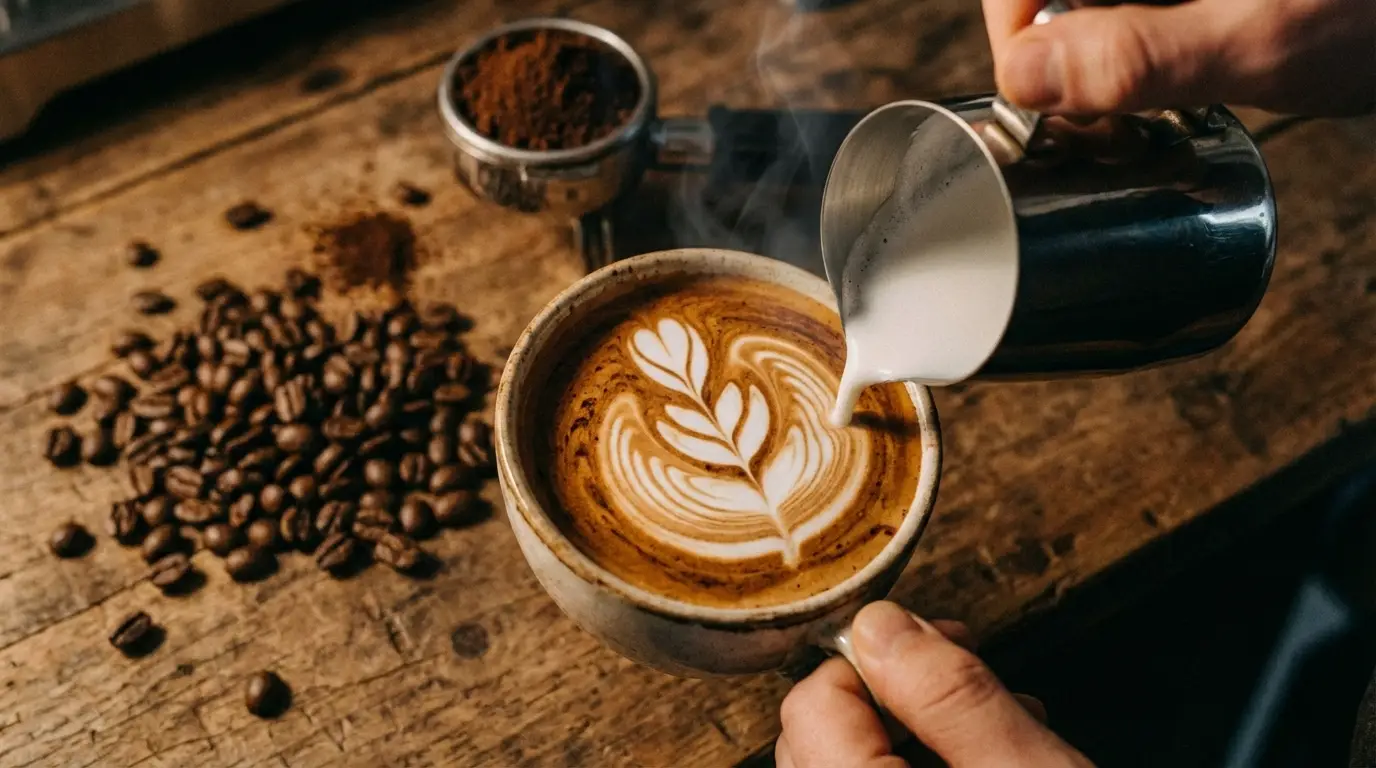
Here’s where dark roast actually excels. If you’re making lattes, cappuccinos, or cortados, a short dark roast shot cuts through milk beautifully.
I find that a 1:1 ristretto-style shot from a good dark roast makes the best latte I’ve ever had at home. The intensity and syrupy sweetness carries through even 8-10 oz of steamed milk, where a lighter roast would get lost.
For milk drinks specifically:
- Pull shorter (1:1 ratio)
- Don’t worry about the shot tasting “too strong” straight—it blends into milk perfectly
- Consider keeping your dark roast specifically for milk drinks while using medium roast for straight espresso
My Dial-In Process for Dark Roast
Here’s my exact step-by-step when I get a new bag of dark roast beans:
- Lock dose at 18g — don’t change this
- Start at grind 10, ratio 1:1.5 (27g out)
- Pull a test shot — time it, taste it
- If bitter/ashy: Go 1 setting coarser or pull shorter (try 1:1)
- If sour/thin: Go 1 setting finer or pull slightly longer
- If watery: Increase dose by 0.5g or go finer
- Repeat — usually dialed in within 3-5 shots
The key is changing only ONE variable at a time. Don’t simultaneously change grind, ratio, and temperature—you won’t know what fixed the problem.
FAQs
Why does my dark roast espresso taste burnt?
Almost always over-extraction. Your grind is too fine, your ratio is too long, or both. Go 2 settings coarser and pull a shorter shot (1:1.5). Also check your beans—bags sitting open for more than 4 weeks will taste increasingly bitter.
Can I use dark roast in the pressurized basket?
Yes, and it’s actually more forgiving with dark roasts since the basket regulates flow. But you’ll get better results—more crema, more flavor—with the single-wall basket and proper settings.
Should I use pre-infusion for dark roast?
Yes. Breville’s pre-infusion (hold the brew button for 2-3 seconds before releasing for full pressure) helps dark roast extract more evenly. The low-pressure soak allows water to saturate the puck before full pressure hits.
What’s the ideal crema color for dark roast?
Expect darker crema than from medium or light roasts—deep reddish-brown rather than golden. This is normal and not a sign of over-extraction.
My dark roast extraction is too fast. What do I do?
Grind finer by one setting and try again. Dark roast runs faster because of its porous structure, but if it’s under 20 seconds, you need a finer grind to slow it down.
Key Takeaways
- Go coarser: Grind setting 9-11 on Breville (vs 5-8 for medium)
- Pull shorter: 1:1 to 1:1.5 ratio — not the standard 1:2
- Keep it cool: Use medium or low temperature setting
- Clean more often: Dark roast oils build up fast in the grinder
- Fresh beans matter more: Use within 1-4 weeks of roast
- Dark roast + milk = magic: Short shots carry beautifully through steamed milk
- Change one variable at a time — you’ll dial in within 3-5 shots
Related Guides:

Mikael
Home espresso enthusiast and Breville specialist. Helping you master the art of coffee brewing from your own kitchen.
Learn more about me →