Naked Portafilter Guide for Breville 54mm
Why a bottomless portafilter changes everything. See channeling, improve technique, and pull better shots on your Breville Barista Express.
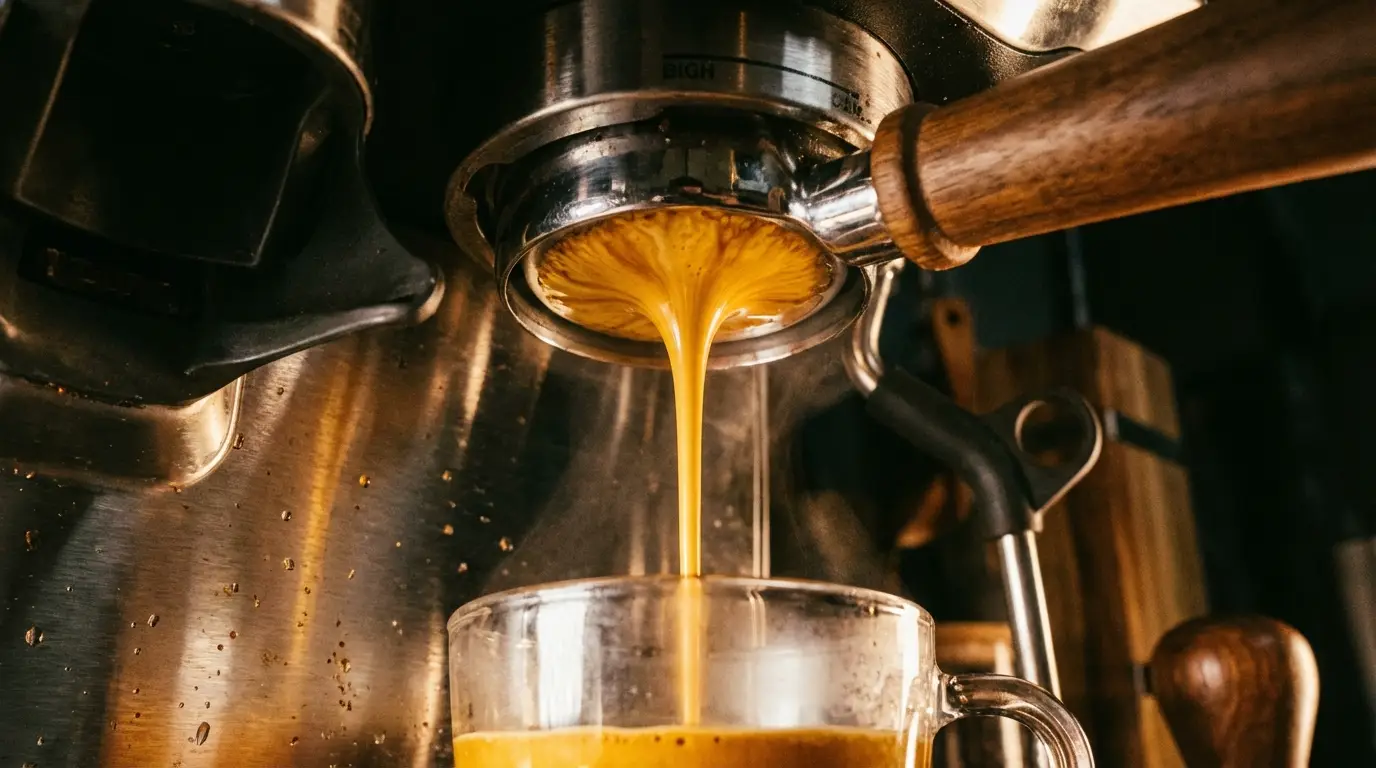
The first time I pulled a shot through a naked portafilter, I immediately understood why my espresso had been inconsistent. Turns out, my puck prep was terrible—I just couldn’t see it through the standard spouted portafilter.
That’s the whole point of a naked (or bottomless) portafilter: it strips away the spouts and exposes the bottom of the basket so you can actually watch what’s happening during extraction. And what you see might surprise you.
What Is a Naked Portafilter?
A naked portafilter is simply a portafilter with the bottom cut away. No spouts, no walls below the basket—just the filter basket sitting there, exposed. When you pull a shot, espresso drips directly from the basket into your cup.
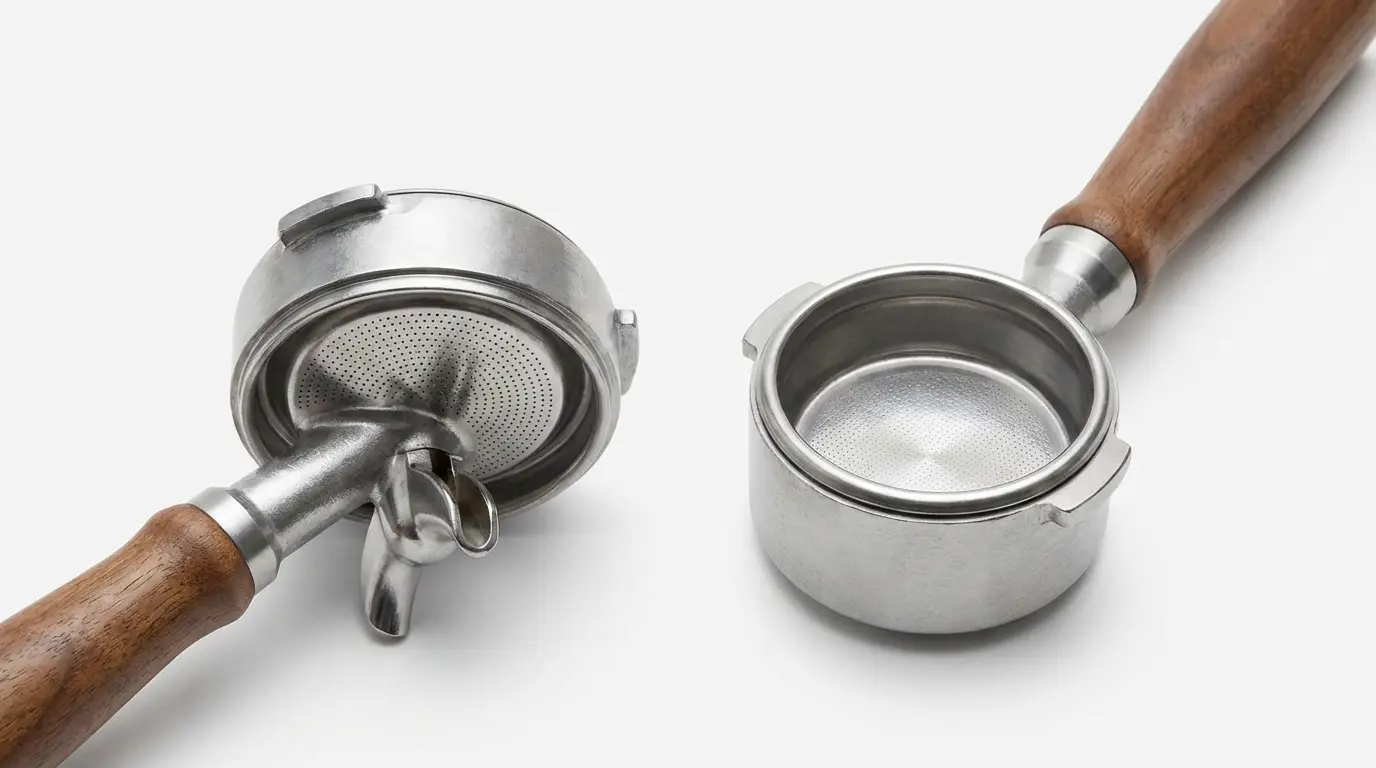
It’s also called a “bottomless portafilter,” and it’s become basically a rite of passage in the home espresso community.
Why Would You Want One?
Because your spouted portafilter is hiding problems from you.
With a standard portafilter, espresso flows through the basket, hits the spouts, and gets funneled neatly into your cup. Looks tidy. But that tidy appearance is covering up channeling, uneven extraction, and all sorts of issues you’d never notice otherwise.
A naked portafilter shows you everything—the good, the bad, and the genuinely ugly.
What You’ll See (And What It Means)
The Perfect Shot
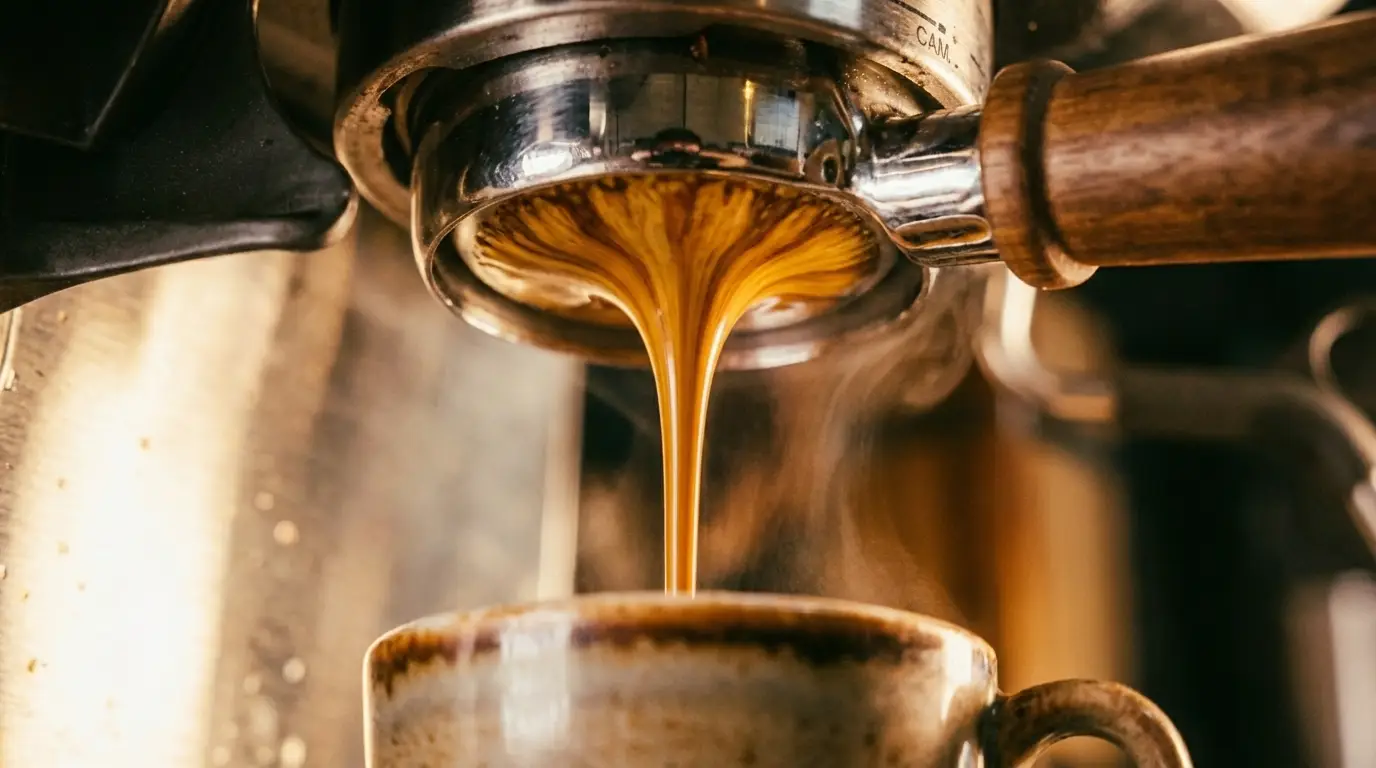
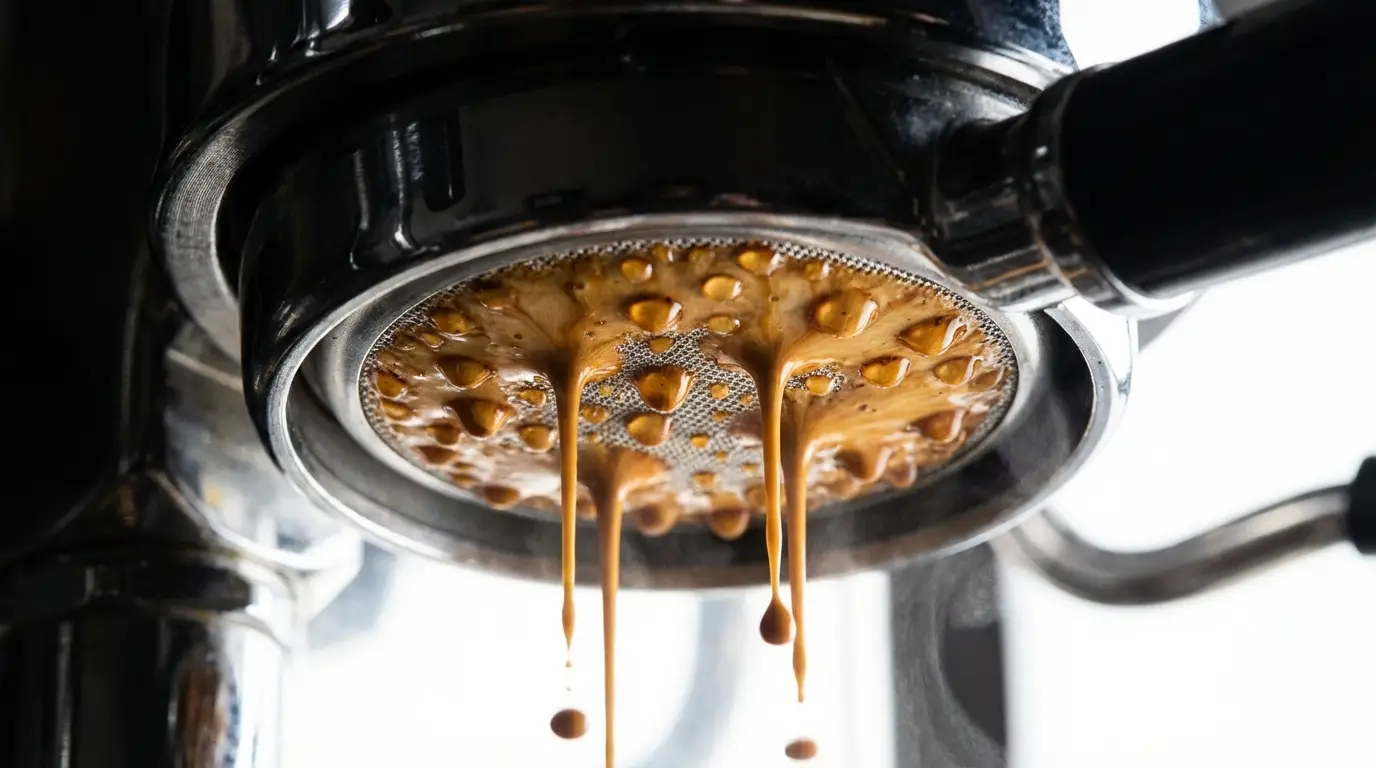
When everything’s dialed in, you’ll see the espresso form what looks like a small volcano cone on the bottom of the basket. Multiple thin streams converge into a single, centered flow. The color transitions smoothly from dark to golden blonde. It’s honestly kind of beautiful.
Channeling
This is what you’re really looking for. Channeling looks like:
- Spraying from one spot: A jet of liquid shooting sideways means water found a weak point in your puck
- Multiple thin streams that never merge: Your distribution is uneven
- One side flowing faster: Your tamp isn’t level
- Spurting and sputtering: Major clumps or voids in the puck
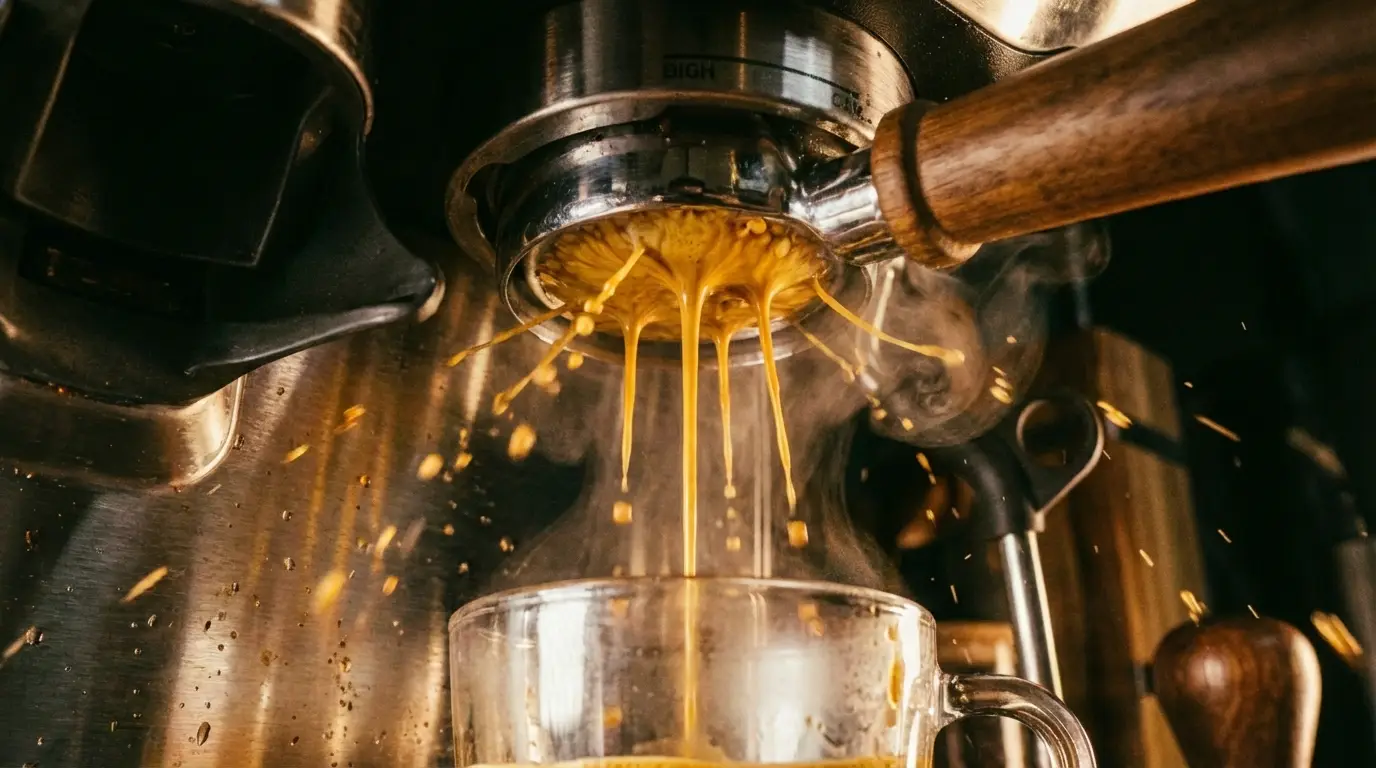
The first time I used a naked portafilter, my “perfect” shot turned out to have three distinct channels. No wonder my espresso tasted different every morning.
Common Visual Problems
| What You See | What It Means | How to Fix |
|---|---|---|
| Spray from basket edge | Gap between puck and basket wall | Better distribution, slightly higher dose |
| Stream leans to one side | Uneven tamp | Focus on level tamping, use a leveling tamper |
| Fast blonde drip spots | Localized under-extraction | WDT for better distribution |
| Entire bottom spurting | Major puck prep issues | Start over: dose, WDT, distribute, level tamp |
Choosing a Naked Portafilter for Breville
Here’s the important thing: Breville uses 54mm portafilters, not the standard 58mm that most espresso accessories are designed for. Make sure you’re buying the right size.
Recommended Options
| Product | Price | My Take |
|---|---|---|
| Breville-compatible 54mm bottomless (various brands) | $20-35 | Most common, works perfectly |
| Crema Coffee 54mm | ~$30 | Popular with Breville owners, good fit |
| Generic stainless steel 54mm | $15-25 | Budget option, check compatibility reviews |
My advice: Don’t overthink this. Any stainless steel 54mm bottomless portafilter with decent reviews will work. It’s a metal ring holding a basket—there isn’t that much to get wrong. I’ve been using a $25 Amazon option for over a year and it works perfectly.
What About the Handle?
Some naked portafilters come with wooden handles, some with plastic. Wooden looks nicer, but functionally it makes zero difference. Pick whatever you like aesthetically.
The Mess Factor (Let’s Be Real)
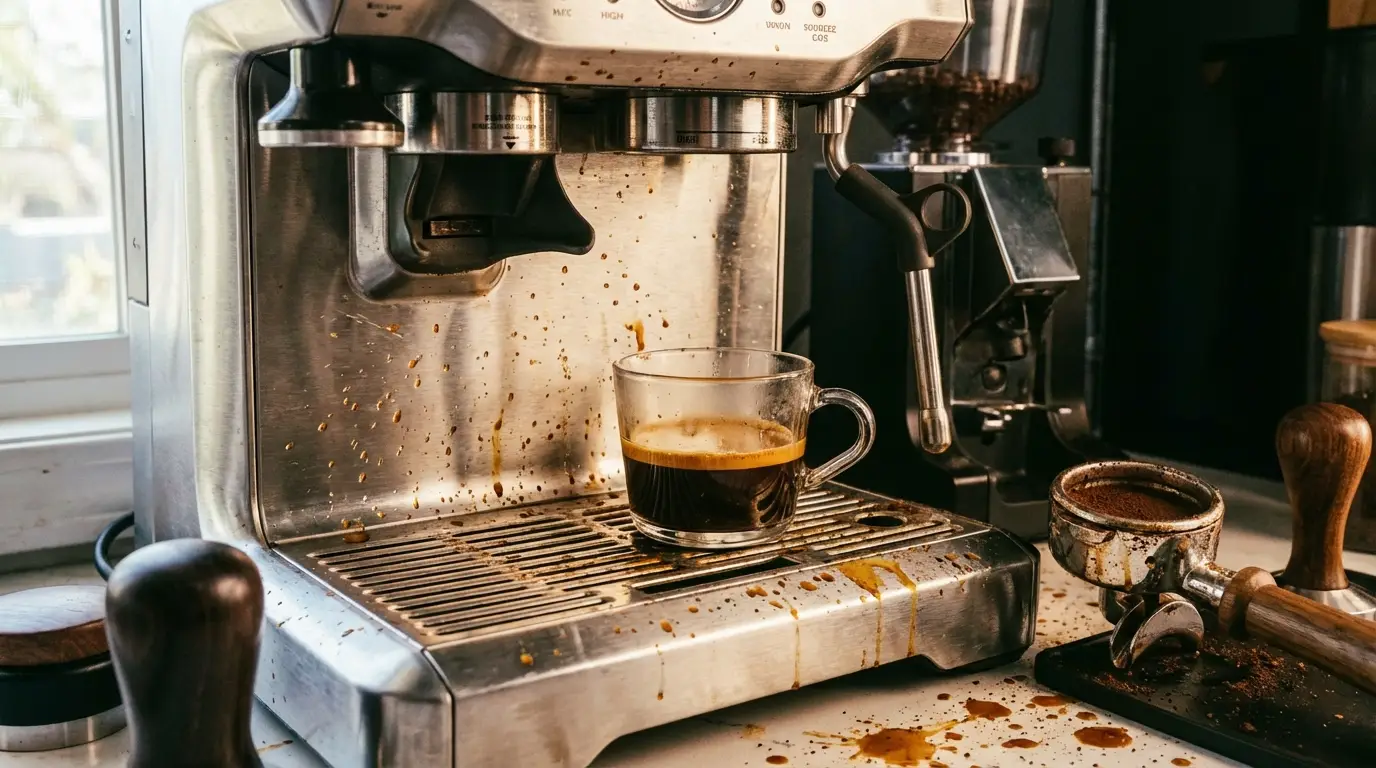
Nobody warns you about this enough: your first few shots through a naked portafilter will be messy.
Any channeling that previously got caught by the spouts now goes… everywhere. Expect espresso spray on your counter, your machine, maybe even you.
How to manage it:
- Place a towel or small tray under the cup for the first few attempts
- Use a wider cup or glass initially
- Don’t wear white the first time you try this (learned that one myself)
- Accept that mess decreases dramatically as your puck prep improves
Within a week or two of practice, my extractions were clean enough that mess was no longer an issue. The naked portafilter literally forced me to get better at puck prep—which was the whole point.
How a Naked Portafilter Improved My Routine
Before getting a bottomless portafilter, I thought my technique was fine. My shots tasted “okay” and I couldn’t figure out why they weren’t great.
After switching:
Week 1: Discovered my tamp was consistently tilted to the right. Fixed it by consciously leveling.
Week 2: Noticed significant channeling in the center—started using WDT and the problem nearly disappeared.
Week 3: Could visually see the difference between properly distributed grounds and lazy prep. Stopped skipping the distribution step.
Week 4: Consistently pulling shots with a single, centered stream. Espresso tasted noticeably better, more balanced, less bitter randomness.
The naked portafilter didn’t make my espresso better directly. It showed me what I was doing wrong so I could fix it.
Switching Between Naked and Standard
Something a lot of people don’t realize: you don’t have to use the naked portafilter for every shot.
My workflow:
- Dialing in new beans? Naked portafilter to see what’s happening
- Troubleshooting taste issues? Naked for diagnosis
- Regular morning routine when dialed in? Back to standard for convenience
- Showing off to guests? Definitely naked—it looks impressive
Some people switch permanently to naked portafilters. That’s fine too. The crema actually looks better (up to 50% thicker according to some) because it doesn’t get disrupted by contact with metal spouts.
Breville-Specific Considerations
Cup Clearance
One genuine advantage of the naked portafilter: more cup clearance under the group head. The Breville Barista Express doesn’t have the most generous space between the group head and the drip tray. Without spouts hanging down, you can fit taller cups underneath.
Basket Compatibility
Your existing Breville baskets fit directly into a naked portafilter. No need to buy new baskets. Just pop out the basket from your standard portafilter and drop it into the naked one.
Pre-Infusion Observation
Breville’s low-pressure pre-infusion is actually fascinating to watch through a naked portafilter. You can see the initial drops forming slowly before full pressure kicks in. It gives you real insight into how your puck is behaving.
FAQs
Is a naked portafilter just for diagnosing problems?
Mostly, yes. The home-barista.com community considers it primarily a diagnostic tool. But plenty of people use it daily because they like watching the extraction, and the improved crema is a nice bonus.
Will it make my espresso taste better?
Not directly. But it will show you what’s preventing your espresso from tasting great. Fix those issues and your espresso absolutely improves.
Do I need a naked portafilter if I’m using pressurized baskets?
Not really. Pressurized baskets artificially regulate flow, so there’s nothing useful to diagnose. Switch to single-wall baskets first, then get a naked portafilter.
How do I clean it?
Easier than a standard portafilter, actually. No spouts means no trapped coffee residue in those little channels. Rinse, wipe, done.
Can I use it for milk drinks?
Absolutely. Just pull your shot through it like normal. Some people find it easier to split shots into two cups since there are no spouts directing flow—you just position two cups under the basket.
Key Takeaways
- A naked portafilter is the best diagnostic tool for improving your espresso technique
- Get the right size: 54mm for Breville — don’t accidentally buy 58mm
- Expect mess initially — it gets better as your technique improves
- Use it to diagnose, not necessarily daily — switch back to standard once dialed in
- WDT + naked portafilter = rapid improvement — seeing channeling in real time changes everything
- Don’t overspend — a $25 option works just as well as a $50 one
Related Guides:

Mikael
Home espresso enthusiast and Breville specialist. Helping you master the art of coffee brewing from your own kitchen.
Learn more about me →