Why Your Espresso Has No Crema: Causes and Fixes
No crema on your Breville espresso? Learn the common causes and how to fix them for that perfect golden layer on every shot.
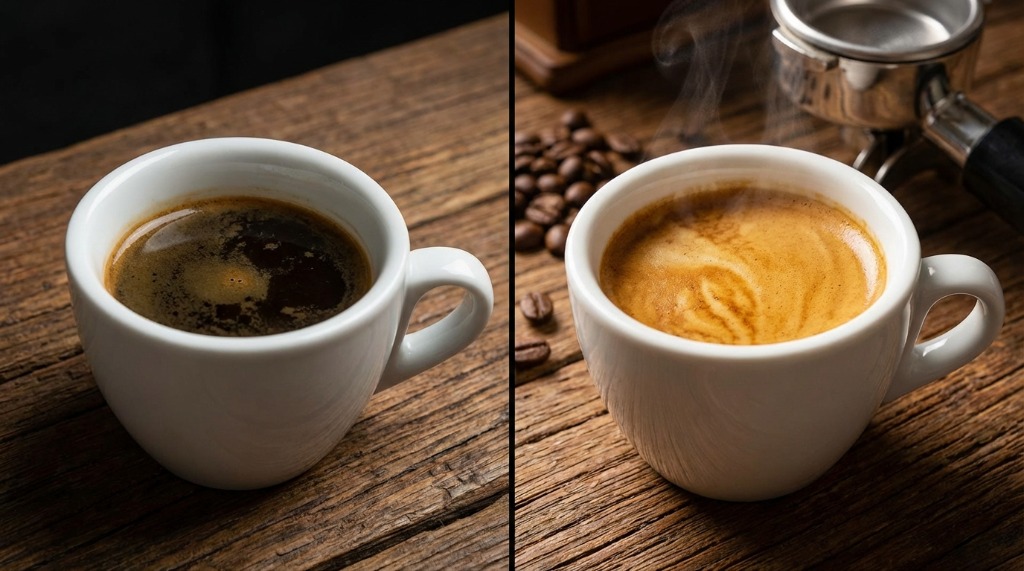
Pulled a shot last week and something looked wrong. No golden foam, just dark liquid. Looked more like drip coffee than espresso. Immediate panic—is my machine broken? Is my coffee dead?
Turns out the answer was simple: stale beans. But before figuring that out, I ran through basically every other troubleshooting step. Let me save you the trouble.
If your espresso looks flat and crema-less, here’s how to diagnose and fix it.
What Is Crema and Why Does It Matter?
Crema is that fine, golden-brown foam on top of freshly extracted espresso. It’s made of emulsified coffee oils, dissolved CO₂ gas, and water.
Why Crema Matters
- Quality indicator—crema signals fresh beans and proper extraction
- Flavor enhancement—when stirred in, crema adds body and silky mouthfeel
- Aromatic carrier—volatile compounds that make espresso smell amazing concentrate in the crema
- Visual appeal—that “Instagram-worthy” shot you’re chasing
In Italian coffee culture, crema defines proper espresso. A shot without it usually means something’s off.
What Good Crema Looks Like
| Characteristic | Ideal Crema |
|---|---|
| Color | Golden-brown to hazelnut |
| Thickness | 2-4mm, about 10% of total volume |
| Texture | Fine, uniform bubbles |
| Duration | Persists 2-3 minutes before fading |
Pale and thin? Dark and spotty? Nonexistent? Keep reading.
Common Causes of Missing Crema
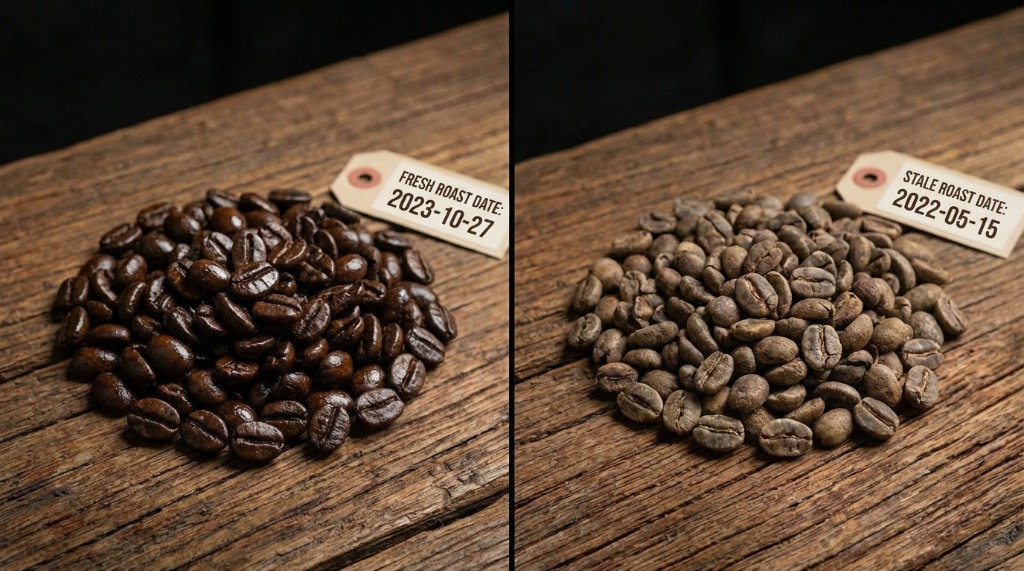
Cause #1: Stale Coffee Beans
This is the culprit probably 70% of the time. It was my problem too.
Fresh beans contain trapped CO₂ from roasting. As beans age, that gas escapes. Since crema is essentially CO₂ bubbles suspended in coffee oils, stale beans = no gas = no crema. Simple physics.
The freshness window:
| Days Post-Roast | Crema Quality |
|---|---|
| 3-7 days | Lots of crema (maybe too much—can taste gassy) |
| 7-21 days | Optimal crema, balanced flavor |
| 21-30 days | Declining crema, still usable |
| 30+ days | Little to no crema, stale taste |
Fix: Use beans roasted within the last 2-3 weeks. Check roast dates on packaging. If your supermarket beans don’t have roast dates, they’re probably ancient.
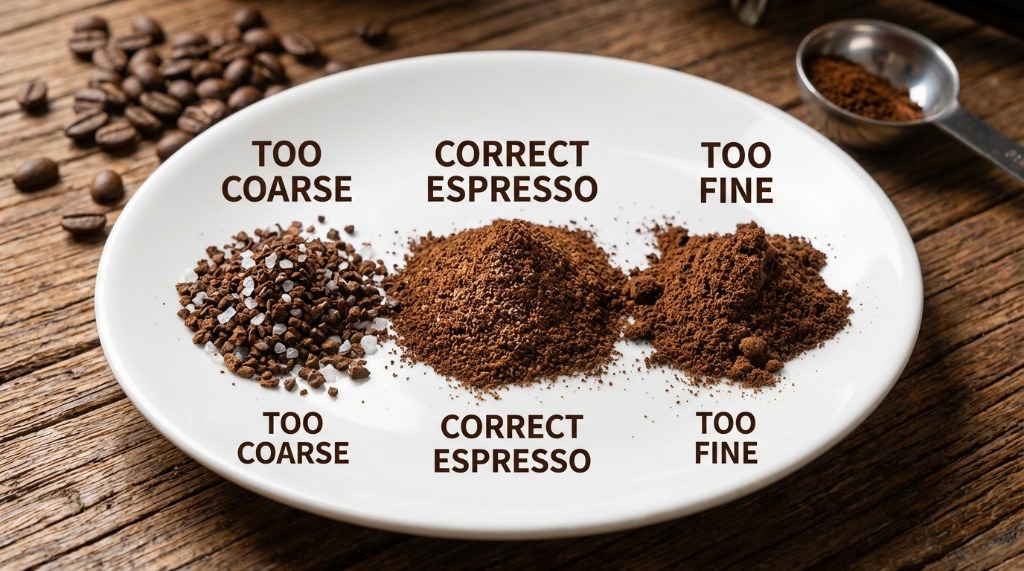
Cause #2: Grind Too Coarse
When grind is too coarse, water rushes through way too fast. This under-extraction fails to emulsify oils properly and produces weak, thin crema.
Signs your grind is too coarse:
- Shot finishes under 20 seconds
- Thin, pale crema that disappears fast
- Sour, watery taste
Fix: Grind finer. On Breville, try dropping 1-2 numbers on the dial. Aim for 25-30 second extraction.
Cause #3: Low Machine Pressure
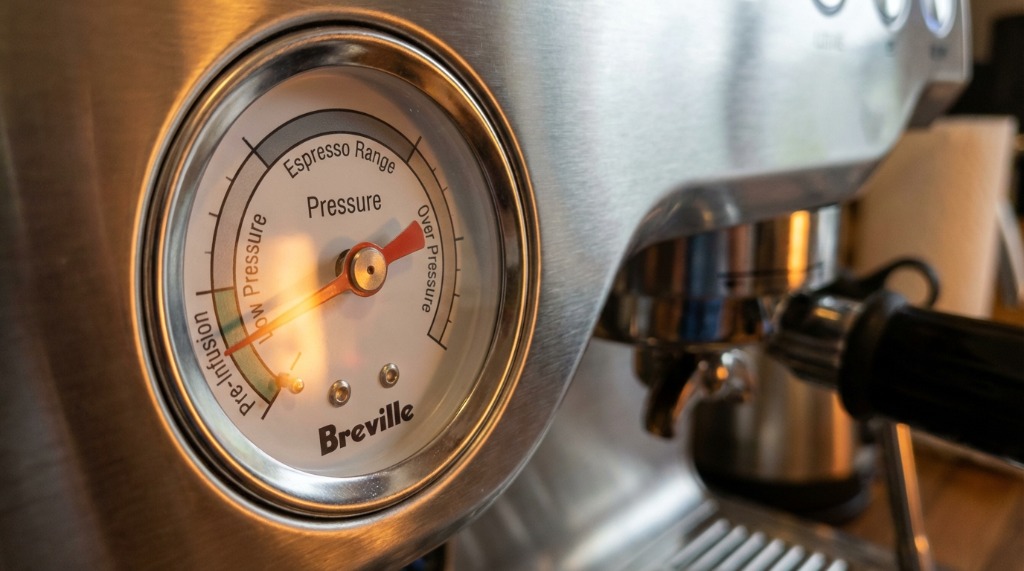
Espresso needs 9 bars of pressure for proper extraction. If your machine isn’t hitting pressure, crema suffers.
What causes pressure issues:
- Scale buildup restricting flow
- Pump wearing out (common after 5+ years)
- Grind too coarse (see above)
- Not enough coffee
How to check: Most Breville machines have a pressure gauge. During extraction, needle should reach the “espresso range” zone. Consistently low? Time to troubleshoot.
Fix: Descale machine, check grind size, make sure you’re dosing enough (18g for double basket).
Cause #4: Wrong Basket or Dose
Using wrong basket or under-dosing creates channeling and poor extraction.
Common mistakes:
- Using single basket but trying to dose for double
- Under-filling the basket (not enough coffee)
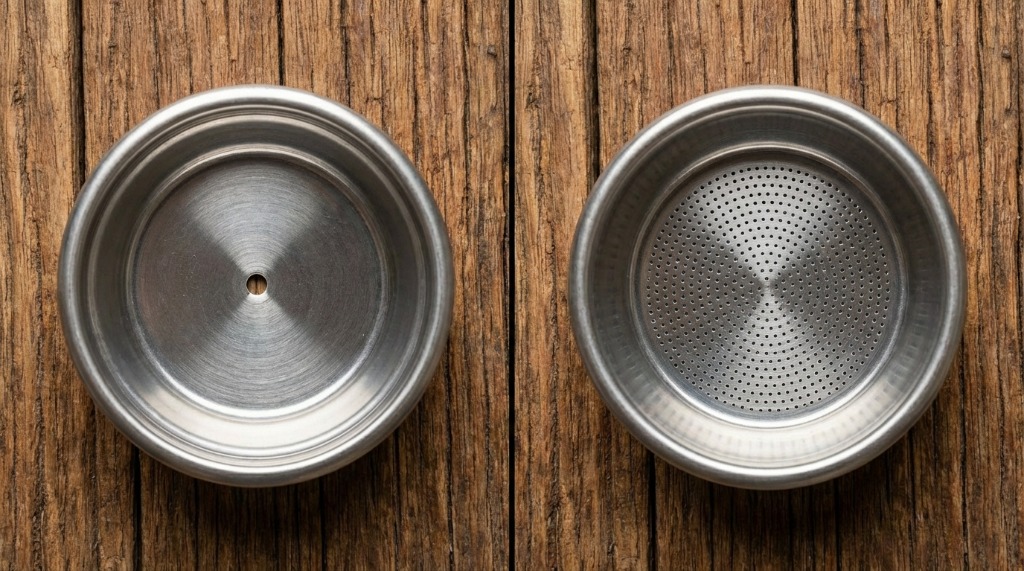
- Using pressurized basket expecting specialty results
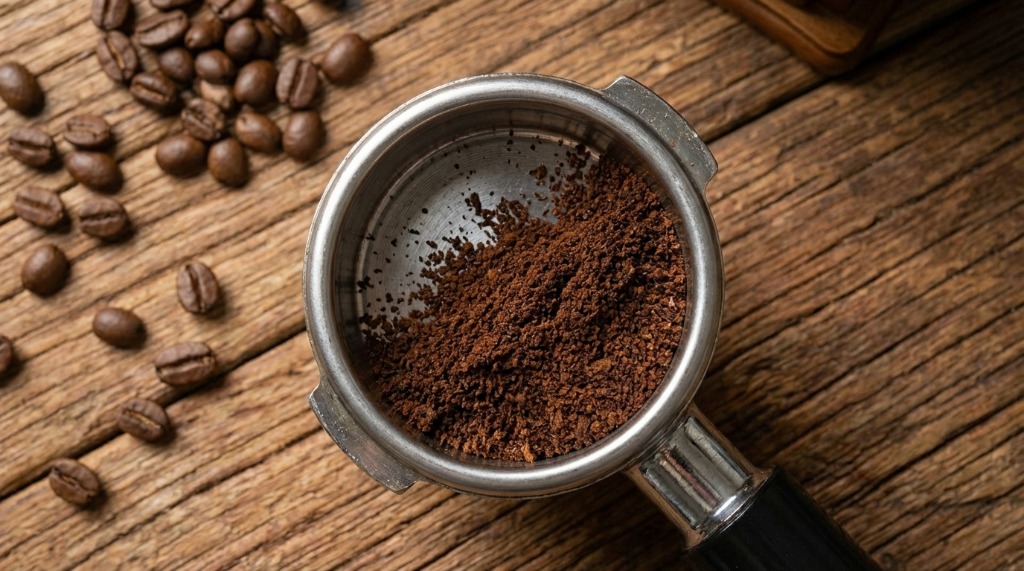
Fix: For double basket on Breville, use 18-20g of coffee. Fill to just below the rim. If you’re using the pressurized basket that came with your machine, switch to non-pressurized for real crema.
Cause #5: Oily or Dark Roast Beans
Very dark, shiny beans can cause issues:
- Surface oils clog grinder burrs
- Oils oxidize faster
- CO₂ content is lower (longer roast = more gas released during roasting)
Fix: If using very oily beans, clean your grinder more frequently. Maybe try a medium roast and compare.
Cause #6: Wrong Water Temperature
Water that’s too cold won’t extract properly. Most Breville machines heat automatically, but issues happen.
What can go wrong:
- Not warming up long enough
- Pulling shot right after steaming (single boiler machines drop temp)
- Thermostat malfunctioning
Fix: Let your Breville warm up 15-20 minutes before pulling shots. Run blank shot through portafilter to heat the group head.
Step-by-Step Troubleshooting Guide
If crema is missing, work through this in order:
Step 1: Check Bean Freshness
Look at roast date. Over 3-4 weeks old? Buy fresh beans and test again. This single step solves most crema problems.
Step 2: Adjust Grind Finer
If shot pulls under 20 seconds, go 1-2 steps finer on grinder. Target 25-30 second extraction.
Step 3: Check Your Dose
Weigh it—should be 18-20g for double. Use a scale every time.
Step 4: Inspect the Basket
Are you using non-pressurized (single-wall) basket? Pressurized baskets create “fake” crema that fades fast. Real crema comes from non-pressurized extraction with good technique.
Step 5: Run a Pressure Test
Watch gauge during extraction. Not reaching espresso zone? Troubleshoot pressure issues (descale, check grind).
Step 6: Temperature Check
Make sure machine is fully warmed up. Run blank shot to heat portafilter and group head.
Step 7: Descale if Needed
Scale buildup affects both temperature and pressure. Haven’t descaled in 2-3 months? Do it now.
Prevention Tips
Once crema is back, keep it:
- Buy fresh, dated beans—aim for roast dates within 2 weeks
- Store beans properly—airtight container, no light, no heat
- Grind right before brewing—pre-ground loses CO₂ fast
- Use correct dose—18-20g for double basket
- Maintain your machine—descale regularly, clean group head
- Warm up properly—15-20 minutes before first shot
FAQ
My crema appears but disappears within seconds. Is that normal?
Quick-dissipating crema usually means slightly stale beans or grind too coarse. Aim for crema that sticks around 2-3 minutes. Try fresher beans or grind slightly finer.
Does crema actually affect taste?
Definitely. When you stir crema into the liquid (recommended), it adds body and rounds out flavor. Crema alone tastes quite bitter, but integrated with the shot, it enhances everything.
Should I use pressurized or non-pressurized baskets?
For best crema and quality, non-pressurized (single-wall) baskets. Pressurized baskets are training wheels—they create pseudo-crema that looks okay but lacks real quality.
My beans are fresh but still no crema. What now?
Check grind size and dose. Fresh beans with too coarse a grind still won’t produce crema. Also make sure you’re using non-pressurized basket.
Why does my friend’s Nespresso have more crema than my Breville?
Pod machines force crema artificially through pressurized extraction. It’s not the same quality as real crema from fresh beans and proper technique. Once you dial in your Breville, your crema will be far better.
Conclusion
No crema usually means one of a few things: stale beans, wrong grind, or equipment issue. The fix is almost always simple:
- Fresh beans—within 2-3 weeks of roast date
- Proper grind—fine enough for 25-30 second extraction
- Correct dose—18-20g for double basket
- Good equipment—non-pressurized basket, descaled machine
Fix these fundamentals and that golden crema comes back. You’ll know your process is working—and shots will taste as good as they look.

Mikael
Home espresso enthusiast and Breville specialist. Helping you master the art of coffee brewing from your own kitchen.
Learn more about me →