Water Quality for Espresso: How Your Tap Water Affects Taste
Discover how water quality impacts espresso flavor and machine health. Learn optimal mineral content and filtration for the best home espresso.
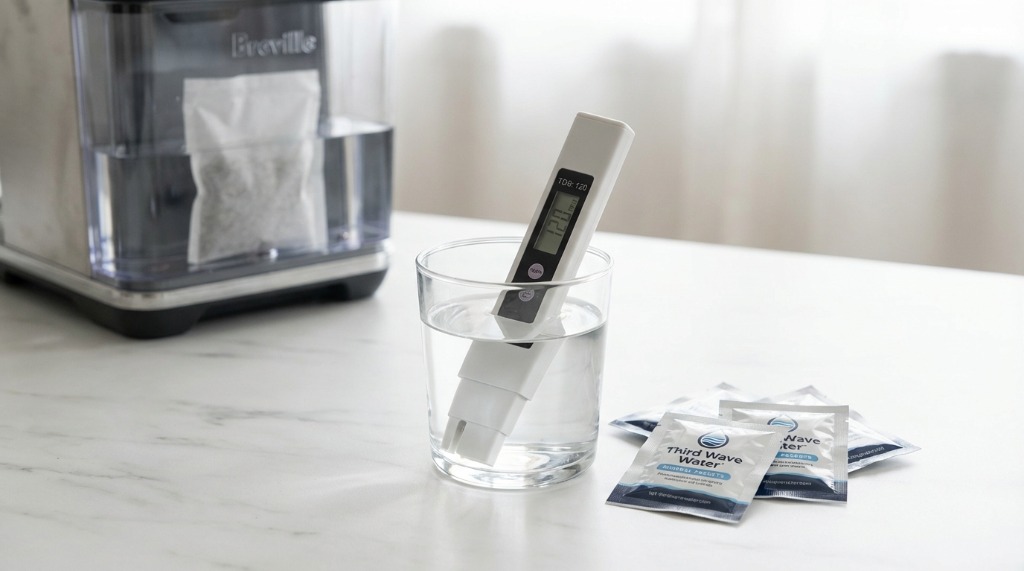
Spent months dialing in what I thought were perfect shots. Upgraded my grinder. Sourced amazing single-origin beans. Then I tested my tap water and realized it was sabotaging everything.
The difference between tap water espresso and properly mineralized water? Night and day. Shots I thought were “good” became genuinely excellent. Flavors I’d never tasted before suddenly showed up.
Water makes up 90%+ of your espresso. If you’re ignoring water quality, you’re ignoring the biggest ingredient in your cup.
Why Water Quality Matters
Coffee extraction is fundamentally chemistry. Water dissolves flavor compounds from ground coffee, and the minerals in that water dramatically affect what gets extracted—and how it tastes.
Too soft (low minerals): Under-extracts. Flat, sour, lifeless shots. Nothing to grab onto.
Too hard (high minerals): Over-extracts harsh compounds. Bitter, chalky, muted sweetness.
Just right: Balanced extraction. Sweetness, clarity, complexity.
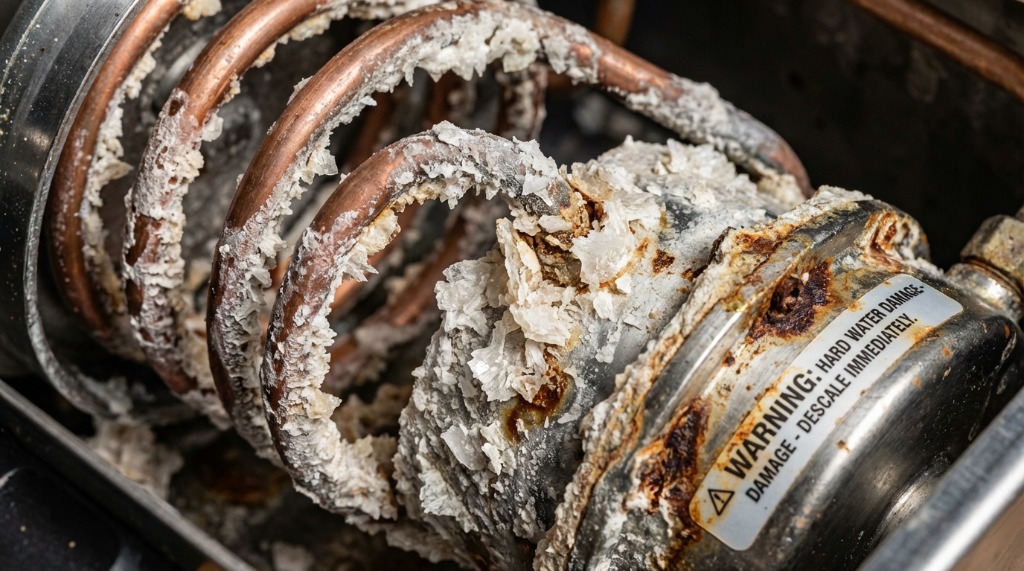
Beyond taste, water quality affects your machine’s lifespan. Scale buildup from hard water clogs boilers, blocks solenoids, and eventually kills espresso machines. I’ve seen Brevilles die at 2 years from bad water—they should last 10+.
Understanding Water Composition
Key players in espresso water:
| Component | Role | Ideal Range (ppm) |
|---|---|---|
| Total Hardness (CaCO₃) | Extraction power | 50-175 ppm |
| Calcium | Primary hardness mineral | 50-80 ppm |
| Magnesium | Enhances flavor extraction | 10-30 ppm |
| Total Dissolved Solids (TDS) | Overall mineral content | 75-250 ppm |
| Chlorides | Corrosion (bad) | < 30 ppm |
SCA (Specialty Coffee Association) recommends:
- Total hardness: 50-175 ppm (ideally 50-100 ppm)
- TDS: 75-250 ppm (ideally 100-150 ppm)
- pH: 6.5-7.5 (neutral)
Testing Your Water
Before making changes, figure out what you’re working with.
Option 1: TDS Meter ($15-25)
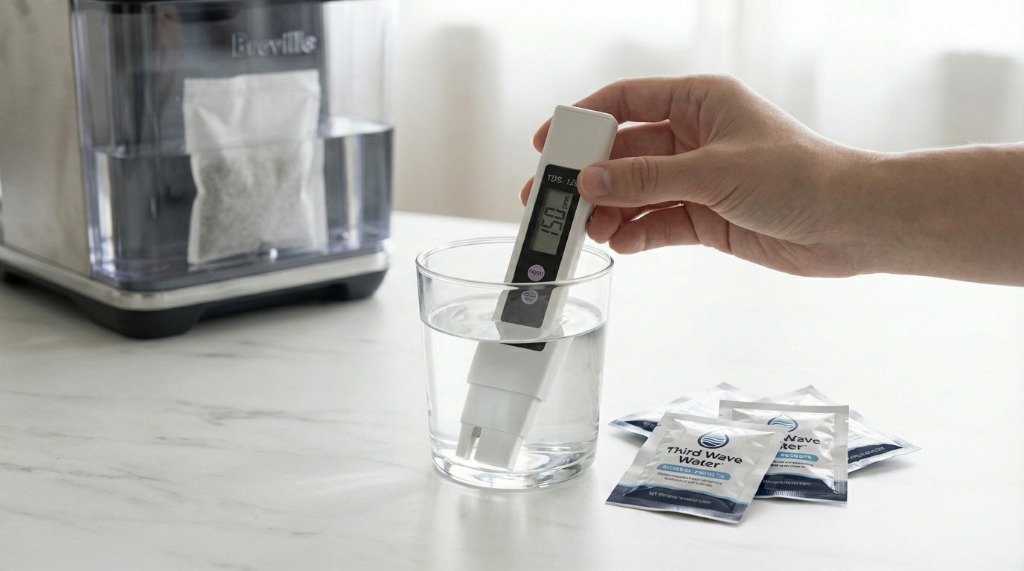
TDS meter measures total dissolved solids—rough proxy for mineral content. Dip it in water, get a number.
| TDS Reading | What It Means |
|---|---|
| 0-50 ppm | Very soft (too soft for espresso) |
| 50-150 ppm | Ideal range |
| 150-300 ppm | Moderately hard (may need filtering) |
| 300+ ppm | Hard water (definitely filter) |
My Seattle tap reads ~40 ppm—too soft. Had to add minerals.
Option 2: Water Test Kit ($10-20)
Aquarium test strips measure hardness, pH, sometimes chlorine. More detailed than TDS alone.
Option 3: Local Water Report
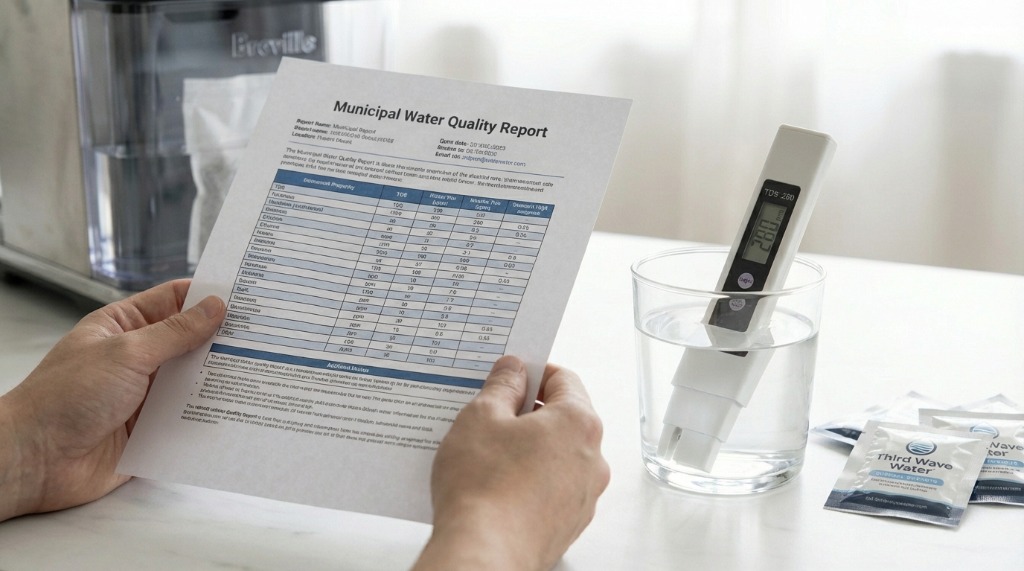
Your utility publishes annual water quality reports. Search “[your city] water quality report” for free data. Look for total hardness and TDS.
Solutions for Different Water Problems
If Your Water Is Too Hard (150+ ppm)
Hard water = scale buildup. Solutions:
1. Breville Water Filter (included) The built-in filter reduces chlorine taste and some hardness. Replace every 2-3 months. Good but not sufficient for very hard water.
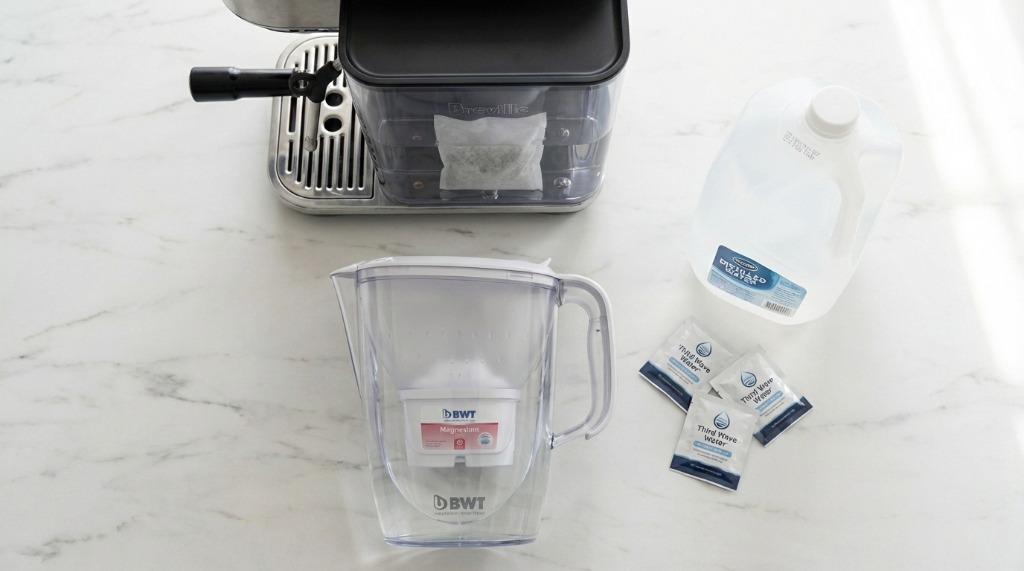
2. BWT Magnesium Filter Reduces calcium while adding beneficial magnesium. Popular in the coffee world. I used these when living somewhere with 300+ ppm water.
3. Reverse Osmosis (RO) Removes nearly everything. Too pure for espresso on its own—you’ll need to remineralize. See next section.
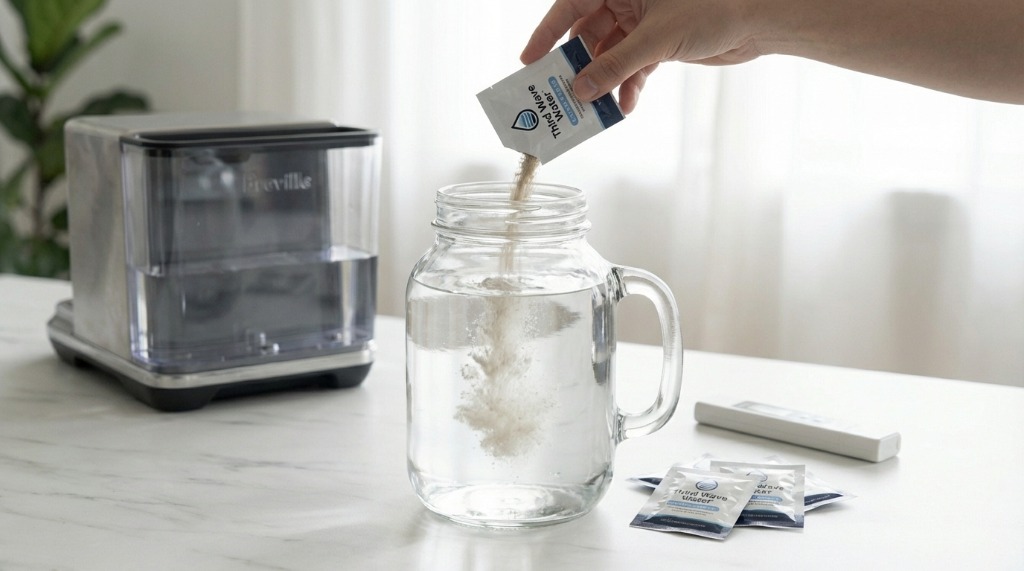
4. Third Wave Water / Perfect Coffee Water Mineral packets you add to distilled or RO water. Creates “ideal” espresso water. This is what I use now.
If Your Water Is Too Soft (< 50 ppm)
Soft water lacks minerals needed for balanced extraction. Solutions:
1. Mineral Packets Third Wave Water or similar—add to distilled/RO water. Creates consistent, optimal water every time.
2. DIY Mineral Recipe For the adventurous: food-grade magnesium sulfate (Epsom salt) + sodium bicarbonate (baking soda) in distilled water. Recipes online, but easy to mess up.
3. Blend with Tap If your tap is moderately soft (30-50 ppm), mix 50/50 with distilled. Quick hack but less consistent.
My Current Water Setup
After testing multiple approaches:
- Fill gallon jug with distilled water ($1/gallon at grocery)
- Add one Third Wave Water packet (optimized mineral profile)
- Store and use for 1-2 weeks
Result: TDS of ~150 ppm, perfect hardness, zero scale buildup. My Breville’s boiler is spotless after 2+ years.
Cost: About $0.30/gallon for perfect water. Totally worth it for taste and machine longevity.
How Water Affects Your Shots
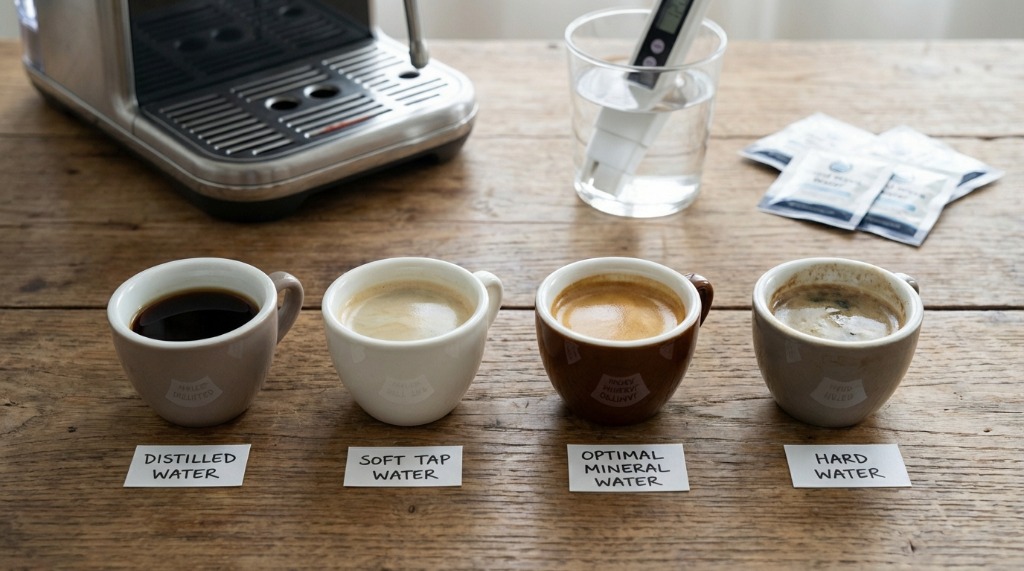
I ran a side-by-side test—same beans, same grind, same everything except water:
| Water Type | TDS | Taste Notes |
|---|---|---|
| Distilled (0 ppm) | 0 | Flat, sour, lifeless. Like diluted lemon juice. |
| My tap (40 ppm) | 40 | Better but thin. Missing body and sweetness. |
| Third Wave Water (~150 ppm) | 150 | Full body, balanced sweetness, clear origin notes. Completely different. |
| Hard tap (350 ppm) | 350 | Harsh, chalky, bitter finish. Sweetness buried. |
The shots with “optimal” water were so obviously better. Couldn’t go back.
Protecting Your Machine
Water quality isn’t just about taste—it’s about machine survival.
Scale Buildup
Hard water deposits calcium carbonate (scale) on heating elements, valves, and tubing. Symptoms:
- Longer heat-up times
- Weak steam pressure
- Reduced flow rate
- Eventually, complete blockage
Prevention
- Use filtered or remineralized water—as described above
- Descale regularly—even with good water, every 2-3 months
- Empty tank when not using machine—standing water accelerates issues
- Check steam tip—early scale often shows here first
If you’ve been using hard tap water, descale immediately and fix your water going forward.
Troubleshooting Water Issues
My shots taste flat and sour
Likely cause: Water too soft. Minerals are needed for flavor extraction. Learn more about sour vs bitter espresso issues.
Fix: Check TDS. Under 50? Use mineral packets or blend with harder water.
My shots taste harsh and chalky
Likely cause: Water too hard, or high chloride content.
Fix: Use BWT filter or switch to remineralized distilled water.
Scale keeps building up even after descaling
Likely cause: Water hardness above 200+ ppm.
Fix: Add external filtration (pitcher filter, under-sink RO) before the machine. Built-in Breville filter can’t handle very hard water alone.
FAQ
Can I just use bottled water?
Sometimes. Check label for mineral content. Spring water varies wildly—some great, some too soft or too hard. Evian (300+ ppm) is too hard. Voss (~40 ppm) is too soft. Look for 75-150 ppm TDS.
Is distilled water bad for my machine?
Distilled won’t damage your machine, but produces flat, under-extracted espresso. Some manufacturers claim very soft water corrodes boilers faster—evidence is mixed.
How often should I change the Breville water filter?
Breville recommends every 2-3 months, or after 100 liters. I change every 2 months regardless—they’re cheap insurance. Check the full maintenance schedule for all replacement intervals.
Do mineral packets really make a difference?
Yes, dramatically. If you have soft tap water or use RO/distilled, mineral packets transform your espresso. Sounds silly until you taste the difference.
Conclusion
Water is the silent variable most home baristas ignore. Getting it right provides immediate, dramatic improvement:
- Test your water—know your starting point with TDS meter
- Aim for 75-150 ppm—sweet spot for extraction and taste
- Filter hard water—protect your machine from scale
- Mineralize soft water—enable proper extraction
- Descale regularly—even with good water
After dialing in water, I realized I’d been judging my beans unfairly. Coffee I thought was mediocre suddenly revealed complexity I’d been missing. Fix your water, taste what your beans are actually capable of.
Mikael
Home espresso enthusiast and Breville specialist. Helping you master the art of coffee brewing from your own kitchen.
Learn more about me →