Best Espresso Cleaning Tablets Compared
Cafiza vs Urnex vs Breville vs generic cleaning tablets tested. Cost per use, effectiveness, and which works best for Breville backflushing.
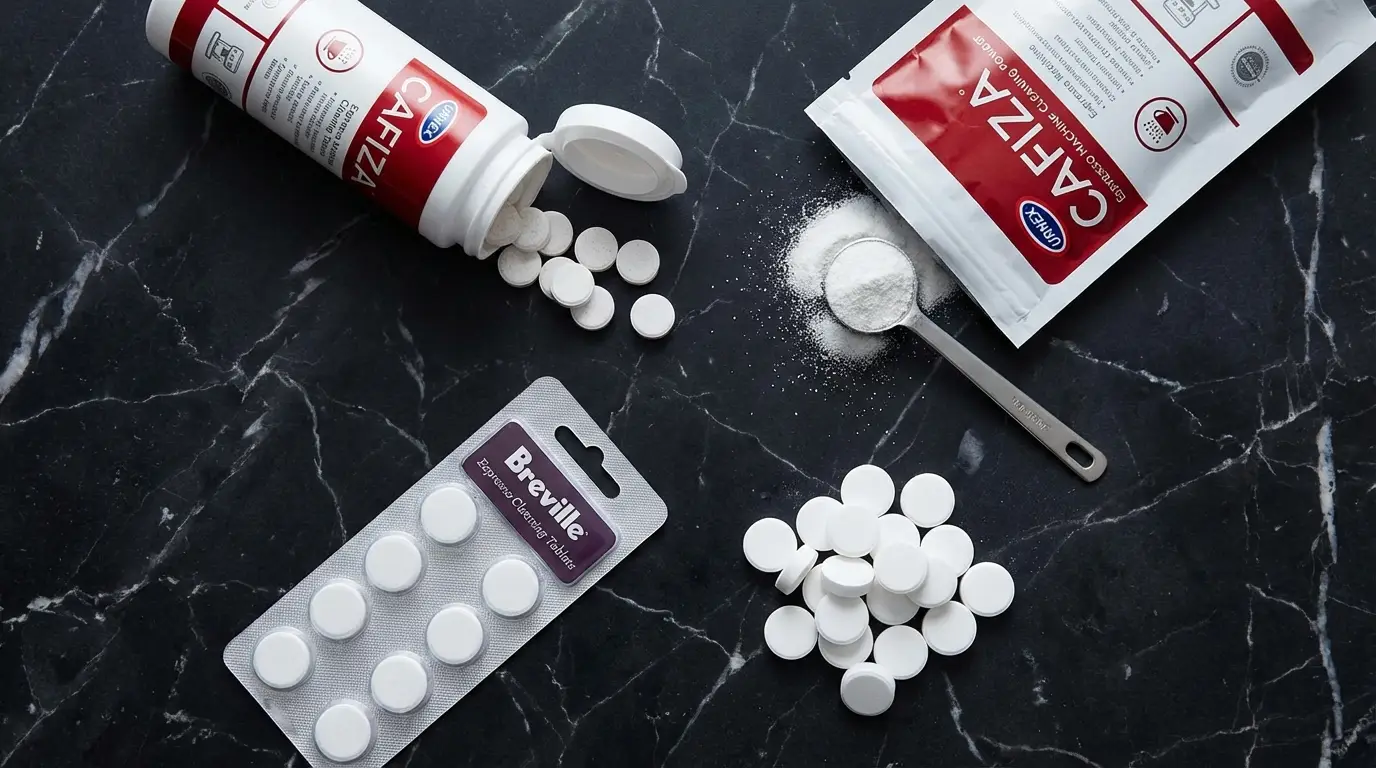
I’ll admit it—I used to skip cleaning my Breville for embarrassingly long stretches. Then one day my shots started tasting like cardboard mixed with bitterness, and I realized those old coffee oils had basically turned rancid inside my machine.
Cleaning tablets fixed the taste immediately. But which ones should you actually buy? I’ve tried three different brands and done a deep dive into what the espresso community recommends. Here’s everything I’ve found.
What Cleaning Tablets Actually Do
Before we compare brands, let’s get clear on what these tablets are for.
Espresso cleaning tablets dissolve coffee oils and residue that build up in your group head, portafilter, basket, and shower screen. Every time you pull a shot, microscopic oils get left behind. Over days and weeks, that layer thickens and starts affecting taste—usually adding a rancid, stale bitterness to your espresso.
Important distinction: Cleaning tablets are NOT descalers. Descalers (like Urnex Dezcal or citric acid) remove mineral buildup from water. You need both, but they’re different products for different problems.
| Cleaning Tablets | Descaling Solution | |
|---|---|---|
| Removes | Coffee oils and residue | Mineral scale from water |
| Where | Group head, portafilter, basket | Boiler, water lines, thermoblock |
| How often | Every 1-2 weeks | Every 2-3 months |
| Used via | Backflushing cycle | Running through machine |
The Contenders
I’m comparing four options that Breville owners commonly use:
- Urnex Cafiza — the industry standard
- Breville branded tablets — what comes with your machine
- Urnex powder — the budget pro choice
- Generic/off-brand tablets — the Amazon bargain bin
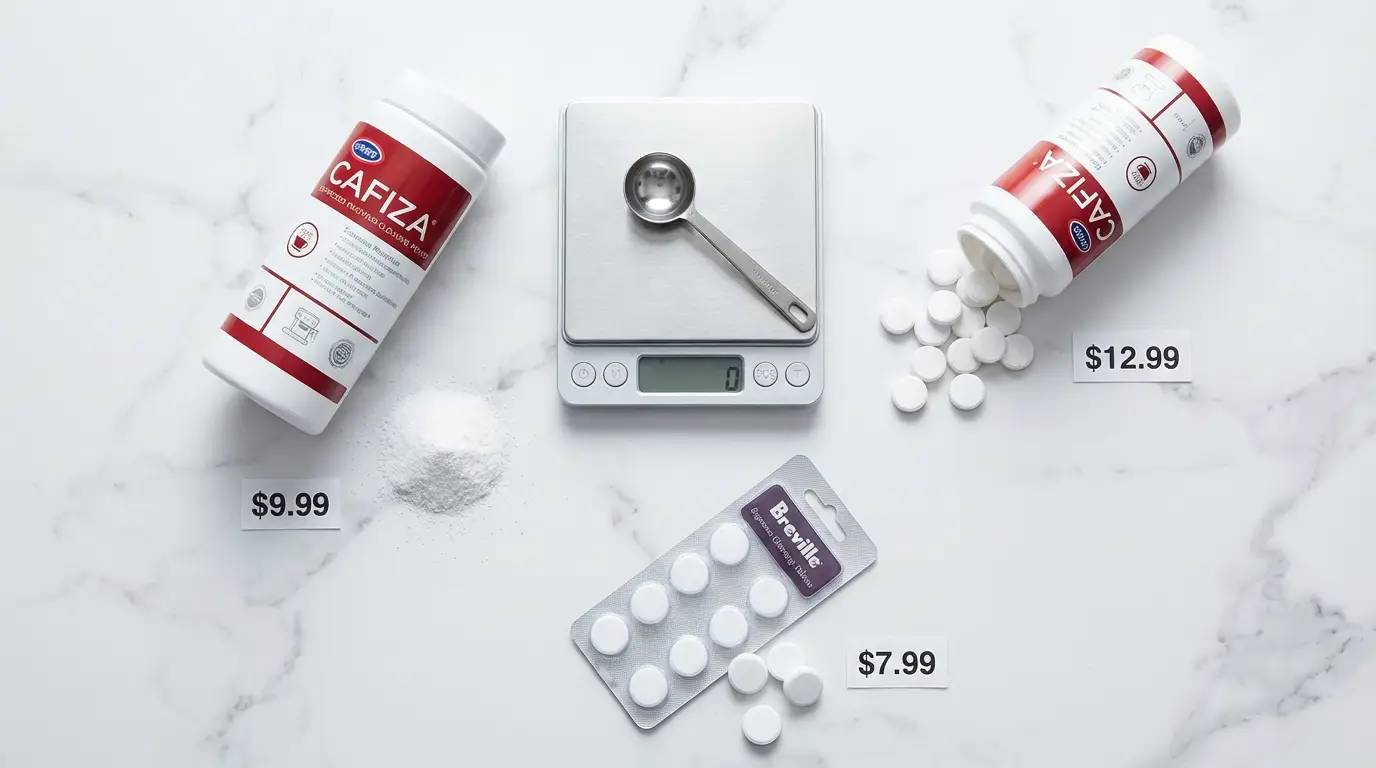
Head-to-Head Comparison
| Feature | Cafiza Tablets | Breville Tablets | Cafiza Powder | Generic |
|---|---|---|---|---|
| Active ingredient | Proprietary oil emulsifier | Breville-specific formula | Same as Cafiza tablets | Varies widely |
| Dissolve speed | Fast | Moderate | Instant (powder) | Often slow |
| Residue left | None | Minimal | None | Sometimes |
| Effectiveness | Excellent | Very good | Excellent | Hit or miss |
| Breville compatible | Yes | Yes (designed for) | Yes | Usually |
| Cost per use | ~$0.25 | ~$0.35 | ~$0.03-0.05 | ~$0.10-0.15 |
Urnex Cafiza Tablets
This is what most coffee shops use, and there’s a reason for that. Cafiza tablets dissolve quickly, cut through oils aggressively, leave zero residue, and don’t damage any machine components.
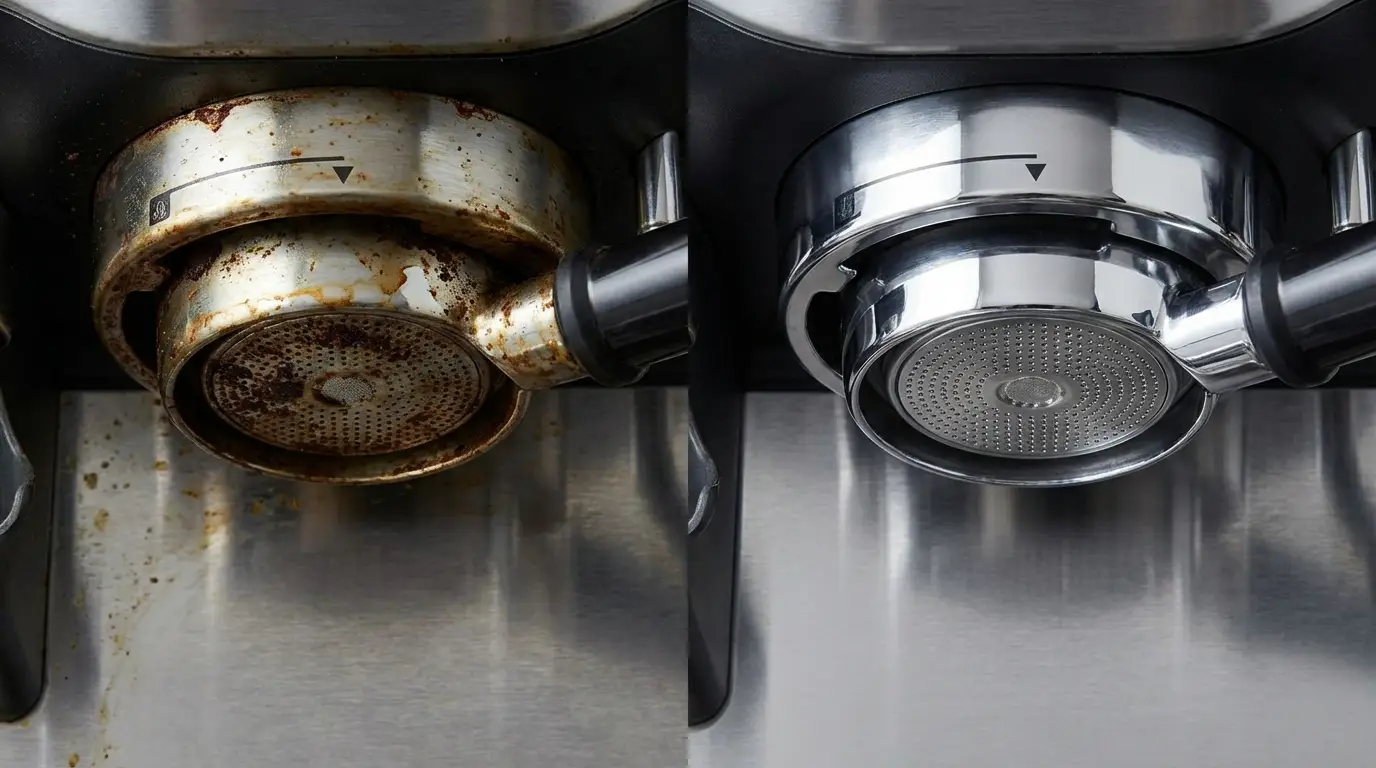
I’ve been using Cafiza for the past year. Every time I run a cleaning cycle, the water that comes out is brown and genuinely gross—proof that it’s pulling out oils that accumulated since the last clean.
Best for: People who want the proven, professional standard.
Breville Branded Tablets
These come included with your Barista Express and are available from Breville directly. They’re formulated specifically for Breville’s automated cleaning cycle timing.
They work well—no complaints from me when I used them. The main downside is price. They cost roughly 40% more per tablet than Cafiza for what seems like similar results.
Best for: People who want zero guesswork—just use what Breville designed.
Urnex Cafiza Powder
This is the secret the home-barista.com community talks about constantly: Cafiza powder costs a fraction of tablets and works just as well.
A 566g bottle costs around $13 and lasts months even with weekly cleaning. You just measure ~3g of powder into the blind basket instead of dropping in a tablet. The powder dissolves instantly—actually faster than tablets.
The Home-Barista forum consensus is pretty clear: “Powder over tablets every time. Cheaper, dissolves better, same results.”
Best for: Budget-conscious baristas, heavy users, anyone who doesn’t mind measuring.
Generic/Off-Brand Tablets
I tried a pack of generic cleaning tablets from Amazon once. They were half the price of Cafiza.
My experience: they dissolved noticeably slower, and after the cleaning cycle I could still taste a slight soapy residue in my next shot. Had to run extra rinse cycles to flush it out.
Some generics are probably fine, but the inconsistency isn’t worth the savings when Cafiza powder costs literally pennies per use.
Best for: If you’re really on a budget and can’t justify even $13 for Cafiza powder.
Cost Breakdown Per Year
Assuming you clean once every two weeks (recommended minimum):
| Product | Cost Per Use | Annual Cost (26 cleans) |
|---|---|---|
| Cafiza powder | $0.04 | $1.04 |
| Generic tablets | $0.12 | $3.12 |
| Cafiza tablets | $0.25 | $6.50 |
| Breville tablets | $0.35 | $9.10 |
Yeah. Cafiza powder at basically $1 per year is absurdly good value. Even if you clean weekly (which some people do), you’re looking at $2 per year.
How to Clean Your Breville (Step by Step)
Using Breville’s Automated Clean Cycle
Your Barista Express has a built-in cleaning cycle—that blinking “CLEAN ME” light isn’t just a suggestion.
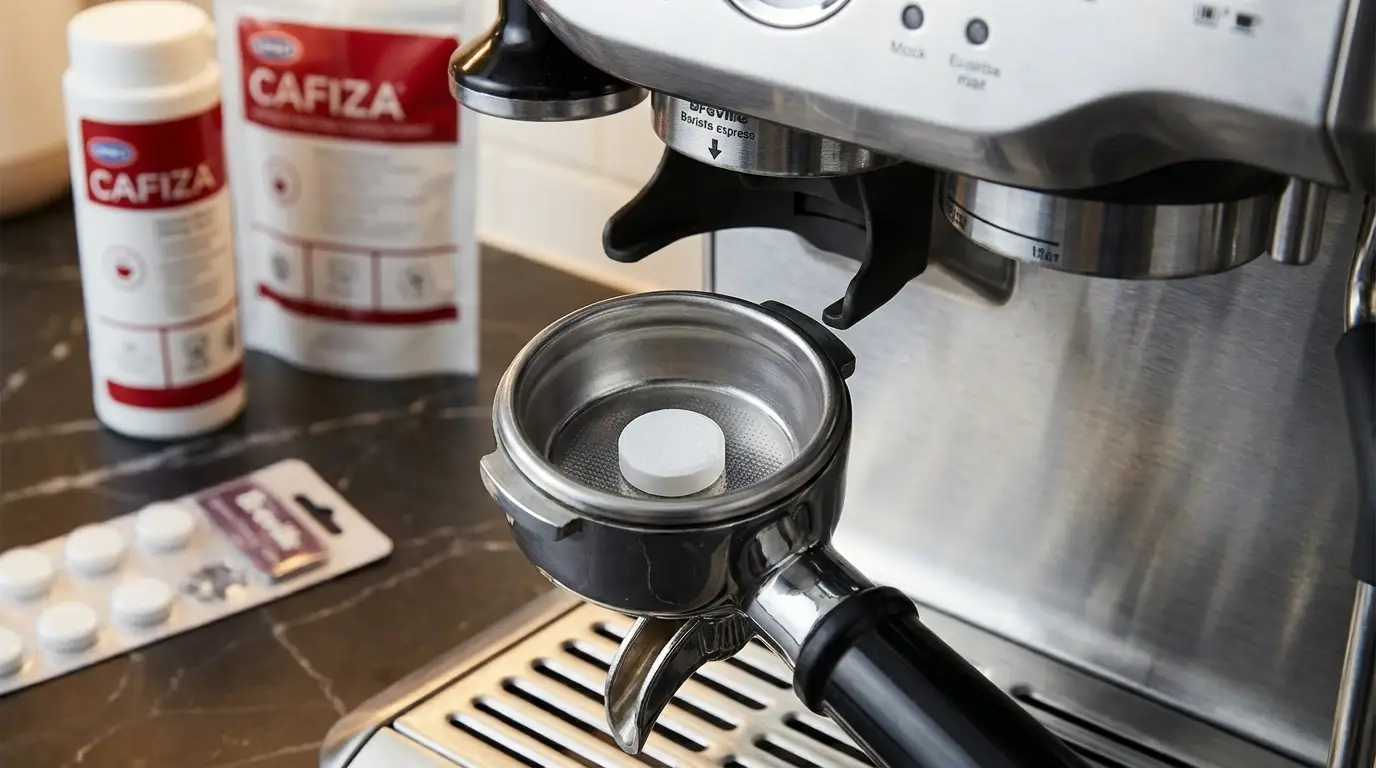
- Insert the single-wall single basket (the one with one hole)
- Place a cleaning tablet or ~3g powder in the basket
- Lock the portafilter into the group head
- Press and hold the 1 CUP and 2 CUP buttons simultaneously
- The machine runs an automated cycle (~6 minutes of pump cycling)
- When done, remove portafilter and rinse everything
 7. Run a blank shot (no coffee) to flush any remaining solution
Manual Backflush Method (If You Prefer)
Some people prefer manual control, especially if using Cafiza powder:
- Insert blind basket into portafilter
- Add one tablet or ~3g powder
- Lock into group head
- Start extraction for 10 seconds, then stop — repeat 5 times
- Unlock portafilter, rinse basket and portafilter
- Lock clean blind basket back in
- Run 5 more 10-second water-only flushes
- Pull one throwaway shot to clear the group head
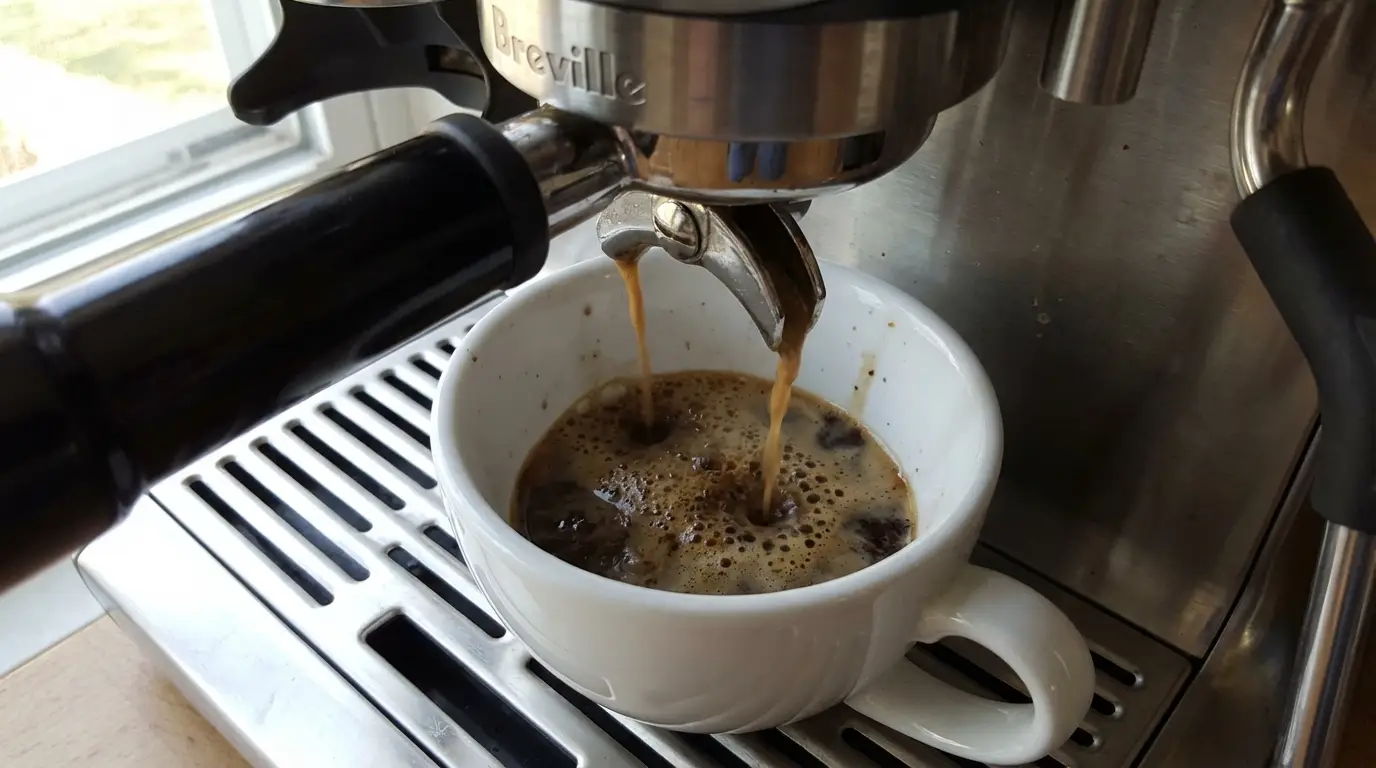
Extra Credit: Soak Your Basket and Portafilter
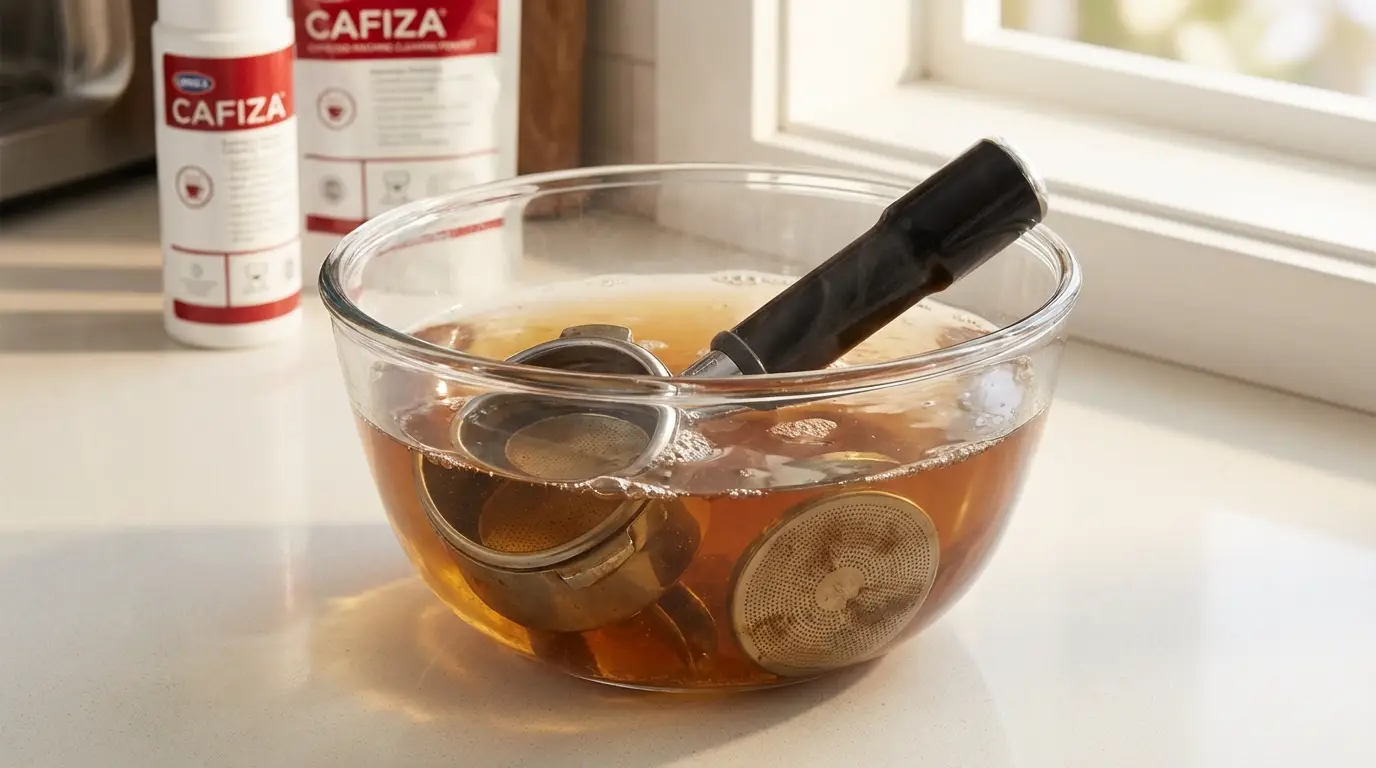
Once a month, I dissolve a Cafiza tablet in a bowl of hot water and soak my basket, portafilter, and shower screen for 15-20 minutes. The gunk that comes off is… motivating, let’s say. Everything looks brand new afterward.
How Often Should You Clean?
| Usage Level | Cleaning Frequency |
|---|---|
| 1-2 shots per day | Every 2 weeks |
| 3-4 shots per day | Weekly |
| 5+ shots per day | Every 3-5 days |
| Using dark/oily beans | More frequently (oils build up faster) |
When your Breville’s CLEAN light comes on, don’t ignore it. That machine knows what it needs.
Also: cleaning and descaling are separate. You should descale every 2-3 months regardless of how often you clean.
My Verdict
For most Breville owners: Get Urnex Cafiza powder. It’s the professional standard, costs almost nothing, dissolves instantly, and works perfectly with Breville’s cleaning cycle. One bottle will last you over a year.
If you hate measuring: Cafiza tablets are the same formula in convenient tablet form. A bit more expensive but still very reasonable.
Breville tablets are fine but overpriced for what they are.
Generics aren’t worth the risk of inconsistency when the gold standard costs $13 for a year’s supply.
FAQs
Can I use dish soap instead of cleaning tablets?
Please don’t. Dish soap isn’t designed to dissolve coffee oils and can leave residue that’s hard to rinse out and affects taste. Purpose-made cleaning tablets are formulated to break down coffee-specific buildup and rinse clean.
Why does my espresso taste weird after cleaning?
You probably didn’t rinse enough. Run 2-3 blank water shots after cleaning to flush any remaining solution. If using generic tablets, this problem is more common—another reason to stick with Cafiza.
Do I still need to descale if I use cleaning tablets?
Yes. Cleaning tablets remove coffee oils. Descaling removes mineral buildup from water. They solve completely different problems. Do both.
Can I use Cafiza powder in the automated Breville cycle?
Absolutely. Just measure about 3g into the single-wall basket and run the cycle as usual. Works perfectly.
What about cleaning tablets for the steam wand?
Cleaning tablets are for the group head and brew path only. For the steam wand, clean it manually with a damp cloth after every use and purge steam before and after frothing.
Key Takeaways
- Cafiza powder is the clear winner — professional-grade results at ~$1 per year
- Clean every 1-2 weeks minimum — don’t wait for the CLEAN light
- Cleaning ≠ descaling — you need to do both, separately
- Skip generics — the savings aren’t worth the inconsistency
- Soak your portafilter monthly — you’ll be amazed how much buildup comes off
Related Guides:

Mikael
Home espresso enthusiast and Breville specialist. Helping you master the art of coffee brewing from your own kitchen.
Learn more about me →