How to Clean Your Breville Bean Hopper: Removing Oil Buildup
Keep your Breville grinder fresh by cleaning the bean hopper. Learn how to remove coffee oil residue that causes stale taste and clogs.
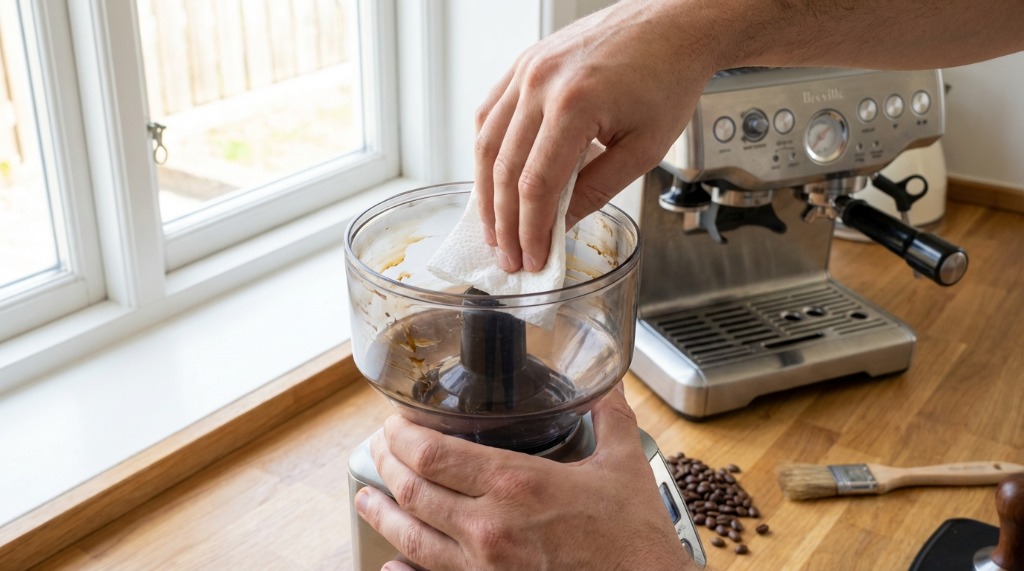
After months of wondering why my $20 single-origin Ethiopian beans tasted like “generic coffee shop roast,” I finally found the culprit. It wasn’t my grind size, my water temp, or my tamping. It was the bean hopper.
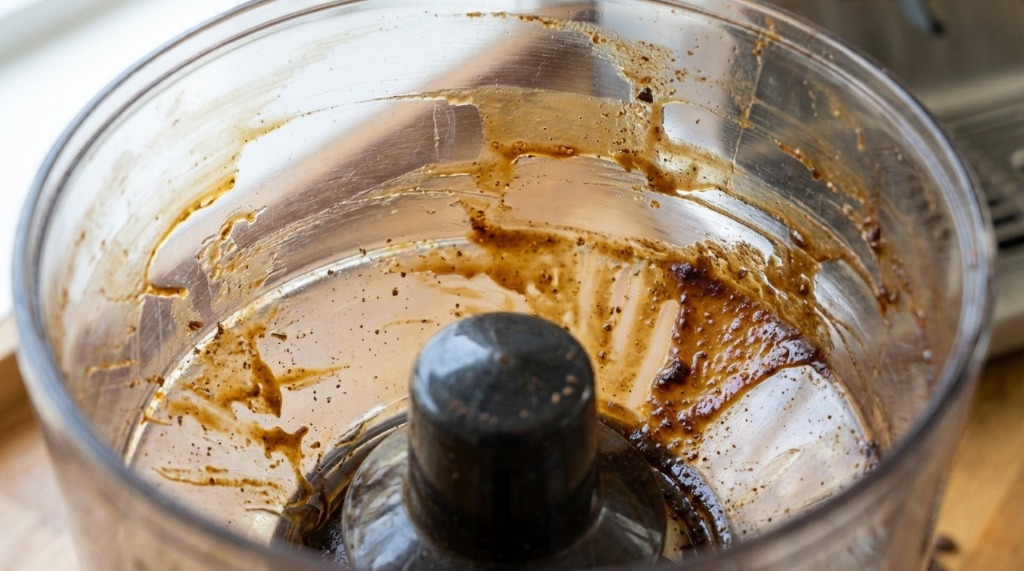
I rubbed my finger on the inside of the plastic container and it came away greasy, sticky, and smelling like old crayons. That rancid oil was coating every single fresh bean I put into the machine.
Cleaning the hopper is one of those “out of sight, out of mind” tasks, but trust me: if you skip it, you’re seasoning your fresh coffee with rancid oil every morning. Here is how to fix it in about 5 minutes.
Why Hopper Cleaning Matters
Coffee beans are full of fats and oils (lipids). Dark roasts are basically sweating oil. These oils stick to the plastic walls of your hopper and oxidize.
- The Smell Test: Open your hopper lid right now and sniff. Does it smell sweet and fresh, or like sharp, stale plastic?
- The Contamination: New beans slide down those greasy walls, picking up the old flavors.
- The Clog: Over time, this sticky layer collects dust and chaff, which can eventually feed into your grinder burrs.
If your espresso has a persistent “funky” background note that won’t go away, check the hopper.
When to Clean Your Hopper
I used to do this “whenever I remembered,” which was basically once a year. Now I have a system:
| Situation | Cleaning Frequency |
|---|---|
| Using medium/light roasts | Every month |
| Using dark/oily roasts | Every week (Seriously, oil builds up fast) |
| Visible oil sheen | Immediately |
| Switching bean types | Before adding the new bag |
| Taste becomes stale | Immediately |
Step-by-Step Cleaning Process
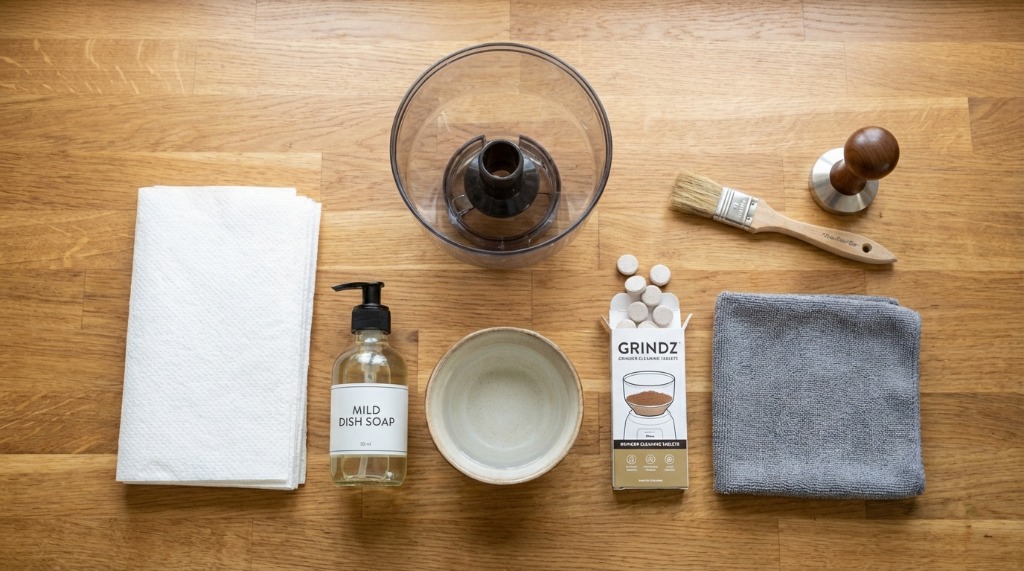
What You’ll Need
- Dry paper towels (lots of them).
- Mild dish soap.
- Warm water.
- Crucial: A completely dry microfiber cloth.
Step 1: Empty the Hopper
Don’t just dump the beans out.
- Remove the lid.
- Scoop out most beans.
- Run the grinder until it runs empty (you don’t want half-ground beans stuck in the throat).
Pro tip: If you have a vacuum sealer for food, use it for your beans. Storing them in the hopper is a recipe for staleness anyway.
Step 2: Remove the Hopper
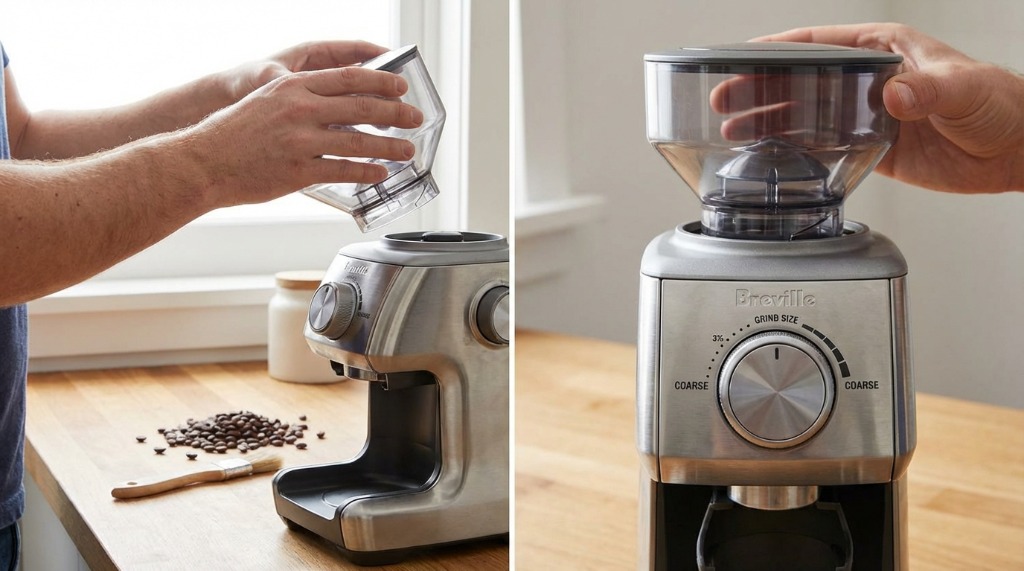
This actually baffled me the first time I tried it on my Barista Express.
- Turn the locking mechanism (the little dial inside the hopper) to UNLOCK.
- If stubborn, you might need to turn the Grind Size dial on the side to the coarsest setting to release the lock.
- Lift straight up. It might require a bit of a wiggle, but don’t force it.
Step 3: Wipe Down Interior Walls
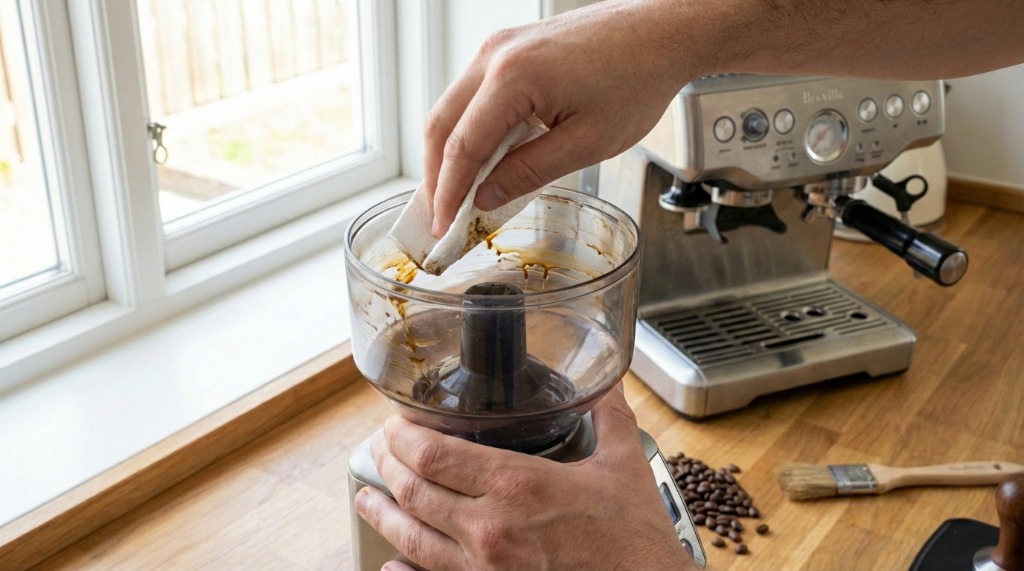
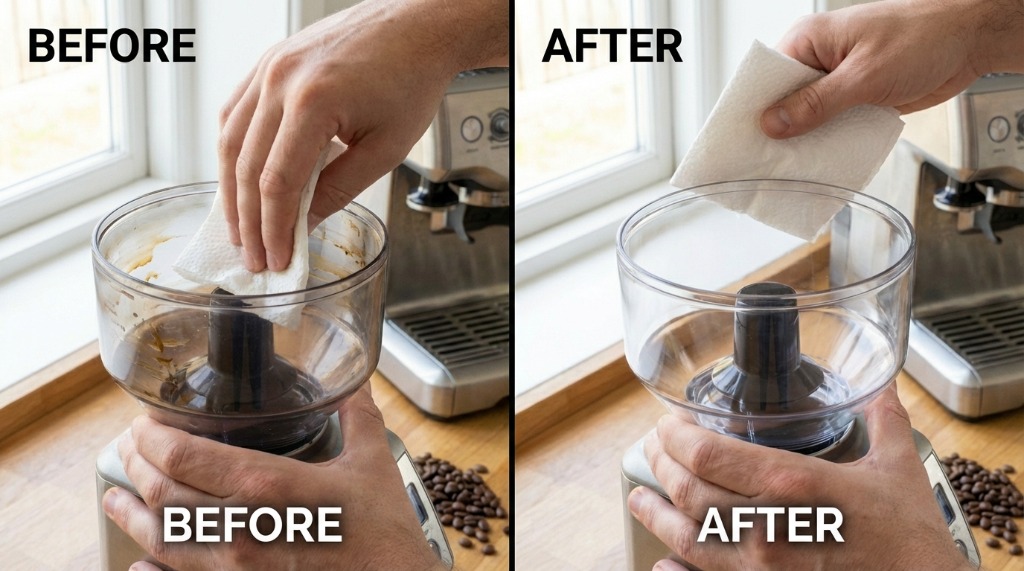
The Dry Wipe: First, take a dry paper towel and wipe out the oil. You’ll be amazed at the brown gunk that comes off.
The Wet Wash:
- Rinse the hopper in the sink with warm water.
- Use a tiny drop of dish soap.
- Use a soft sponge (non-abrasive) to remove the sticky layer.
- DO NOT put it in the dishwasher. The heat can warp the plastic locking tabs, and then your grinder won’t start.
Step 4: Clean the Lid and Gaskets
The rubber seal on the lid is a magnet for oils. Wipe it down thoroughly. If the rubber feels sticky or tacky, it stays sticky; that’s just the material degrading, but cleaning it helps the seal.
Step 5: Run Cleaning Tablets (Optional)
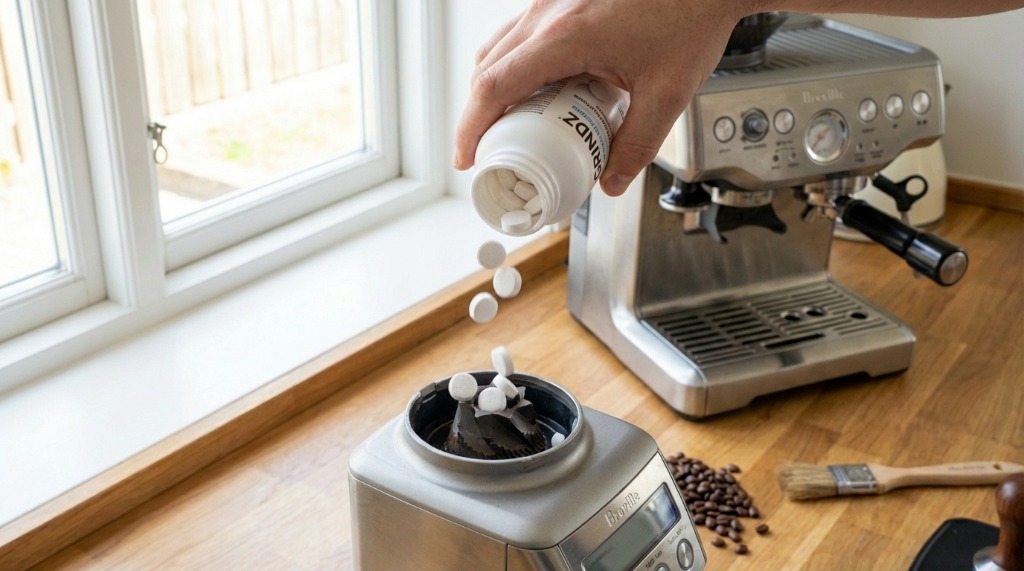
Since the hopper is off, look down at the burrs. Do they look caked in brown sludge?
- Toss in a capful of Urnex Grindz (yellow tablets that look like coffee beans).
- Put the hopper back on.
- Grind them through.
- This clears the oil from the actual metal burrs, which is just as important as the hopper itself.
Step 6: The Most Important Step - DRYING
Do not reinstall a wet hopper. Moisture + Coffee Grounds = Mold. I dry mine with a towel, and then let it sit on the counter for an hour to be absolutely sure. Even a drop of water can rust your burrs.
- Reinstall hopper.
- Lock it in (listen for the click).
- Add fresh beans.
Deep Cleaning for Stubborn Residue
If you ignored this for a year like I did, soap might not cut it.
Baking Soda Paste
- Mix baking soda + water.
- Smear it on the oily plastic.
- Let it sit for 5 minutes.
- Scrub. The grit helps lift the polymerized oil without scratching the plastic.
Isopropyl Alcohol (90%+)
Use with caution. Standard rubbing alcohol cuts oil instantly, but check a small area first to ensure it doesn’t fog the plastic. I use this for the really sticky spots near the bottom chute.
Preventing Oil Buildup
Store Beans Properly
Use the hopper for grinding, not storing. I only put enough beans in for the next 1-2 days. The rest stay in an Airscape canister. This keeps the beans fresh and the hopper cleaner.
Choose Less Oily Beans
If you exclusively drink “French Roast” or “Italian Roast” where the beans look wet with oil, you need to clean your hopper weekly. It’s the price of admission for dark roasts.
Wipe Weekly
Every Sunday, I just run a dry paper towel around the inside. It takes 10 seconds and prevents the buildup from ever hardening.
Signs Your Hopper Needs Cleaning
- The Finger Test: Swipe the inside. Is it greasy? Clean it.
- Rancid Smell: Smells like old crayons? Clean it.
- Beans Stopping: If beans stop sliding down into the grinder, the walls are too sticky/friction-heavy.
FAQ
Can I put the hopper in the dishwasher?
No. I know the manual might say “top rack safe” for some models, but I’ve seen too many warped hoppers. The drying cycle heat is too intense. Hand wash only.
My hopper has a cloudy residue that won’t come off. What is it?
That’s etched plastic from the acidic coffee oils sitting there too long. It’s permanent cosmetic damage, but harmless. It just looks ugly.
How do I remove the bean hopper from my Barista Express?
You have to unlock it first! Twist the lock dial inside the hopper. If it’s jammed, ensure no beans are stuck in the locking mechanism by rocking the hopper gently.
Should I store beans in the hopper overnight?
Ideally, no. But in reality? Yes, we all do it. Just try not to leave them there for a week while you go on vacation.
My hopper plastic is cracked. Can I still use it?
If it holds beans, yes. But cracks harbor bacteria that you can’t clean. Replacement hoppers are like $30 on Breville’s site—just treat yourself to a fresh one.
Conclusion
A clean hopper means cleaner tasting espresso. It’s the easiest maintenance win you can get.
- Empty and wipe — remove visible oil weekly.
- Deep clean monthly — soap and water, fully dry.
- Don’t store beans in it — use an airtight canister.
That “stale” taste I couldn’t identify for months? Gone after one thorough hopper cleaning. Don’t let dirty plastic ruin your expensive beans.
Grab a paper towel and check your hopper right now. You might be horrified.

Mikael
Home espresso enthusiast and Breville specialist. Helping you master the art of coffee brewing from your own kitchen.
Learn more about me →