Clean Breville Portafilter Guide
Complete guide to cleaning Breville portafilters and baskets. Prevent coffee residue buildup and ensure consistent extraction with daily and weekly cleaning routines.
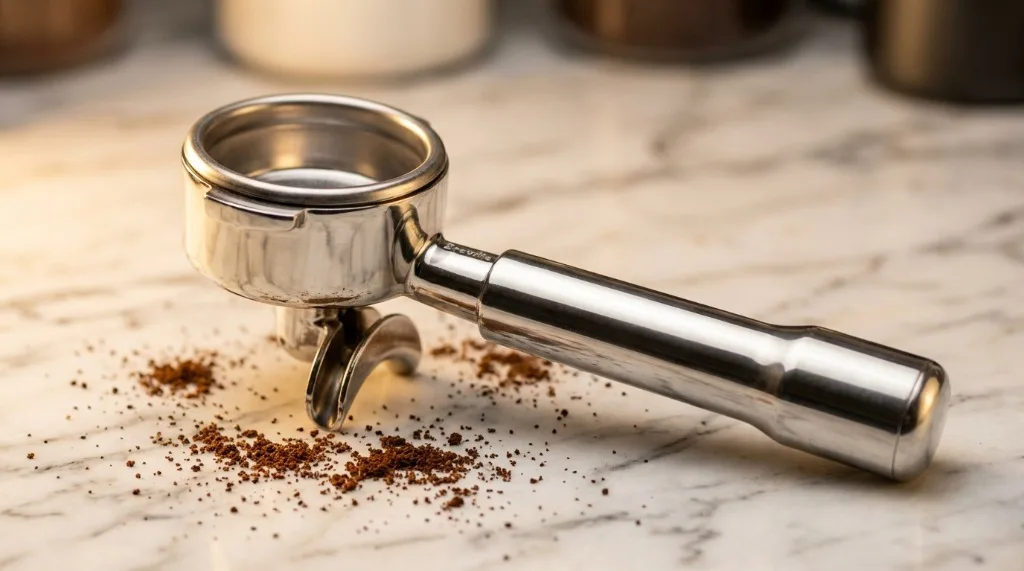
Your portafilter is the heart of every espresso extraction. Coffee oils, fine particles, and residue accumulate with every shot, gradually affecting your espresso’s flavor profile. A neglected portafilter delivers inconsistent, stale-tasting shots—no matter how good your beans are.
I learned this the hard way. About six months into owning my first Breville, I started noticing an underlying “off” flavor in my shots. Turned out, I hadn’t been cleaning my basket holes properly—they were partially clogged, causing uneven extraction. A 15-minute deep clean fixed everything. The difference was night and day.
This guide covers everything from quick daily maintenance to deep weekly cleaning, specifically for Breville machines like the Barista Express, Barista Pro, and Oracle.
Why Portafilter Cleaning Matters
Coffee oils are the enemy of great espresso. They go rancid within hours, leaving bitter, unpleasant flavors that contaminate every subsequent shot. Here’s what happens without proper cleaning:
Flavor degradation:
- Rancid oils create harsh, bitter notes (even with fresh beans)
- Old grounds trapped in basket holes mess up extraction
- Coffee residue absorbs moisture and goes stale
Extraction problems:
- Clogged basket holes cause uneven water flow
- Channeling becomes way more frequent
- Pressure builds inconsistently
Machine longevity:
- Stuck grounds can damage basket walls over time
- Corrosion from acidic coffee residues
- You’ll have much harder deep cleaning sessions later
Tools and Supplies You’ll Need
Before starting, gather these essential items:
Cleaning Tools
- Nylon brush (soft bristles for basket holes)
- Grouphead cleaning brush (angled bristles)
- Microfiber cloth (lint-free)
- Wooden toothpick or portafilter needle (for stubborn holes)
Cleaning Solutions
- Espresso machine cleaner (Cafiza or Breville tablets)
- Warm water (not boiling—too hot can warp baskets)
- White vinegar (optional, for stubborn stains)
Pro Tip
Avoid using dish soap on your portafilter baskets. Seriously. Soap residue is nearly impossible to fully rinse away and will affect your espresso’s crema and flavor for several shots afterward. I made this mistake once—never again.
Daily Quick Clean (After Every Session)
This 2-minute routine prevents 90% of buildup issues:
Step 1: Knock and Wipe Immediately
Right after pulling your last shot:
- Knock out the spent puck into a knock box
- Tap the portafilter firmly to release stuck grounds
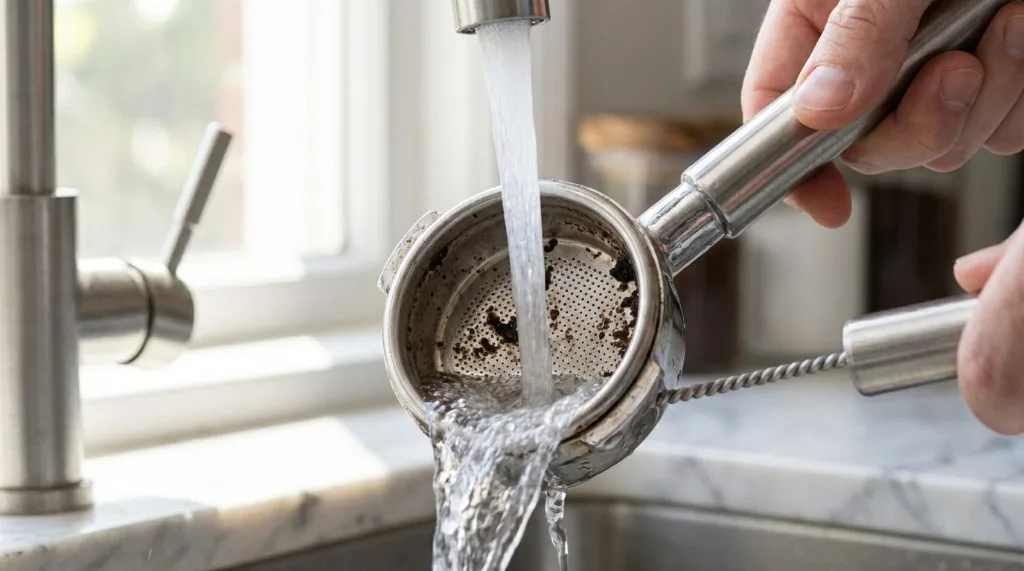
- Rinse the basket under hot running water for 5 seconds
- Wipe the inside with your finger to remove oils
Step 2: Purge the Basket Holes
- Flip the basket over under running water
- Press your thumb over the bottom
- Let water pressure push through each hole
- Check that water flows evenly through all holes (if it doesn’t, some are clogged)
Step 3: Dry Thoroughly
- Shake off excess water
- Wipe with a dry microfiber cloth
- Leave portafilter unlocked from the group head to air dry
- Store basket upside down to prevent moisture pooling
Time required: Under 2 minutes
Weekly Deep Clean Process
Once a week, give your portafilter and baskets a thorough cleaning:
Step 1: Remove and Inspect Baskets
- Pop out the basket from the portafilter
- Check for stuck grounds in any holes
- Look for discoloration or coffee staining
- Inspect the rim for buildup
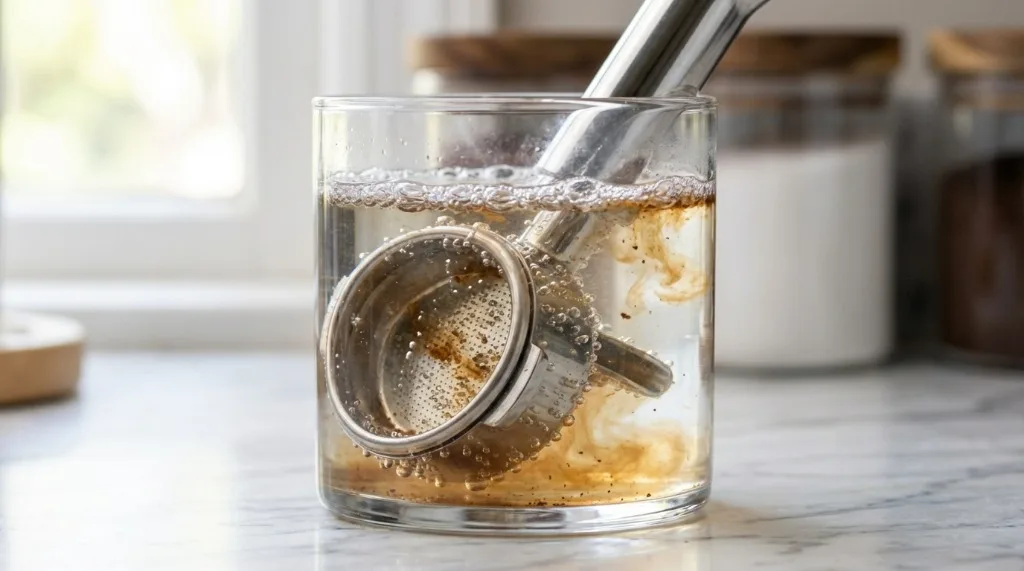
Step 2: Soak the Baskets
- Fill a container with hot (not boiling) water
- Add 1/2 teaspoon of espresso machine cleaner (Cafiza powder)
- Submerge baskets and let soak for 15-20 minutes
- For stubborn buildup, extend to 30 minutes
Warning: Don’t soak the portafilter handle—the coffee powder cleaner can damage the finish on some models.
Step 3: Scrub and Detail
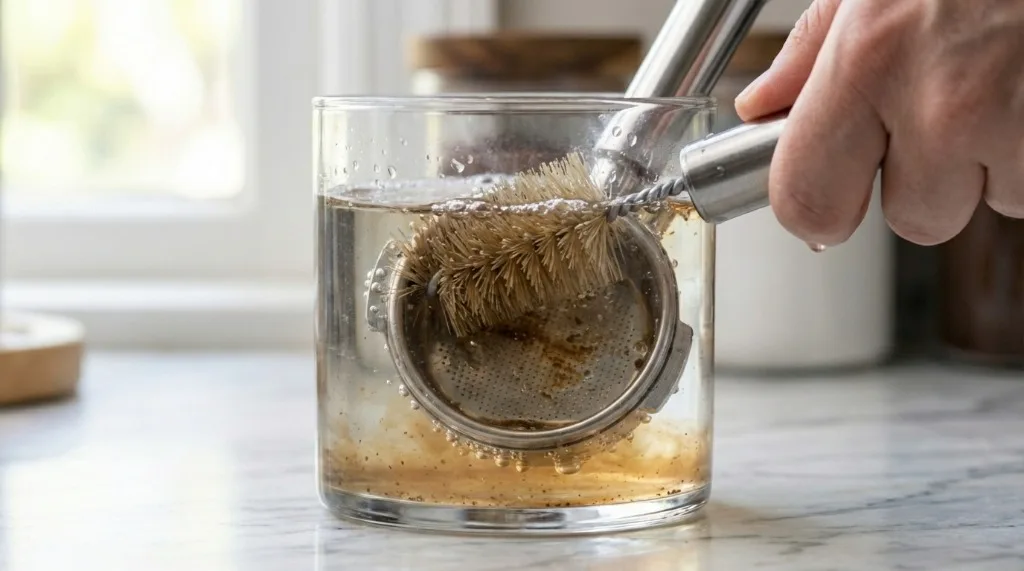
After soaking:
- Scrub basket holes with a nylon brush, working in circles
- Clear individual holes with a wooden toothpick or portafilter needle
- Clean the basket rim where it seals against the gasket
- Scrub the outside to remove staining
Step 4: Clean the Portafilter Handle
- Wipe the handle with a damp cloth
- Clean the spouts (if applicable) with a thin brush
- Check where the basket seats for buildup
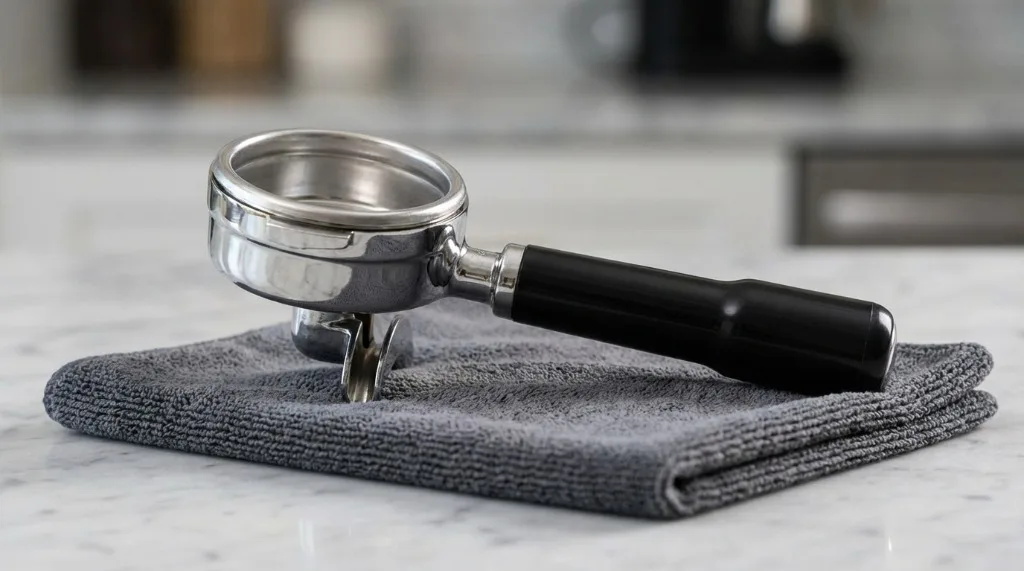
- Dry completely with a microfiber cloth
Step 5: Rinse Thoroughly
- Rinse baskets under running water for 30 seconds
- Push water through each hole to verify flow
- Sniff for any chemical odor—rinse more if detected
- Shake and air dry completely
Troubleshooting Common Issues
Stuck Coffee Grounds in Basket Holes
Problem: Water flows unevenly; some holes appear blocked.
Solution:
- Soak basket in hot Cafiza solution for 30+ minutes
- Use a portafilter hole needle to push through each blocked hole
- For stubborn blockages, try an ultrasonic cleaner (if you have one)
- Never use metal pins—they can enlarge holes and affect extraction
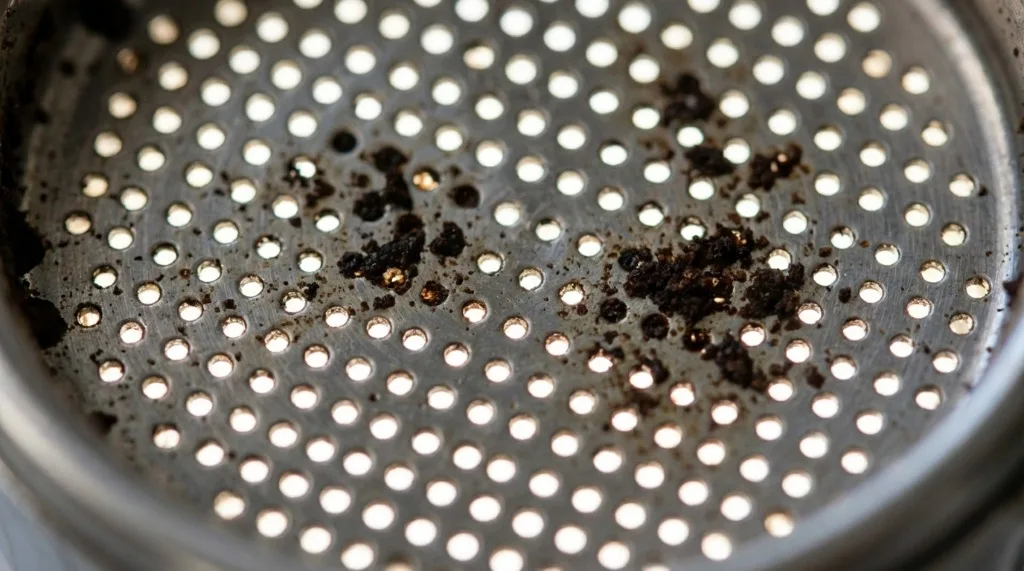
Brown Staining on Basket
Problem: Coffee oils have created permanent-looking stains.
Solution:
- Make a paste with baking soda and water
- Apply to stained areas
- Let sit for 10 minutes
- Scrub with nylon brush and rinse
- Repeat if necessary
Rust Spots Appearing
Problem: Small orange/brown spots that aren’t coffee stains.
Solution:
- Immediate action: Dry thoroughly after every use (this is the most important thing)
- Create a paste of baking soda + water
- Gently scrub rust spots
- Rinse and dry immediately
- Consider replacing the basket if rust is extensive
Portafilter Won’t Lock Properly
Problem: Portafilter is harder to insert or doesn’t lock at 90 degrees.
Cause: Likely a grouphead gasket issue, but check the portafilter first.
Solution:
- Clean the portafilter lugs (the wings that lock in)
- Remove any buildup from the rim
- Check the grouphead gasket condition
- May need gasket replacement if the problem persists
Pressurized vs Non-Pressurized Basket Care
Different basket types need slightly different care:
Pressurized (Dual-Wall) Baskets
These have a single hole at the bottom and create pressure artificially:
- Extra attention to the single output hole—this clogs easily
- Check the internal valve isn’t clogged
- Soak longer as residue gets trapped inside
- Don’t use portafilter needles on the valve
Non-Pressurized (Single-Wall) Baskets
These have many tiny holes for proper extraction:
- Each hole matters—clear them individually weekly
- More prone to uneven flow if some holes clog
- Consider upgrading to IMS or VST precision baskets
- Easier to clean overall once you establish a routine
When to Replace Your Basket
Even with perfect maintenance, baskets wear out. Replace when:
| Issue | Action |
|---|---|
| Holes becoming enlarged | Replace immediately |
| Permanent warping | Replace |
| Extensive rust | Replace |
| Inconsistent extraction despite cleaning | Try new basket |
| Visible cracks or damage | Replace immediately |
Replacement frequency: With proper care, Breville stock baskets last 2-3 years. Precision baskets (IMS, VST) can last 5+ years.
Model-Specific Notes
Barista Express (BES870/BES875)
- Comes with 4 baskets: 1-cup and 2-cup, pressurized and non-pressurized
- Use the 1-cup single-wall for cleaning cycles
- Handle is plastic—avoid harsh chemicals
Barista Pro (BES878)
- Same basket system as Express
- ThermoJet heater means faster warm-up between cleaning
- LCD display reminds when cleaning is needed
Oracle / Oracle Touch
- Larger baskets (22g capacity on some)
- Handle is integrated with the machine’s doser
- Follow on-screen cleaning prompts
- May require specific basket positioning
Bambino / Bambino Plus
- Smaller 54mm portafilter (not 58mm)
- Baskets are specific to this size—not interchangeable with other models
- Same cleaning process applies
- Compact knock box recommended
Pro Tips for Perfect Portafilter Maintenance
Rotate Your Baskets
If you have multiple baskets, rotate usage:
- Allows complete drying between uses
- Extends lifespan of each basket
- Makes it easier to deep clean while still brewing
Warm Your Portafilter
For best espresso AND easier cleaning:
- Keep portafilter locked in the grouphead when not in use
- The residual heat helps dry moisture
- Also improves your shot temperature stability
Invest in Quality Cleaning Tools
- Portafilter funnel/dosing ring: Prevents grounds on the rim
- WDT tool: Distributes grounds, reducing channeling and cleanup
- Magnetic dosing cup: Easier puck removal, less mess
Create a Cleaning Station
Set up a dedicated area with:
- Small container for soaking
- Brush holder
- Microfiber cloth
- Cafiza powder in a sealed container
Integration with Your Maintenance Routine
Combine portafilter cleaning with other maintenance tasks:
| Task | Frequency | Time |
|---|---|---|
| Portafilter quick wipe | After every shot | 30 seconds |
| Portafilter deep clean | Weekly | 15 minutes |
| Grouphead backflush | Weekly | 10 minutes |
| Shower screen cleaning | Weekly | 5 minutes |
| Full machine cleaning cycle | Weekly | 15 minutes |
Key Takeaways
- Daily quick cleans prevent most buildup—just 2 minutes after each session
- Weekly deep soaks with Cafiza keep baskets performing like new
- Never use dish soap—it leaves residue that affects crema and flavor
- Dry thoroughly to prevent rust and corrosion
- Check basket holes weekly with a light behind to verify flow
- Replace damaged baskets immediately for consistent extraction
Your portafilter is a simple tool, but its condition directly impacts every shot you pull. With these routines, you’ll maintain café-quality extraction at home for years.
Related Guides:

Mikael
Home espresso enthusiast and Breville specialist. Helping you master the art of coffee brewing from your own kitchen.
Learn more about me →